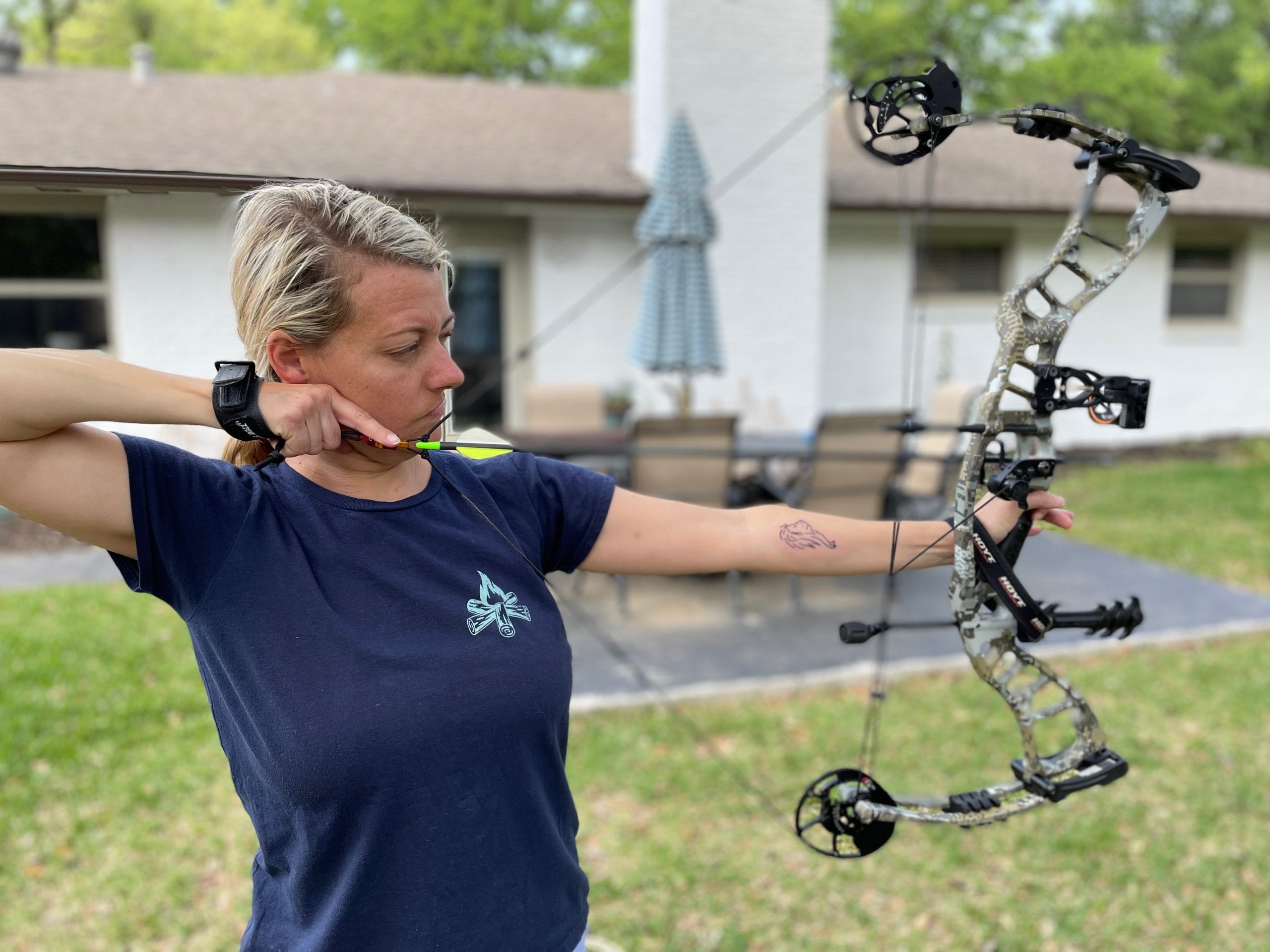
As childbearing powerhouses, our center of gravity rests in our middle section. While there are many physiological advantages to our structure, our male counterparts’ center of gravity makes it a LOT easier to pull more weight when drawing back a bow. Many states have minimum poundage laws for bowhunters, and I know many women (especially those with shorter draw lengths) who struggle to meet those requirements. To make an ethical kill, we not only need to be good marksmen, but we also need to send it with force. Higher velocity arrows = greater accuracy and more penetration.
Looking to increase your draw weight?
Increasing your upper body strength and core will not only help you draw more weight, but will also ensure a steady body at full draw, and increase your ability to stay at full draw longer. Other added bonuses include being able to pack out or drag your harvest out…without help.
Read More: Best Deer Hunting Bows – Top Picks
Disclaimer: I’m not a physical trainer or educated whatsoever (outside of the occasional Beachbody or YouTube video) on physical fitness. I grew up a gymnast and coach, and have remained healthy and active my entire life – these are just some exercises that have helped me keep up my bow strength.
Exercises to Increase Your Draw Weight
For most, start with 5 reps of 10 using low weight, then increase your weight and reps as you gain strength.
Chest Press
Using 5 lb weights or an exercise band, stand up tall and set your feet at shoulder width. Bringing your elbows up to shoulder height and at a 90-degree angle, push your weights forward, and then back. If you’re struggling, you can also do this exercise laying down on a yoga mat. Be sure your knees are up and your feet and back are flat on the mat (squeeze that core).
Shoulder Press
Same stance as above, but this time push the weight up above your head. Keep that 90-degree angle at rest, and don’t forget to engage your core.
Bent Over Row
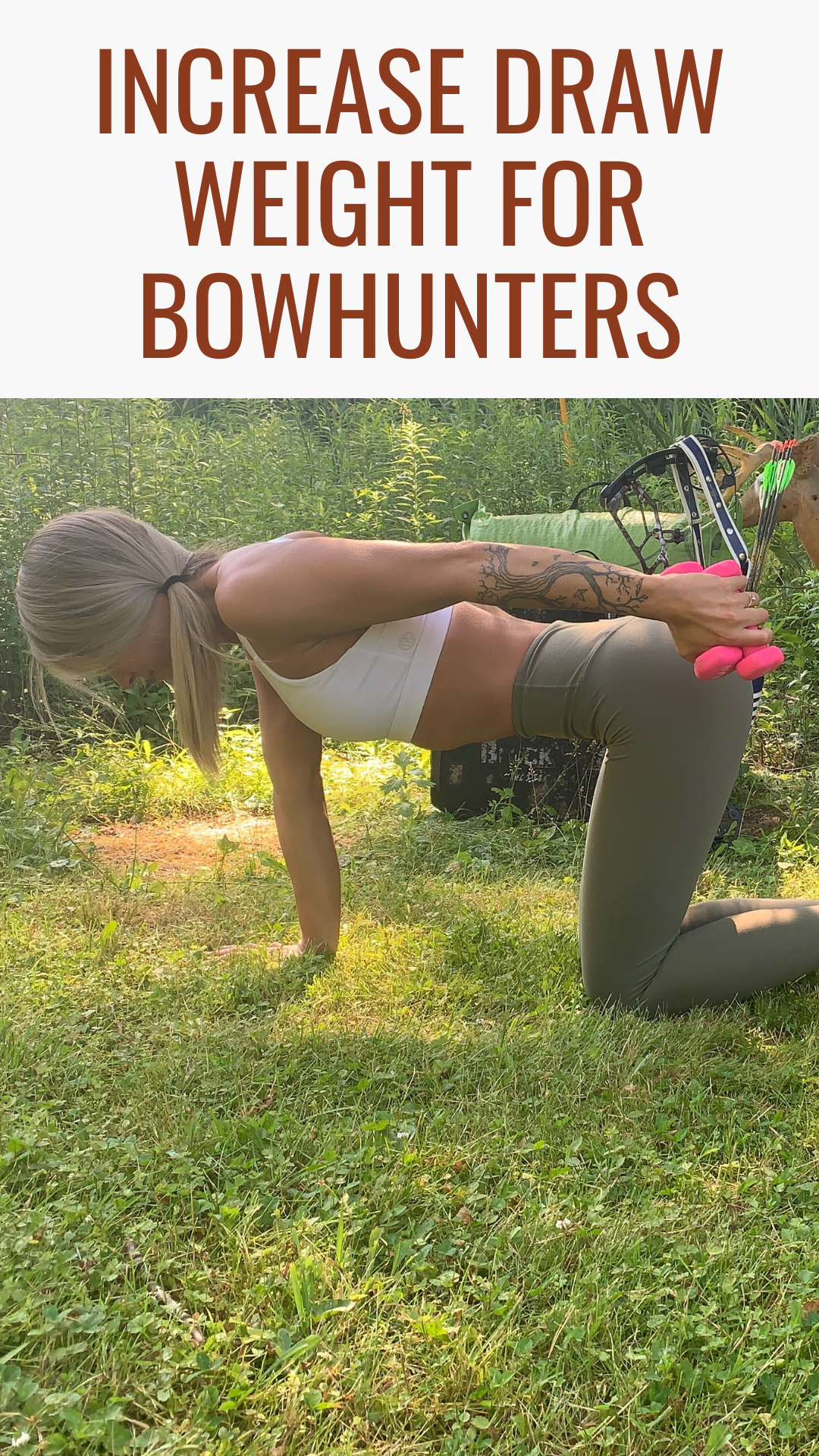
Kneel to the ground and have a 5-10 lb weight ready. Using one arm on the ground to stabilize, pull the weight up to your chest.
Shoulder Shrugs
Using 5-10 lbs per arm, let your arms dangle at your sides. Using your shoulders, lift up, hold for 5 seconds, then slowly release your arms down.
Punch Across
I’ve found this exercise to be super helpful – and it’s fun if you’re jamming out to some tunes. Using 5 lb weights in each hand, punch across your body, engaging your core, alternating sides. Be careful not to punch so hard that you lock your elbows. Set your timer for one minute, take a 30-second break, then repeat (as many times as you can!).
Read More: Stay Ahead of the Game: Off-Season Prep for the Bowhunter
Push-Ups
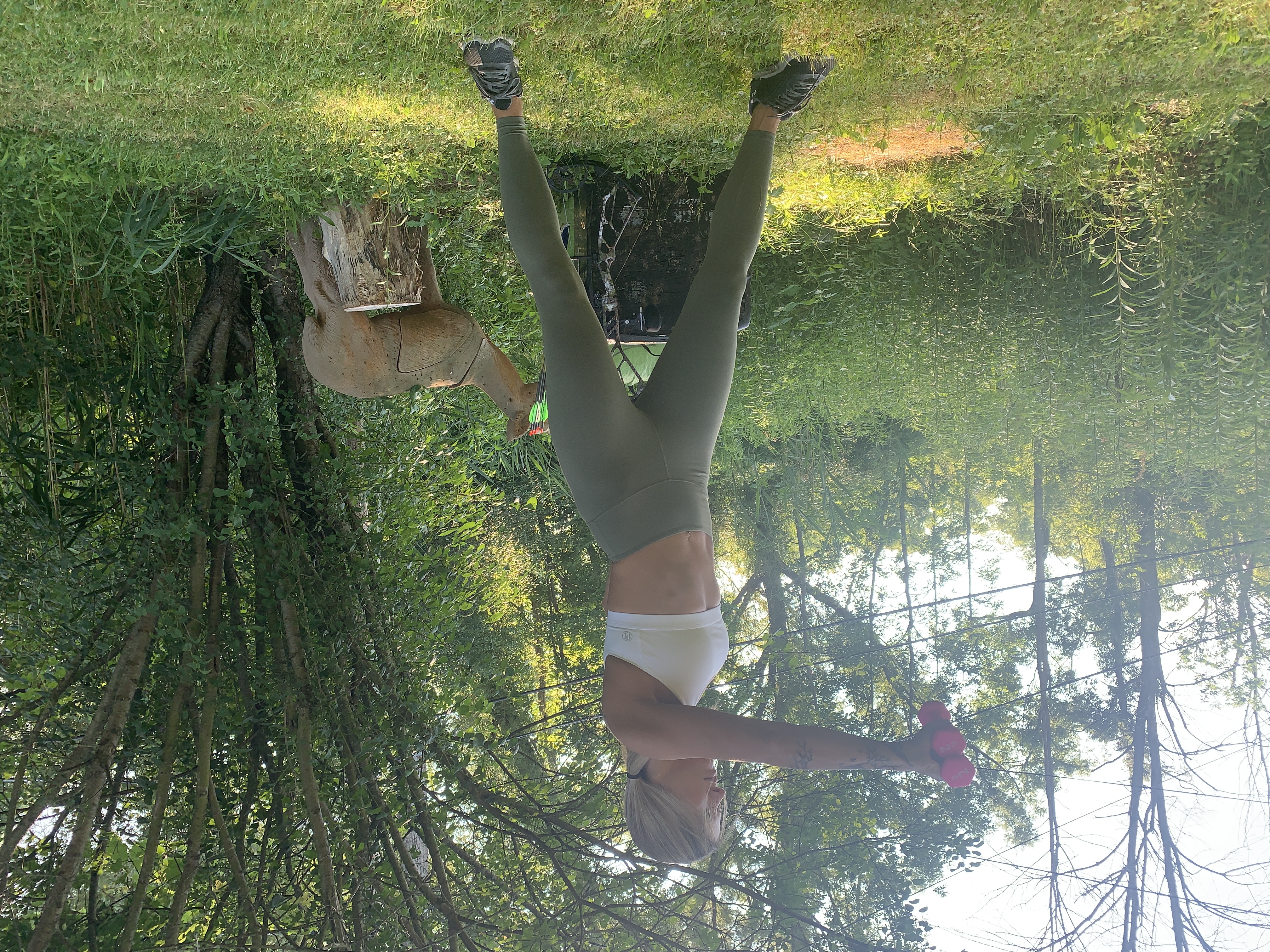
“Lady push-ups” (on your knees) are totally acceptable. Set your timer for one minute and get in as many as you can. Take a 30-second break
And yes… planks.
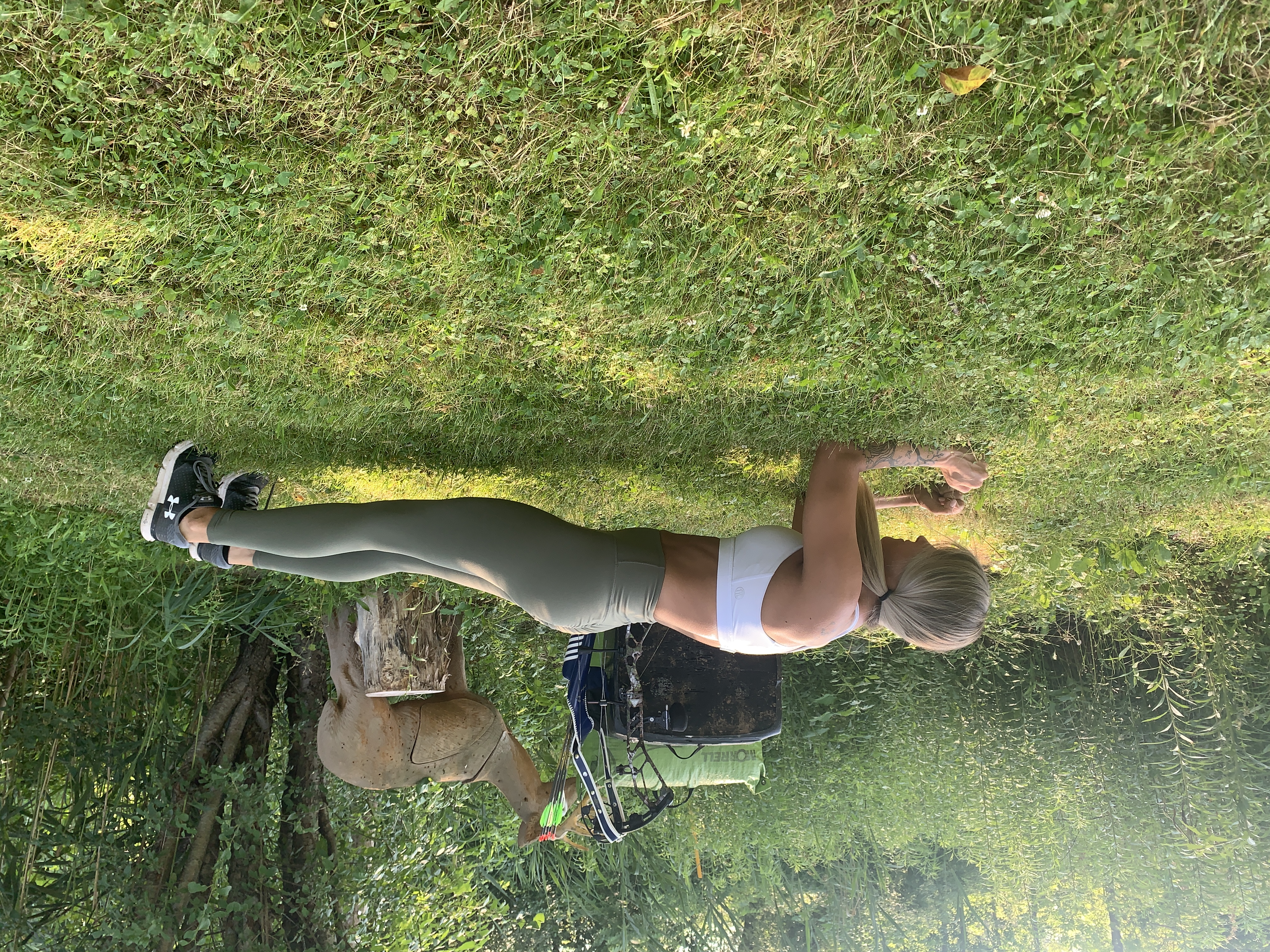
I like to get a couple of these guys in for each circuit. Start with a 30-second hold at the beginning of your workout, then end with a 60-second hold.
About a month prior to bow season, I’ll work my core and upper body strength several times per week. In addition, I mix in some cardio to get in the habit of shooting with an elevated heart rate. I also recommend ensuring your diet compliments your lifestyle.
Our household consumes mostly wild game, veggies and fruit – with the least amount of gluten possible (although I do love my occasional Italian dishes). You’d be surprised how quickly you’re able to increase your draw weight with a upper body focused exercise regimen and balanced diet.
FAQ’s for How to Increase Draw Weight for Bowhunting
What draw weight do you need for bowhunting?
For most whitetail hunting situations, many hunters consider 40–50 pounds sufficient when paired with good shot placement and proper arrows/broadheads. Elk and larger game often push hunters toward 50–60+ pounds for added penetration. Ethical shooting matters more than ego-driven poundage.
What is the minimum legal draw weight by state?
Minimum legal draw weights vary by state and species. Many states require between 30–40 pounds for deer-sized game. Examples include:
- Texas: no minimum specified
- Minnesota: 30 pounds
- Florida: 30–35 pounds depending on equipment interpretation
- Colorado: 35 pounds
- Many western states: 40 pounds minimum for deer and up to 50 pounds for elk/moose species
Always verify current regulations with your state wildlife agency before hunting season.
Can women pull a 50-pound bow?
Absolutely. Many women comfortably and ethically hunt with bows set between 45 and 60 pounds. Proper form, progressive strength building, and realistic expectations are best instead of assuming women should shoot lower poundage automatically.
Is 50 pounds enough to kill a deer?
Yes. A properly tuned bow at 50 pounds with a sharp broadhead is more than capable of ethically harvesting whitetail deer at appropriate distances.
Is 40 pounds enough for bowhunting?
In many states, yes. Forty pounds is commonly accepted as the minimum effective setup for deer-sized game when combined with:
- Proper arrow setup
- Sharp broadheads
- Good shot placement
- Reasonable shooting distance
How long does it take to increase draw weight?
Most archers can safely increase draw weight over several weeks to several months depending on:
- Starting strength
- Shooting frequency
- Shoulder stability
- Previous injuries
- Overall conditioning
Slow progression rather than jumping up too quickly and developing poor shooting form is always the way to go.
How much draw weight should beginners start with?
Beginners should start at a weight they can:
- Draw smoothly
- Hold steadily
- Shoot repeatedly without fatigue
- Control without sky-drawing or jerking
For many adults, that may initially be anywhere from 30–45 pounds depending on fitness and experience.
What’s the fastest way to increase draw weight?
The safest and most effective approach usually combines:
- Consistent shooting
- Back and shoulder strengthening
- Proper draw mechanics
- Gradual bow adjustments
- Rest and recovery
Trying to jump up too quickly often creates bad habits or shoulder pain.
How often should you increase draw weight?
Many bowhunters increase draw weight gradually in:
- 2–5 pound increments
- Every few weeks
- Only after maintaining clean form consistently
Master control first before increasing poundage.
What muscles help increase draw weight?
The primary muscles involved include:
- Upper back
- Rear shoulders
- Lats
- Rhomboids
- Rotator cuff stabilizers
- Core muscles
Bowhunting strength depends far more on pulling mechanics than arm strength alone.
Why does higher draw weight feel harder in hunting situations?
Cold weather, awkward angles, adrenaline, bulky clothing, exhaustion, and elevated heart rate all make bows feel heavier in the field than in the backyard.
Can you hunt effectively with lower draw weight?
Yes. Modern bows, arrows, and broadheads are significantly more efficient than older setups. Many hunters ethically harvest deer every year with bows in the 40–50 pound range.
Is higher draw weight always better?
No. Excessive draw weight can actually hurt performance by causing:
- Poor form
- Target panic
- Short draws
- Inconsistent anchor points
- Fatigue
- Shoulder injuries
A controllable bow kills more animals cleanly than an overbowed setup.
What’s the biggest mistake bowhunters make when increasing draw weight?
Jumping too high too fast. Many hunters increase poundage before they can:
- Hold full draw comfortably
- Maintain anchor consistency
- Shoot accurately under fatigue
- Draw smoothly while seated or cold
Should women shoot the same draw weight as men?
Not necessarily.
- Ethical effectiveness
- Shot placement
- Comfort
- Repeatable form
Many highly successful female bowhunters shoot draw weights tailored to their own body mechanics and hunting style.
Can teenagers hunt with lighter draw weights?
Yes, depending on state regulations and the game being hunted. Many youth bowhunters successfully hunt deer with lower poundage setups when paired with disciplined shot selection and good equipment.
What exercises help increase draw weight?
Strength and stability exercises like:
- Resistance band rows
- Face pulls
- Lat pulldowns
- Rear delt work
- Scapular stability exercises
- Controlled bow-holding drills
Should you practice at a higher draw weight than you hunt with?
Most hunters practice and hunt at the same draw weight. Consistency matters more than “training heavy” in archery.
Why do some experienced hunters still shoot lower poundage?
Many veteran hunters prioritize:
- Accuracy
- Shoulder longevity
- Smooth drawing
- Quiet movement
- Controlled shooting under pressure
Some intentionally reduce draw weight as they age or recover from injuries.
How do you know your draw weight is too heavy?
Warning signs include:
- Shaking at full draw
- Sky drawing
- Short drawing
- Shoulder pain
- Inconsistent anchor points
- Fatigue after a few shots
- Difficulty drawing while seated
Does draw length affect actual draw weight?
Yes. Shorter draw lengths often reduce the actual weight pulled compared to factory-rated specifications measured at 28 inches.
Is there a “perfect” draw weight for bowhunting?
Not really. To find the highest draw weight you can:
- Control comfortably
- Shoot accurately repeatedly
- Draw smoothly in hunting conditions
- Maintain throughout long practice sessions
That number is different for every hunter.
Can you build draw weight at home without a gym?
Absolutely. Resistance bands, controlled shooting practice, mobility work, and bodyweight exercises can all help improve archery strength and stability.
Why do some hunters intentionally stay around 45–55 pounds?
Because modern compound bows are highly efficient. Many hunters find that range offers the best balance of:
- Speed
- Accuracy
- Comfort
- Quiet shooting
- Reduced fatigue
- Better real-world hunting performance
What matters more than draw weight?
- Shot placement
- Arrow tuning
- Sharp broadheads
- Ethical distance
- Consistency
- Confidence under pressure
Draw weight alone does not guarantee clean kills.
How do you stay in bowhunting shape in the off-season? What tips do you have to increase draw weight?
Read More: Are You a Member of Your State’s Bowhunters Association?
5 thoughts on “Increase Draw Weight for Bowhunters”