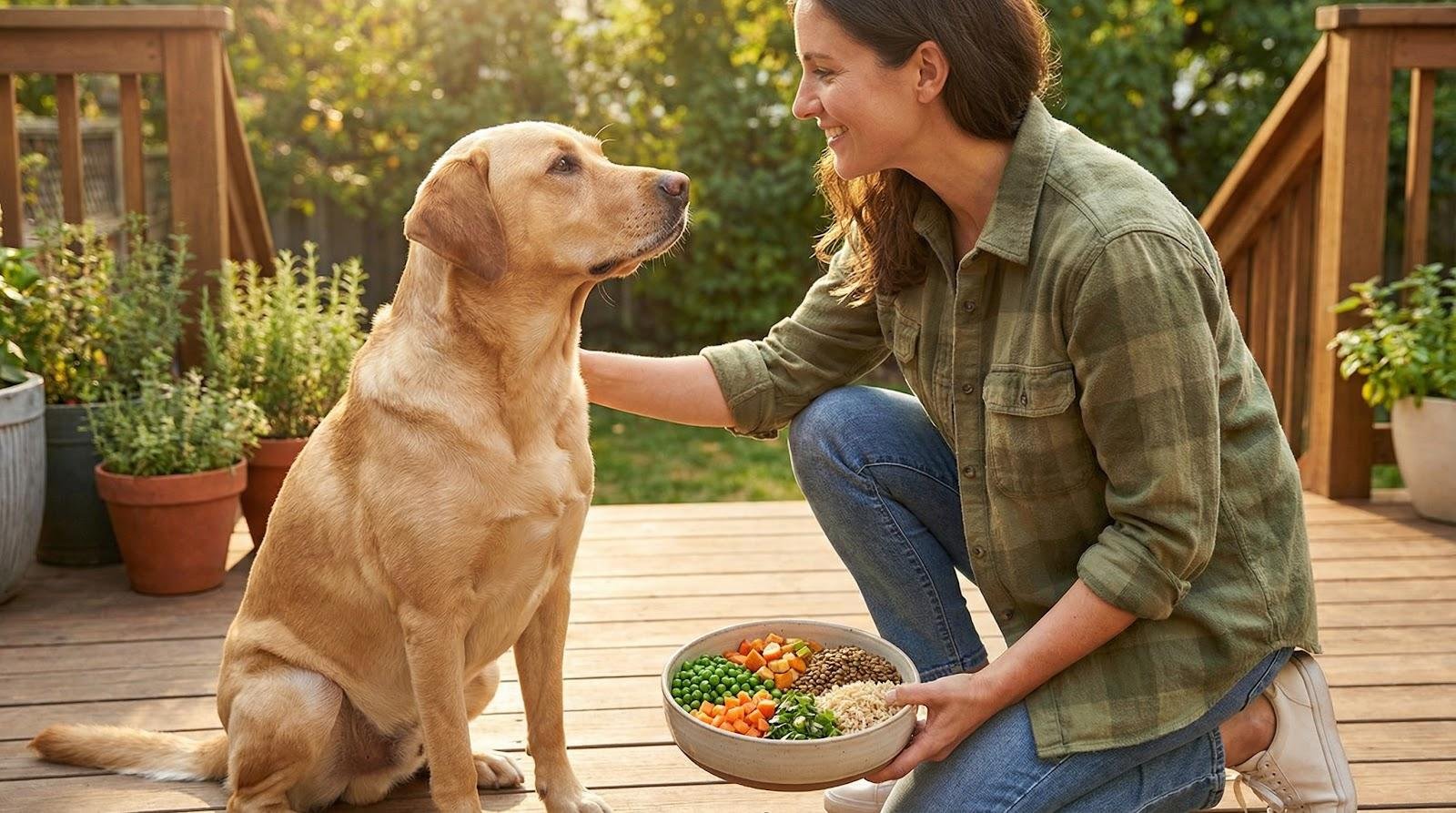
Big dogs eat a lot—and that meat footprint adds up quickly. So can a 90-pound Lab stay healthy on plant-based food? Absolutely. As of 2024, at least ten peer-reviewed studies show adult dogs maintain normal bloodwork and body condition on balanced vegan diets. In this guide, we’ll rank the five best large-breed formulas, share the scorecard we used, and flag the questions you should ask before switching. Ready to feed your gentle giant while shrinking vet bills and carbon paw-prints? Let’s dig in.
How we picked the winners
A balanced plant-based bowl can keep big dogs lean, strong, and eco-friendly
Nutrition isn’t guesswork, so we built a weighted scorecard and ran it against every plant-based food sold for dogs over 60 pounds.
First, each recipe had to clear two non-negotiables:
- Meet current AAFCO adult-maintenance profiles
- List a board-certified veterinary nutritionist on the formulation team or label
Foods that passed were scored on six research-backed factors:

Scorecard used to rank plant-based dog foods for large breeds, from complete nutrition to sustainability
- Complete nutritional profile: 40 percent
- Protein quality and level: 20 percent (minimum 22 percent dry matter)
- Large-breed safeguards: 15 percent (target calcium-to-phosphorus ratio 1:1 to 1.3:1; higher ratios link to skeletal stress in big dogs)
- Palatability or digestibility data: 10 percent (company feeding trial or independent study)
- Cost per 1,000 kcal: 10 percent
- Documented sustainability efforts: 5 percent
To set those weights, we pulled from more than a dozen peer-reviewed papers on vegan and human-grade diets, several of which are collected on Bramble’s Backed By Science page for pet owners.
Those studies report that carefully formulated vegan foods, including Bramble’s fresh recipes tested at the University of Illinois, match meat-based diets for protein digestibility while lowering blood cholesterol and improving markers of gut health.
That evidence is why the scorecard leans so heavily on complete nutrient profiles, independent digestibility data and veterinary nutritionist oversight instead of simply counting how much meat is on the label.
We also excluded any product that had a recall after January 1, 2022, listed protein under 22 percent, or relied on heavy wheat, corn, or soy fillers. The result is a concise list of five formulas that feed muscle, protect joints, and trim carbon.
1. Bramble fresh vegan dog food (best overall)
Picture Sunday meal prep, but for your dog. Bramble ships frozen, human-grade pouches that thaw overnight and vanish at dinner.

Bramble Fresh Vegan Dog Food Website: https://bramblepets.com/
Ingredient lists and feeding guides on Bramble Pets show each recipe is created by board-certified veterinary nutritionists and exceeds AAFCO adult profiles. On a dry-matter basis it delivers about 31 percent protein from lentils, peas, and chickpeas, plus flaxseed for omega-3s. The calcium-to-phosphorus ratio sits near 1.2 : 1, the window most orthopedic vets recommend for large-breed joint health.
Independent data back the promise. A 2023 University of Illinois study found two Bramble diets were more than 80 percent digestible and lowered dogs’ serum cholesterol compared with a meat control while improving gut metabolites.
Energy density averages 1,509 kcal/kg (about 690 kcal/lb). A 70-pound Lab that requires roughly 1,450 kcal per day would eat just over 2 pounds of Bramble. Current subscription pricing sits near eight to ten dollars per day for that size dog, and first-box discounts reduce the cost.
If you want fresh, university-tested nutrition with a smaller carbon paw print, Bramble leads the pack.
2. Wild Earth complete protein kibble (best for active big dogs)
When your Labrador clocks trail miles with you, protein quality matters. Wild Earth Performance Formula supplies 28 percent protein from fermented yeast and legumes, covering all ten essential canine amino acids without animal ingredients.

Yeast does more than pad the label. It adds a savory aroma dogs enjoy while cutting livestock emissions. Chickpeas, peas, and whole oats provide slow-burn carbohydrates and five percent fiber to keep muscles lean and digestion steady.
Energy density stays friendly for big athletes. The Performance line offers about 250 kilocalories per cup (3,380 kilocalories per kilogram), while Maintenance flavors land between 335 and 346 kilocalories per cup. A 70-pound dog burning around 1,600 kilocalories daily would eat roughly 4.5 to 5 cups, translating to 2.80 to 3.20 dollars per day at current 18-pound-bag pricing.
Cardiac extras come built-in: 0.1 percent taurine and 75 milligrams per kilogram L-carnitine, plus flaxseed for omega-3 fats. Calcium and phosphorus sit near 1.0 percent and 0.9 percent, producing a 1.1 to 1.2 ratio that supports joint health.
Wild Earth reports its plant proteins use far less land and water and up to 85 percent lower carbon dioxide equivalent per pound of protein than meat-based diets. With no recalls since launch and a 30-day happiness guarantee, it’s a solid pick for large dogs that play as hard as they look.
3. Halo Holistic Garden of Vegan (best for sensitive stomachs)
If your Great Dane leaves loose stools after dinner, Halo’s Garden of Vegan helps settle things down. Oats top the ingredient list, bringing soluble fiber that calms the gut lining, while chickpeas, peas, and potato protein raise the dry-matter protein to 27 percent.

Halo layers in three digestive aids: inulin prebiotic, 500 million colony-forming units per pound of Bacillus coagulans, and heat-stable postbiotics, so beneficial bacteria arrive alive and stay active. Many guardians notice firmer stool within a week.
The recipe is energy-dense at 427 kilocalories per cup (3,756 kilocalories per kilogram). A 60-pound dog that burns about 1,300 kilocalories a day would eat roughly 3.25 cups, stretching a 21-pound bag close to a month. Calcium and phosphorus sit near a 1.25 ratio, well inside large-breed targets.
Bags list around 84 to 90 dollars for 21 pounds (about 4 dollars per pound) on major retailers, with autoship programs trimming five to ten percent. For big dogs with sensitive bellies, Halo delivers complete nutrition without the mess.
4. Open Farm Kind Earth (most sustainable choice)
Feeding a 100-pound dog can challenge any eco goal. Kind Earth closes that gap by swapping meat for fava-bean and pumpkin proteins grown with far fewer resources. Open Farm’s life-cycle report says the recipe uses up to 86 percent less water and land than a similar chicken kibble.

Nutrition still meets big-dog needs: 22 percent protein, 14 percent fat, 4.5 percent fiber, and 354 kilocalories per cup (3,595 kilocalories per kilogram). Calcium and phosphorus land at 0.5 and 0.4 percent, a 1.25 ratio that supports joint integrity. A 65-pound dog eats about 3.5 cups per day.
Traceable lots, non-GMO grains, and a TerraCycle return program complete the sustainability story. Expect to pay about 73 dollars for a 20-pound bag (about 3.65 dollars per pound) online, with five percent autoship savings. For guardians who trek back-country miles and count carbon, Kind Earth offers balanced nutrition without the environmental baggage.
5. V-Dog Kinder Kibble (best value for multi-dog households)
Feeding two Saint Bernards can strain any budget, yet Kinder Kibble keeps costs in check without cutting corners. A 30-pound bag averages 85 to 90 dollars on Chewy (about 2.80 dollars per pound) and lasts an 80-pound dog roughly four weeks. Autoship programs trim another five to ten percent.

Nutrition stays solid: 24 percent protein, 9 percent fat, 5 percent fiber, and about 346 kilocalories per cup (3,540 kilocalories per kilogram). Peas, brown rice, and oatmeal provide most of the protein, while added taurine, L-carnitine, and DL-methionine support heart and amino-acid needs.
The lean macro profile helps large breeds stay trim. Three and a half cups feed a 65-pound couch companion, and active giants can scale portions without overshooting calories. Standard kibble size pairs well with slow-feeder bowls to curb gulping.
Value does not equal risk. V-Dog has been fully vegan since 2005 and reports zero recalls. For households juggling multiple big appetites, Kinder Kibble delivers complete nutrition at roughly half the cost of premium fresh or boutique kibbles.
Quick-scan comparison table
| Brand | Protein (DM) | Fat (DM) | Ca : P | kcal / cup* | Avg. price / lb† | Why pick it |
| Bramble (fresh) | 31 % | 20 % | 1.2 : 1 | N/A* (fresh food about 690 kcal / lb) | Subscription (eight to ten dollars per day for a 70-lb dog) | University-tested digestibility |
| Wild Earth (Performance) | 28 % | 10 % | 1.1 : 1 | 250 | $3.90 | High protein from eco-friendly yeast |
| Halo Garden of Vegan | 27 % | 15 % | 1.25 : 1 | 427 | $4.00 | Three-way probiotic and postbiotic blend |
| Open Farm Kind Earth | 22 % | 14 % | 1.25 : 1 | 354 | $3.65 | Lowest carbon footprint (company LCA) |
| V-Dog Kinder Kibble | 24 % | 9 % | 1.2 : 1 | 346 | $2.80 | Most calories per dollar |
*Kibble calories come from manufacturer feeding charts; fresh-food brands list kilocalories per pound instead of per cup.
†Prices reflect regular 18- to 30-pound bags on Chewy or brand sites, 2025 USD; autoship discounts trim about five to ten percent.
All five cluster around the 1.1 to 1.3 calcium-to-phosphorus ratio large-breed veterinarians recommend, so you can focus on protein, calories, budget, or sustainability when choosing.
Frequently asked questions
Can a large-breed dog build muscle on a plant-based diet?
Yes, as long as the formula is complete and rich in quality protein. A 2023 University of Illinois study showed that dogs eating Bramble’s vegan fresh food digested protein as efficiently as those on a chicken diet and kept lean body mass over four weeks.
Check the label for three items:
- Protein: at least 22 percent as fed (about 25 percent dry matter) to meet or exceed the AAFCO adult minimum
- Amino-acid backups: taurine, methionine, and lysine listed in the ingredient deck
- Digestibility clues: reference to a feeding trial or published study
All five foods in our list clear these bars. If your dog pulls a sled or runs trails, begin with the higher-protein Wild Earth or Halo and adjust portions until ribs sit under a thin fat cover—body condition tells the truth better than scoop count.
What about taurine and dilated cardiomyopathy?
Taurine deficiency links to some cases of dilated cardiomyopathy (DCM), especially in large breeds. Aim for taurine at or above 0.10 percent dry matter (about 1,000 milligrams per kilogram), plus enough sulfur amino acids for your dog to make more on its own, according to ongoing FDA reviews.
Every food in our top five adds taurine, methionine, and cysteine, and several include oats or barley to widen amino-acid sources beyond legumes. The FDA’s inquiry, launched in 2018 and updated in February 2023, found no consistent taurine shortage across grain-free products, yet research continues on how ingredient mixes affect absorption.
Best practice: book yearly wellness bloodwork and ask your vet to include a whole-blood taurine test every two to three years for breeds with higher DCM risk such as Doberman Pinscher and Great Dane. With that simple check, thousands of large dogs have thrived for years on fortified plant-based diets.
How do I switch my big dog without digestive drama?
The same rules apply whether you move from beef kibble to vegan kibble or to fresh food: go slowly and watch the stool. Veterinary nutritionists usually suggest a seven- to fourteen-day taper:
| Day | New food | Old food |
| 1–3 | 25 percent | 75 percent |
| 4–6 | 50 percent | 50 percent |
| 7–9 | 75 percent | 25 percent |
| 10–14 | 100 percent | — |
Large breeds have longer intestinal tracts, so give the microbiome extra help:
- Add one tablespoon of plain canned pumpkin per 50 pounds of body weight
- Warm water or low-sodium vegetable broth boosts aroma for picky eaters
- A canine probiotic with at least one billion colony-forming units can shorten the adjustment window, according to PetMD veterinarians
Expect slightly bulkier yet well-formed stools—fiber is doing its job. If you see loose stool, hold the current ratio for two more days before advancing. Most dogs settle by week two, and many guardians notice less gas than on meat diets.
Conclusion
Balanced vegan diets can keep large-breed dogs lean, strong, and energetic while trimming household carbon footprints. Use the scorecard above to match protein, calories, and budget to your dog’s needs, transition gradually, and monitor body condition and annual bloodwork. With these steps, your gentle giant can thrive on plants for years to come.





One thought on “5 Best Plant-Based Dog Foods for Large Breeds”