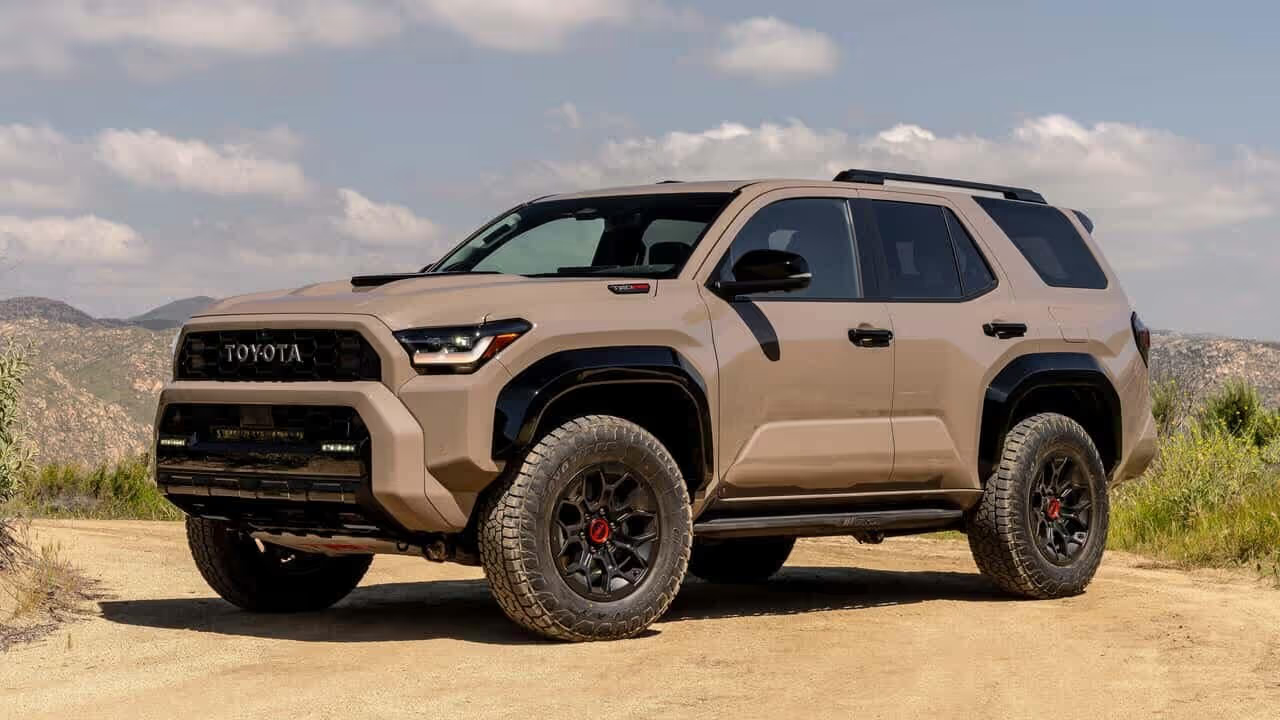
“Women-friendly” is less about pink gear and more about feeling in control. In a 4Runner, that starts with how it fits the body: a driving position that keeps feet comfortable on the pedals during long days, good visibility over the bonnet and out the mirrors, and controls that can be reached easily even when tired or layered up. When the seat, steering wheel, and sightlines feel right, rough forest roads and night drives turn from “stressful” into “manageable”.
Safety is the next step. It involves becoming familiar with locking and unlocking routines, having daily necessities close at hand, and, if you have heavy equipment, making sure that it is tightly secured so that it does not become a projectile in case of a gravel road or an emergency stop. A headlamp in the door pocket, a charged phone up front, and a clear exit way are small things that matter just as much as any lift kit if you are camping solo or going away at dawn.
Finally, a women-friendly rig reduces mental load. Simple systems for where things live, how the car is packed, and how it is reset after each trip cut down on constant decision-making. The goal is a 4Runner that feels like a calm, predictable base where headspace is saved for the hunt, hike, or paddle, not for endlessly hunting for gear.
Building a Solid Base: Layout, Safety and Essentials
Before adding roof racks or fancy accessories, it helps to think of the 4Runner’s interior as a tiny, moving cabin. A clear layout – sometimes even built around a modular drawer and sleeping setup like the Camping System for Toyota 4Runner 4th/5th Gen – gives every item a home and makes it easier to grab what matters without digging through piles of bags.
Up front, the driver and passenger seats become the “command centre”. This is where maps or the nav app, radio or inReach, snacks, water, tissues, sunglasses and basic first-aid live. If there’s a dog or kids along, this is also where leads, wipes and a spare jumper sit within easy reach. The idea is that the person in the front row can manage most small problems without leaving the seat.
In the second row, a simple strategy goes a long way. Sometimes all seats stay up for friends or family. On solo or hunting trips, one side can stay folded flat for packs, gun cases or bows, while the other remains ready for a passenger or dog. Knowing in advance which side does what stops last-minute reshuffles in a car park.
Drawers and Advanced Storage: Turning the 4Runner into a Gear HQ
Loose tubs and random duffels work for one quick trip, but over a season they turn the back of a 4Runner into a rummage bin. Drawer systems change that. With a pull of a handle, ammo, optics, gloves, rain gear and camp tools are laid out in shallow layers instead of buried at the bottom of a tote. It is the difference between “I know it’s in here somewhere” and “I can grab it in ten seconds in the dark.”
A smart setup usually splits the boot into zones: one side for “hunt mode” (packs, boots, weapon cases, game bags), the other for “camp mode” (kitchen kit, food, chairs, lanterns). Purpose-built systems like the Advanced Storage for Toyota 4Runner make that zoning easier by giving each category its own drawer or bay. Heavy items sit low and strapped in, so rough forest tracks and emergency stops feel less risky.
Over time, a “store once, grab-and-go” philosophy pays off. A permanent base kit can stay in the drawers all season, so last-minute Friday departures are just clothes, food and tags. Everything else is already on board.
Sleep, Cook, Clean: Making the 4Runner a Comfortable Weekend Basecamp
Turning a 4Runner into a weekend basecamp starts with a realistic sleep plan. A simple platform over the folded rear seats and part of the cargo area gives a flat, predictable surface for a mattress. Solo, that can mean sleeping on one side with gear on the other; with a partner, kids, or a dog, it is about agreeing who gets which slice of the space. Warm bedding, a small privacy curtain, and a beanie or buff often do more for comfort than any big accessory.
Behind the tailgate, a compact “kitchen lane” keeps mornings and late dinners easy. Some women swear by a one-drawer kitchen with a fixed spot for stove, coffee kit, and basic cookware; others prefer a sturdy tote box that can slide out onto a table. What matters is knowing exactly where the burner, lighter, knife, and spoon live when hands are cold and light is fading. A cooler or fridge sits within arm’s reach, not buried behind pack frames.
Mud and mess are part of the deal, so the goal is to keep them contained. Rubber mats, a small bin or dry bag for bloody or soaking layers, and a “dirty corner” for boots or waders stop the whole rig from feeling grim by day two. A simple “morning after” routine – coffee, quick wipe-down, bedding rolled, meat or gear packed in its zone – makes rolling out less overwhelming, even after a big day on the hill.
Packing Routines and Real-World Tips from Women in the Field
The best 4Runner setups are less about fancy gear and more about repeatable routines. Many experienced women keep a short pre-trip checklist taped inside a drawer or saved on their phone. It often includes non-negotiables like:
- Headlamp with fresh batteries
- Spare gloves, and socks
- Wipes, hand sanitiser and basic toiletries
- Power bank and charging leads
- Extra mid-layer or puffy
Packing order matters as much as the list. Items needed in the dark or in bad weather stay closest to the tailgate; things only used at camp can live deeper in a drawer. After a long day, no one wants to unload half the truck just to find a toothbrush or clean leggings.
Solo trips and group outings call for slightly different habits. With kids or friends on board, snacks, water, and extra layers move higher up the list, and there is usually more focus on comfort items like camp chairs and a bigger stove. Alone, many women strip back to essentials to keep the rig lighter and less cluttered.
In the end, a 4Runner does not need to look tactical or extreme to be capable. With thoughtful storage, a simple sleep setup, and a few dialled-in routines, it becomes a women-friendly adventure rig that feels like a small, mobile home base – ready for day hunts, quick overnights, and long weekends without a second thought.