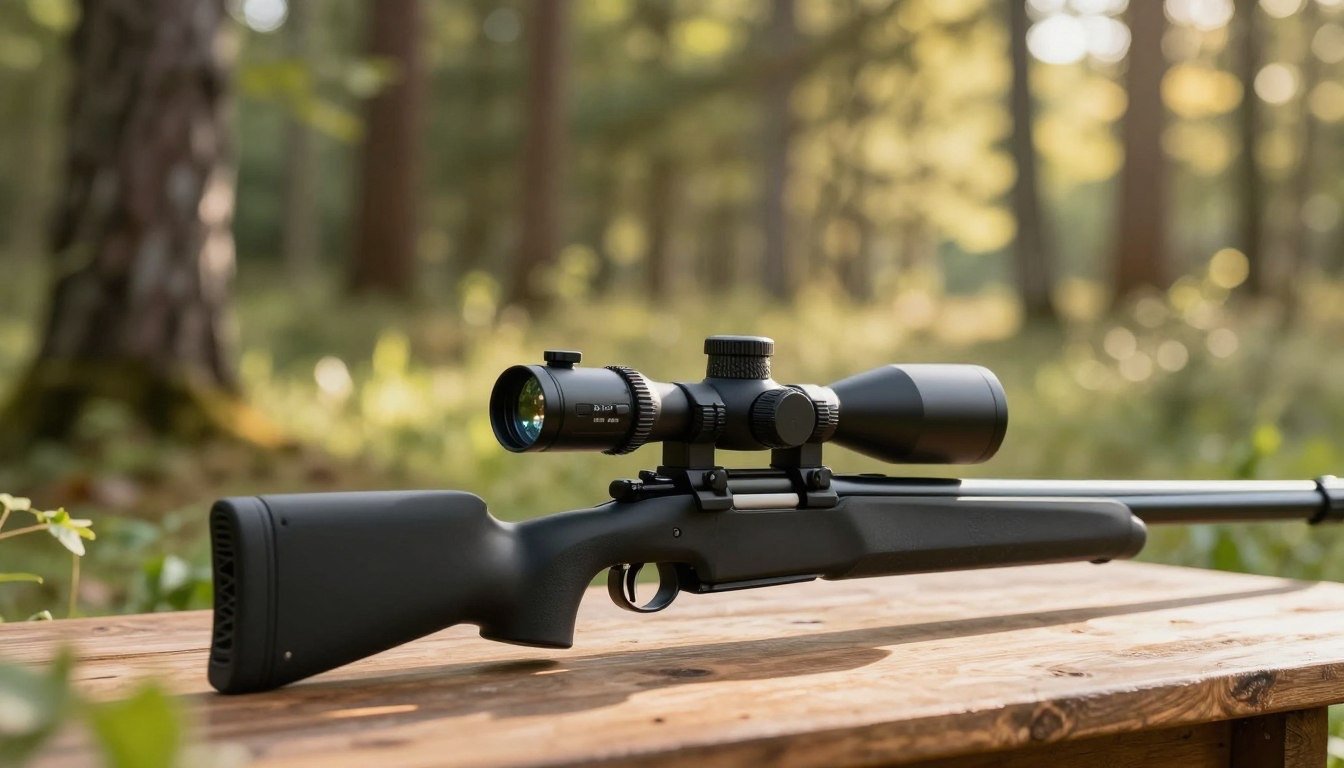
Choosing the right rifle scope for hunting can be a daunting task, especially for newbie female hunters. With so many options available, it’s hard to know where to start.
Selecting the ideal budget rifle scope requires considering several factors, including the hunter’s experience level, the type of hunting, and the terrain.
A good rifle scope for hunting can greatly enhance the hunting experience, providing a clearer and more accurate shot. For new hunters, it’s essential to find a scope that is both reliable and easy to use.
Key Takeaways
- Understand your hunting needs before choosing a scope.
- Consider the terrain and the type of hunting you’ll be doing.
- Look for a scope that is durable and can withstand various weather conditions.
- A good scope can enhance your hunting experience.
- New hunters should prioritize ease of use and reliability.
Understanding Rifle Scope Basics
Before heading into the woods, it’s vital for novice hunters to learn about rifle scopes and their importance in hunting. A rifle scope is more than just an accessory; it’s a critical tool that enhances accuracy, range, and overall hunting experience.
What Is a Rifle Scope and Why You Need One
A rifle scope is an optical instrument that is mounted on a rifle to help the hunter aim more accurately at a target. It magnifies the target, making it easier to see and hit, especially at longer distances. For new hunters, a rifle scope can significantly improve their hunting success by providing a clearer view of their surroundings and the target.
The primary function of a rifle scope is to enhance the hunter’s ability to identify and engage targets effectively. It achieves this through magnification and by providing a reticle (or crosshair) that helps in aiming.
Key Terminology Every New Hunter Should Know
Understanding the terminology associated with rifle scopes is essential for making informed decisions when selecting a scope. Key terms include magnification power, objective lens size, and reticle type.
- Magnification Power: This refers to how much the scope can magnify the target. It’s usually represented by a number (e.g., 3-9x) indicating the range of magnification.
- Objective Lens Size: The size of the objective lens affects how much light the scope can gather. A larger lens allows more light in, making the image brighter.
- Reticle Type: The reticle, or reticule, is the pattern of lines or dots in the scope that help aim. Different reticles are suited for different types of hunting and shooting conditions.
Determining Your Hunting Style and Needs
Before choosing a rifle scope, it’s essential to consider your hunting habits and environment. Understanding your hunting style is crucial for selecting the right equipment that meets your specific needs.
Types of Game You’ll Be Hunting
The type of game you’re hunting significantly influences the kind of rifle scope you should choose. Different game requires different levels of precision and shooting distances. For instance, if you’re hunting small game like rabbits or birds, you may not need a high-powered scope. On the other hand, if you’re after larger game like deer or elk, you’ll need a scope that can handle longer shooting distances.
Here’s a breakdown of common game types and their typical scope requirements:
| Game Type | Typical Shooting Distance | Recommended Scope Magnification |
| Small Game (Rabbits, Birds) | 0-100 yards | 1-4x |
| Medium Game (Deer) | 100-300 yards | 3-9x |
| Large Game (Elk, Moose) | 300-500 yards | 4-12x or higher |
Typical Shooting Distances
Understanding the typical shooting distances for your hunting environment is vital. This knowledge helps you choose a scope with the appropriate magnification power. For example, if you mostly hunt in dense forests where shooting distances are shorter, a lower magnification scope might suffice. Conversely, if you hunt in open fields or mountains, you’ll need a scope that can handle longer ranges.
Hunting Environments and Conditions
The environment and conditions you hunt in also play a significant role in choosing the right scope. Factors such as weather, lighting, and terrain can affect your scope’s performance. For instance, if you often hunt in low-light conditions, a scope with a larger objective lens can be beneficial as it allows more light in.
By considering your hunting style, the type of game you’re after, typical shooting distances, and the environments you hunt in, you can make an informed decision when selecting your first rifle scope. This thoughtful approach ensures that your equipment is tailored to your needs, enhancing your hunting experience.
Setting a Realistic Budget for Your First Scope
When it comes to buying your first rifle scope, setting a realistic budget is key to finding the right balance between quality and affordability. As a new hunter, it’s essential to understand that the price of a rifle scope can vary widely based on several factors, including the brand, features, and quality of the optics.
What to Expect in Different Price Ranges
Rifle scopes can range from under $100 to over $1,000. Here’s a breakdown of what you can expect in different price ranges:
- Under $150: Entry-level scopes that offer basic features and decent quality. These are great for beginners.
- $150-$300: Mid-range scopes that provide better optical quality, more features, and increased durability.
- Over $300: High-end scopes with superior optics, advanced features, and robust construction.
Where You Can and Cannot Compromise
When setting your budget, it’s crucial to know where you can compromise and where you cannot. For instance, you might be able to save money on the brand name or certain features, but compromising on the quality of the glass or the durability of the scope could negatively impact your hunting experience.
Key areas not to compromise on:
- Optical Quality: A clear and bright image is crucial for identifying targets.
- Durability: Your scope should withstand various environmental conditions.
- Adjustment Clarity: Easy and precise adjustments are vital for accuracy.
By understanding your budget and what it can afford, you can make an informed decision that meets your hunting needs without breaking the bank.
Essential Features to Look for in a Budget Rifle Scope
Choosing the right rifle scope on a budget requires understanding the essential features that matter most. When it comes to selecting a budget rifle scope, several factors can significantly impact your hunting experience.
Magnification Power
The magnification power of a rifle scope determines how much it can enlarge the target. For hunting purposes, a variable magnification scope (e.g., 3-9x or 4-12x) is often recommended as it offers flexibility for different shooting distances. Higher magnification isn’t always better; it depends on the typical shooting distances you encounter during hunts.
Objective Lens Size
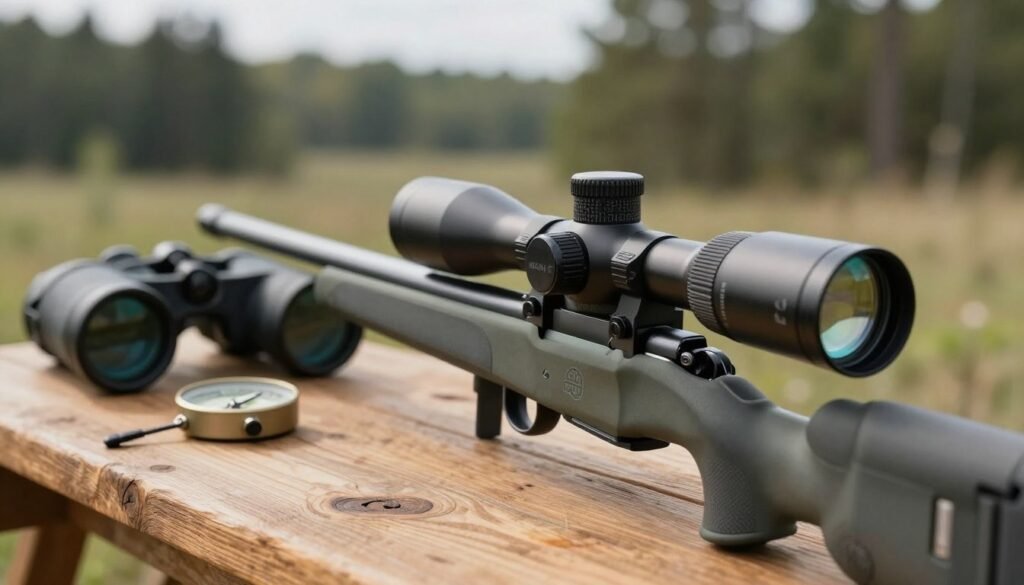
The objective lens size affects how much light the scope can gather, with larger lenses allowing more light and providing a brighter image. However, larger lenses also make the scope heavier and more expensive. For a budget scope, a 40mm objective lens is often a good balance between light gathering and portability.
Reticle Types and Their Applications
The reticle, or crosshair, is a critical component of a rifle scope. Different reticle types serve various purposes. For example, a duplex reticle is simple and effective for general hunting, while a BDC (Bullet Drop Compensation) reticle can be more useful for longer-range shooting. Understanding your typical shooting conditions will help you choose the most appropriate reticle.
Eye Relief Considerations for Female Shooters
Eye relief is the distance between the scope’s eyepiece and the point where the image is fully visible. For female shooters, or anyone with a shorter stock fit, adequate eye relief is crucial to avoid scope eye injuries. A minimum of 3.5 inches of eye relief is recommended, but more is always better, especially when wearing glasses.
By focusing on these essential features—magnification power, objective lens size, reticle type, and eye relief—you can find a budget rifle scope that meets your hunting needs without breaking the bank.
Understanding Scope Mounting and Compatibility
Compatibility between the rifle scope and the rifle itself is key to a hunter’s success, making scope mounting a topic of great importance. When it comes to mounting a rifle scope, newbie female hunters often face a myriad of choices and technical considerations.
Different Mounting Systems Explained
Rifle scopes can be mounted using various systems, each with its own advantages. The most common include:
- Picatinny Rails: These are widely used for their durability and versatility, allowing for easy adjustment and secure mounting.
- Weaver Rails: Similar to Picatinny rails but with slightly different dimensions, Weaver rails are another popular choice for scope mounting.
- Scope Rings: These directly attach to the rifle and hold the scope in place, offering a secure and stable platform for shooting.
Understanding the differences between these mounting systems is crucial for selecting the right scope for your rifle.
Ensuring Your Scope Fits Your Rifle
To ensure compatibility, it’s essential to check the specifications of both your rifle and the scope you’re interested in. Here are some key factors to consider:
| Compatibility Factor | Description | Importance Level |
| Rifle Rail Type | Ensure the rifle’s rail type matches the scope’s mounting requirements. | High |
| Scope Ring Size | The diameter of the scope rings should match the tube diameter of the scope. | High |
| Mounting System | Choose a mounting system that is compatible with both the rifle and the scope. | High |
By carefully considering these factors, newbie female hunters can ensure their rifle scope is properly mounted and compatible with their rifle, enhancing their hunting experience.
Top Budget Rifle Scope Options for Beginners
New hunters can find excellent budget rifle scope options that provide clarity and precision without breaking the bank. When it comes to selecting the right scope, beginners have a variety of choices across different price ranges.
Entry-Level Scopes Under $150
For those on a tight budget, entry-level scopes under $150 offer a great starting point. These scopes may not have all the advanced features of their pricier counterparts, but they still provide good quality and functionality.
- Vortex Optics Crossfire II: Known for its clarity and durability, this scope is a popular choice among beginners.
- Bushnell Banner: Offers good optical quality and a simple, intuitive design.
Mid-Range Options ($150-$300)
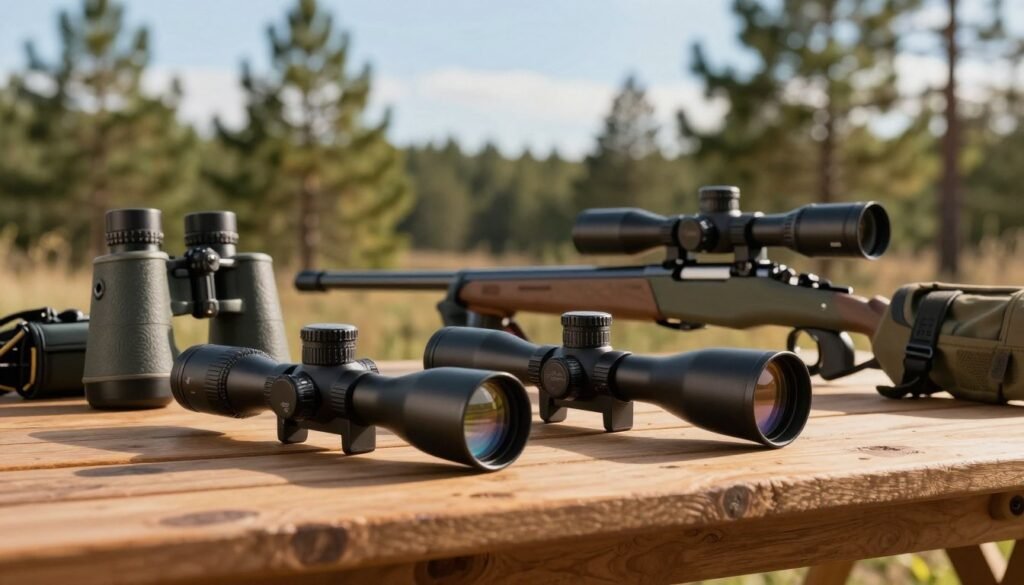
Mid-range scopes offer a step up in quality and features. These scopes are ideal for hunters who want better performance without the hefty price tag of high-end models.
| Scope Model | Magnification | Objective Lens Size | Price |
| Leupold VX-Freedom | 3-9x | 40mm | $250 |
| Nikon PROSTAFF | 3-9x | 40mm | $220 |
Best Value for Money Picks
Some scopes stand out for offering the best value for money, balancing price and performance effectively.
- Primary Arms SLx 1-4x: Offers versatility with its variable magnification.
- Sig Sauer Romeo 4T: Provides excellent optical quality and durability.
When choosing a budget rifle scope, it’s essential to consider your specific hunting needs and preferences. By exploring these options, beginners can find a scope that fits their budget and enhances their hunting experience.
Ergonomics and Physical Considerations for Female Hunters
For female hunters, selecting the right rifle scope involves more than just optics; it’s about ergonomics and comfort. A well-chosen scope can enhance the hunting experience, making it more enjoyable and effective. “A comfortable fit is crucial for accuracy and prolonged use,” notes hunting expert Sarah Jenkins.
Weight and Balance
The weight and balance of a rifle scope are critical factors, especially for female hunters who may prefer lighter equipment. A scope that is too heavy can throw off the balance of the rifle, making it harder to hold steady. Look for scopes made from durable, lightweight materials like aluminum or titanium. These materials offer a good balance between weight and strength.
Adjustability Features
Adjustability is another key consideration. A scope with adjustable eyepiece and turrets can be tailored to fit individual preferences, making it easier to use. For female hunters, scopes with easily accessible adjustments are particularly beneficial.
“The best scopes are those that offer a combination of adjustability and ease of use,” says Jane Doe, a seasoned hunter. “Being able to quickly adjust for windage and elevation can make a significant difference in the field.”
Scope Size and Rifle Fit
The size of the scope and how it fits on the rifle are also important. A scope that is too large or too small for the rifle can be uncomfortable to use and may affect accuracy. Ensure that the scope rings are compatible with the rifle’s diameter and that the scope’s length is suitable for your hunting style.
- Check the scope’s dimensions and weight before purchasing.
- Ensure the scope rings are compatible with your rifle.
- Consider the length of the scope and how it affects handling.
By focusing on ergonomics and physical considerations, female hunters can find a rifle scope that enhances their hunting experience. It’s about finding a balance between functionality, comfort, and budget.
How to Test and Evaluate a Scope Before Purchasing
Before investing in a rifle scope, it’s crucial to test and evaluate it to ensure it meets your hunting needs. A thorough evaluation helps in making an informed decision, ensuring that the scope performs well under various conditions.
In-Store Testing Tips
When testing a rifle scope in-store, start by examining its build quality and ergonomics. Hold the scope, feel its weight, and adjust the controls to get a sense of its build quality. Check if the adjustments are smooth and if the reticle is clear and well-illuminated.
It’s also essential to check the scope’s compatibility with your rifle. Ensure that the scope rings or mounts fit your rifle’s rail or receiver. Some stores may have demo models or loaner scopes that you can mount on your rifle to test.
Questions to Ask Sales Representatives
Engaging with sales representatives can provide valuable insights into the scope’s features and performance. Ask about the scope’s magnification power, objective lens size, and reticle type. Inquire about the warranty and after-sales service offered by the manufacturer.
Some key questions to ask include: “Can I test this scope with my rifle?”, “What is the warranty period for this scope?”, and “Are there any additional costs for mounting or sighting-in the scope?”
Online Research Strategies
In addition to in-store testing, conducting thorough online research can help you evaluate a rifle scope. Read reviews from other hunters and shooters to understand the scope’s real-world performance. Look for reviews on multiple platforms to get a well-rounded view.
Check the manufacturer’s website for detailed specifications and features. Compare different models and brands to identify the best value for your money. Utilize online forums and discussion groups where hunters share their experiences with various rifle scopes.
By combining in-store testing with online research, you can make a well-informed decision when purchasing your first rifle scope.
Scope Maintenance on a Budget
Keeping your rifle scope in top condition is easier than you think, even on a budget. Proper maintenance not only extends the life of your scope but also ensures it continues to perform optimally. In this section, we’ll explore how to maintain your rifle scope without breaking the bank.
Essential Cleaning Supplies
To keep your rifle scope clean and functional, you’ll need a few essential supplies. These include:
- Soft, dry cloth: For wiping down the scope’s exterior.
- Lens cleaning solution: Specifically designed for optics.
- Microfiber cloth: For cleaning lenses without scratching.
- Compressed air: For removing dust and debris from hard-to-reach areas.
Investing in these basic cleaning supplies will help you maintain your scope’s clarity and functionality. Remember, the key is gentle cleaning to avoid damaging the optics.
Routine Maintenance Schedule
Establishing a routine maintenance schedule is crucial for the longevity of your rifle scope. Here’s a simple schedule to follow:
- After each use: Inspect the scope for dirt, moisture, or damage. Clean the exterior with a soft, dry cloth.
- Monthly: Perform a deeper clean, including the lenses and internal components if necessary.
- Before storage: Clean and dry the scope thoroughly, then store it in a protective case.
Storage and Protection Tips
Proper storage is vital for protecting your rifle scope when not in use. Consider the following tips:
- Store your scope in a hardcase or padded bag to protect it from impacts.
- Keep the scope away from extreme temperatures and high humidity.
- Use lens covers or caps to protect the lenses from dust and scratches.
By following these maintenance and storage tips, you can ensure your rifle scope remains in excellent condition, providing you with clear, accurate views during your hunting adventures, all while staying within your budget.
Common Mistakes Newbie Hunters Make When Choosing Scopes
The process of choosing a rifle scope can be overwhelming for beginners, but knowing the common errors can help in making an informed decision. New hunters often encounter several pitfalls when selecting their first scope, mistakes that can significantly impact their hunting experience.
Overspending on Unnecessary Features
One of the most common mistakes is overspending on features that are not necessary for the type of hunting they will be doing. Many new hunters believe that a higher price tag automatically means a better product. However, this is not always the case. It’s essential to identify the features that are truly important for your hunting needs and budget accordingly.
For instance, if you’re primarily hunting in dense forests, a scope with high magnification might not be as crucial as one with a wider field of view. Prioritizing features based on your hunting style can help in avoiding unnecessary expenses.
Underestimating the Importance of Quality Glass
The quality of the glass in your rifle scope is paramount. It directly affects the clarity, light transmission, and overall performance of the scope. New hunters often underestimate the importance of quality glass, opting for cheaper options that may not provide the best image quality.
Investing in a scope with high-quality glass can make a significant difference in your hunting experience. Look for scopes with fully multi-coated lenses, as they provide better light transmission and clearer images.
Improper Mounting and Setup
Even with the right scope, improper mounting and setup can lead to poor performance and frustration. New hunters often struggle with mounting the scope correctly, ensuring it’s level, and adjusting it properly for their rifle.
It’s crucial to follow the manufacturer’s instructions for mounting and to ensure that the scope is properly aligned with the rifle. Investing time in properly setting up your scope can greatly enhance your shooting accuracy and overall hunting experience.
| Common Mistake | Description | Solution |
| Overspending | Spending too much on unnecessary features | Prioritize features based on hunting needs |
| Poor Glass Quality | Underestimating the importance of quality glass | Invest in scopes with fully multi-coated lenses |
| Improper Mounting | Mounting the scope incorrectly | Follow manufacturer’s instructions for mounting |
Conclusion
Choosing the right rifle scope on a budget can be a daunting task, especially for newbie female hunters. However, by understanding the basics of rifle scopes, determining your hunting style and needs, and setting a realistic budget, you can make an informed decision.
When selecting a budget rifle scope, consider the essential features such as magnification power, objective lens size, and reticle types. Ensure the scope is compatible with your rifle and meets your physical needs, including eye relief and adjustability.
By taking your time and considering these factors, you can find a quality budget rifle scope that enhances your hunting experience. Brands like Nikon, Bushnell, and Leupold offer reliable options. Remember, choosing the right rifle scope is crucial for a successful hunt, and with the right guidance, you can make a confident purchase.
FAQ
What is a budget rifle scope?
A budget rifle scope is an affordable optic designed for rifles, typically priced lower than premium models, making it accessible to new hunters or those on a limited budget.
How do I choose the right magnification power for my rifle scope?
To choose the right magnification power, consider the typical shooting distances and the type of game you’ll be hunting. Higher magnification is suitable for longer ranges, while lower magnification is better for closer shots.
What is the ideal objective lens size for a budget rifle scope?
The ideal objective lens size depends on the lighting conditions you’ll be hunting in. A larger objective lens (around 40-50mm) allows more light in, making it suitable for low-light conditions, while a smaller lens is sufficient for bright environments.
What reticle type is best for hunting?
The best reticle type for hunting depends on personal preference and the type of hunting. Duplex and BDC reticles are popular choices for their simplicity and effectiveness in various hunting scenarios.
How important is eye relief when choosing a rifle scope?
Eye relief is crucial, especially for female shooters or those who wear glasses. A scope with sufficient eye relief (around 3-4 inches) ensures a comfortable shooting experience and prevents eye strain.
Can I mount a rifle scope on any rifle?
Not all rifle scopes are compatible with every rifle. Ensure the scope’s mounting system matches your rifle’s rail or receiver, and consider factors like scope ring size and type.
How do I maintain my rifle scope on a budget?
To maintain your rifle scope on a budget, use essential cleaning supplies like a soft cloth, lens cleaning solution, and a brush. Regularly clean the lenses, and store the scope in a protective case when not in use.
What are some common mistakes to avoid when choosing a budget rifle scope?
Common mistakes include overspending on unnecessary features, underestimating the importance of quality glass, and improper mounting and setup. Be aware of these pitfalls to make an informed decision.
Are there any specific features I should look for in a budget rifle scope as a female hunter?
As a female hunter, consider features like adjustability, eye relief, and weight. Look for scopes with adjustable turrets and a comfortable eye relief to ensure a smooth shooting experience.
Can I test a rifle scope before buying?
Yes, you can test a rifle scope before buying by visiting a store that allows in-store testing. Ask sales representatives about the scope’s features, and check online reviews to make an informed decision.


One thought on “How Newbie Female Hunters Can Choose Their First Scope on a Budget?”