Processing a deer can feel overwhelming the first time you do it.
After the excitement of a successful hunt, many hunters suddenly find themselves asking questions like:
What cut is this piece of meat?
Which cuts should become steaks?
What parts are best for grinding or slow cooking?
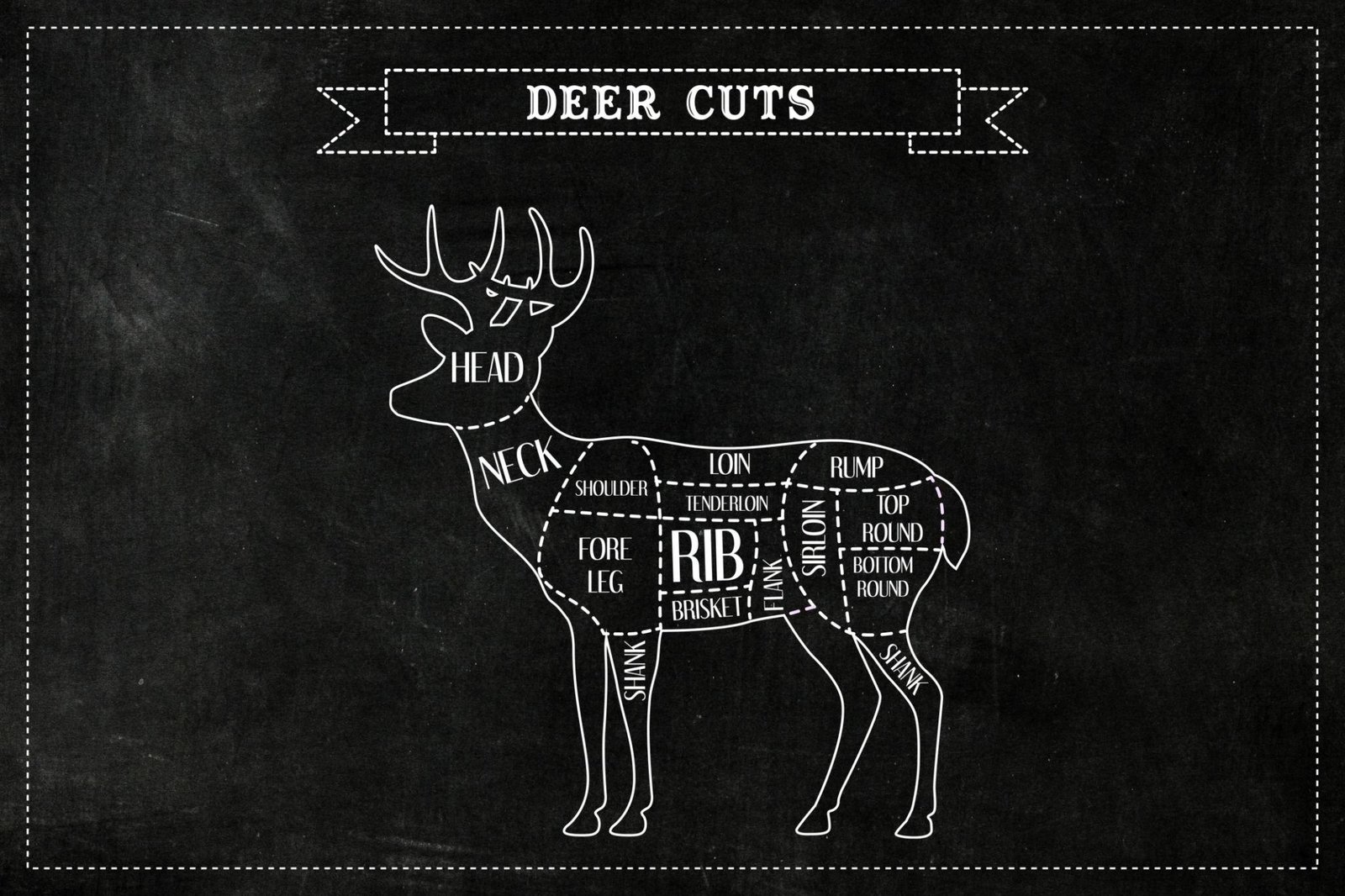
A venison cuts chart makes the process much easier. By understanding how a deer breaks down into different sections, you can process your harvest efficiently and ensure every part of the animal is used properly.
Each section of a deer produces meat with different textures and cooking uses. Some cuts are naturally tender and perfect for quick cooking, while others benefit from slow cooking or grinding.
This guide explains the most common venison cuts and how to prepare them so you can make the most of every deer.
The Main Sections of a Venison Cuts Chart
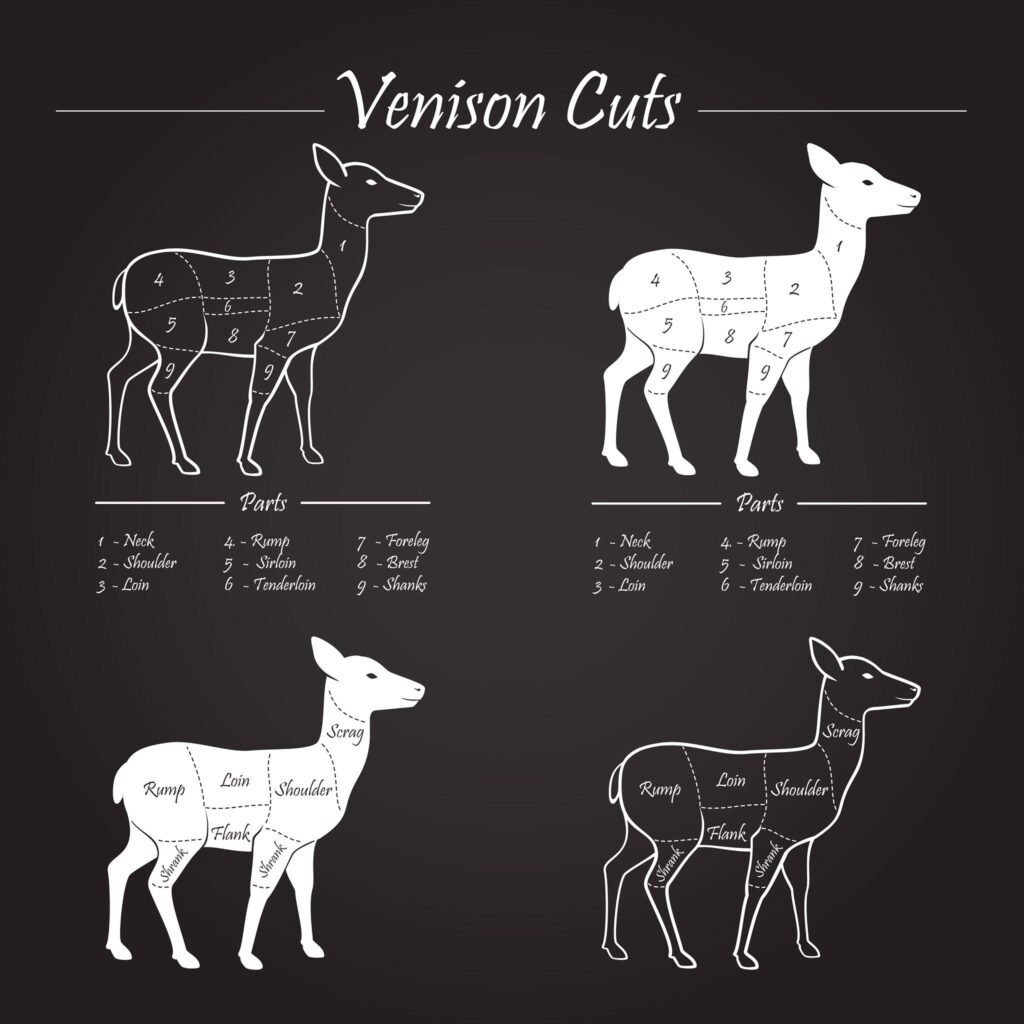
Most venison cuts charts divide a deer into several primary sections. Each section contains muscles with different characteristics based on how much the deer used that part of its body.
The main venison sections include:
• Backstrap (loin)
• Tenderloin
• Hindquarters
• Shoulder
• Neck
• Ribs and flank
• Shanks
Understanding these major sections helps simplify deer processing and cooking.
Backstrap (Loin)
The backstrap is widely considered the most desirable cut of venison.
It runs along both sides of the deer’s spine from the shoulders to the hips.
Because these muscles do relatively little work, the meat remains extremely tender.
Backstrap is commonly cut into:
• Venison steaks
• Medallions
• Roasts
• Butterfly steaks
Cooking methods for backstrap usually involve quick, high-heat methods such as grilling, pan-searing, or roasting.
Overcooking backstrap can quickly dry it out, so many hunters prefer cooking it to medium-rare or medium.
Tenderloin
The tenderloin is the smallest but most tender cut of venison.
These muscles sit inside the body cavity along the spine just beneath the backstrap.
Because the tenderloin muscles are used very little, they are incredibly soft.
Tenderloins are typically:
• Small and narrow
• Extremely tender
• Best cooked quickly
Many hunters remove tenderloins immediately during field dressing to prevent damage or spoilage.
They are often pan-seared or grilled whole.
Hindquarters
The hindquarters provide the largest amount of meat from a deer.
These muscles power the deer’s movement, which makes them slightly firmer than backstrap but still very versatile.
Hindquarters can be separated into several cuts, including:
• Top round
• Bottom round
• Eye of round
• Sirloin tip
These cuts can be used for:
• Venison steaks
• Roasts
• Jerky
• Stir fry meat
• Grinding
Because hindquarter muscles vary in tenderness, some cuts work best as steaks while others perform better as slow-cooked roasts.
Shoulder (Front Quarter)
The shoulder contains a large amount of meat, but it also contains more connective tissue than the hindquarters.
This section works harder during the deer’s daily movement, making the meat slightly tougher.
Shoulder meat is commonly used for:
• Ground venison
• Stew meat
• Slow-cooked roasts
• Barbecue
Slow cooking methods such as braising or smoking help break down connective tissue and produce tender results.
Many hunters grind a large portion of shoulder meat for burgers or sausage.
Neck Meat
The neck is one of the most underrated cuts of venison.
Because these muscles are used frequently by the deer, the meat contains more connective tissue but also incredible flavor.
Neck meat works well for:
• Slow-cooked roasts
• Barbacoa-style dishes
• Stews
• Shredded venison
Cooking neck meat low and slow allows the connective tissue to break down and creates tender, flavorful meals.
Rib Meat and Flank
Rib meat and flank sections contain thinner cuts that are sometimes overlooked during processing.
These sections can be used for:
• Grinding into burger
• Making venison sausage
• Slow-cooking recipes
Some hunters also trim rib meat carefully for stir fry or fajita-style dishes.
Because these cuts contain more fat and connective tissue, grinding them into burger is a common choice.
Shanks
The shanks come from the lower portions of the deer’s legs.
These muscles are used constantly while the animal moves, making them firm and rich in connective tissue.
However, when cooked properly, shanks produce incredibly flavorful meat.
Popular shank dishes include:
• Braised venison shanks
• Slow-cooked stews
• Osso buco-style recipes
Cooking shanks slowly allows collagen in the connective tissue to break down, creating tender and flavorful meat.
Why Understanding a Venison Cuts Chart Matters
Knowing how venison breaks down into different cuts helps hunters make better decisions during processing.
Instead of grinding everything into burger, hunters can preserve premium cuts like:
• Backstrap steaks
• Tenderloins
• Roasts from the hindquarters
This approach allows hunters to enjoy a wider variety of meals from a single deer.
It also honors the animal by using the meat thoughtfully and efficiently.
Tips for Processing Deer Meat
Processing your own venison can be both rewarding and cost-effective.
A few tips can make the process easier:
• Keep knives sharp while butchering
• Remove silver skin to improve flavor and texture
• Trim excess fat carefully
• Label and package cuts clearly
Vacuum sealing or properly wrapping meat for freezing helps preserve quality for months.
Many hunters process their deer at home using only a few basic tools and a clean workspace.
Cooking Venison by Cut
Each venison cut benefits from specific cooking techniques.
Tender cuts like backstrap and tenderloin work best with quick cooking methods, while tougher cuts benefit from slow cooking.
Examples include:
Quick cooking cuts
• Backstrap
• Tenderloin
• Some hindquarter steaks
Slow cooking cuts
• Shoulder
• Neck
• Shanks
Choosing the right cooking method helps maintain tenderness and flavor.
Final Thoughts on the Venison Cuts Chart
Understanding the venison cuts chart allows hunters to process deer more confidently and cook venison more effectively.
Every deer provides a variety of cuts with unique textures and flavors.
From tender backstrap steaks to slow-cooked roasts and rich stews, venison offers incredible versatility in the kitchen.
By learning how each cut works best, hunters can turn their harvest into a wide range of delicious meals while making the most of the entire animal.
➡️ Removing Gamey Taste from Venison: Three Easy Steps
➡️ Field Dressing Guide: Essential Steps for Hunters
➡️ Easy Tips to Prevent Overcooking Wild Game
➡️ Wild Game Cookbooks EVERY Hunter Needs
➡️ Avoiding Freezer-Burned Meat and How to Tell if It Is Safe to Eat
➡️ Guide to Processing Your Own Venison