
The first time you go to the range with a hunting rifle, it feels different from what you expect.
Louder. More pressure. Less forgiving.
You’re not just pulling a trigger. You’re wondering if you could actually take a real shot when it counts.
And if you’re honest, there’s a moment where you think:
What if I miss?
Or worse—what if I don’t?
Most people don’t talk about that part. They just tell you to “practice more.”
But if you don’t know how to practice, you end up doing the same thing over and over and hoping it translates in the field. It usually doesn’t.
Most people think they’re ready for hunting season because they went to the range once… hit the target… and called it good.
I’ve done that too. Walked away thinking, “Yep. I’m dialed.”
And then you get in the woods, a deer steps out, your heart is pounding, your hands feel a little different than they did at the range… and suddenly it’s not the same shot anymore. That’s the part no one really explains at first.
Range practice isn’t just about hitting a target. It’s about preparing for a moment that doesn’t feel calm, controlled, or predictable. Because it won’t be.
Looking for a practical setup and practice guide for new hunters who want steady, ethical shots before their season begins? Look at our The Confident Rifle Hunter guide today.
Why Range Practice Actually Matters (Beyond Just “Shooting”)
Every ethical hunter knows this…whether they say it out loud or not:
The work starts before the season. Not when the deer shows up. At the range.
Consistent practice does a few things:
• confirms your equipment is actually working
• builds muscle memory so you’re not thinking through every step
• helps you stay calm when things aren’t calm
And most importantly… it helps you make a clean, ethical shot when it matters. That’s the whole point.
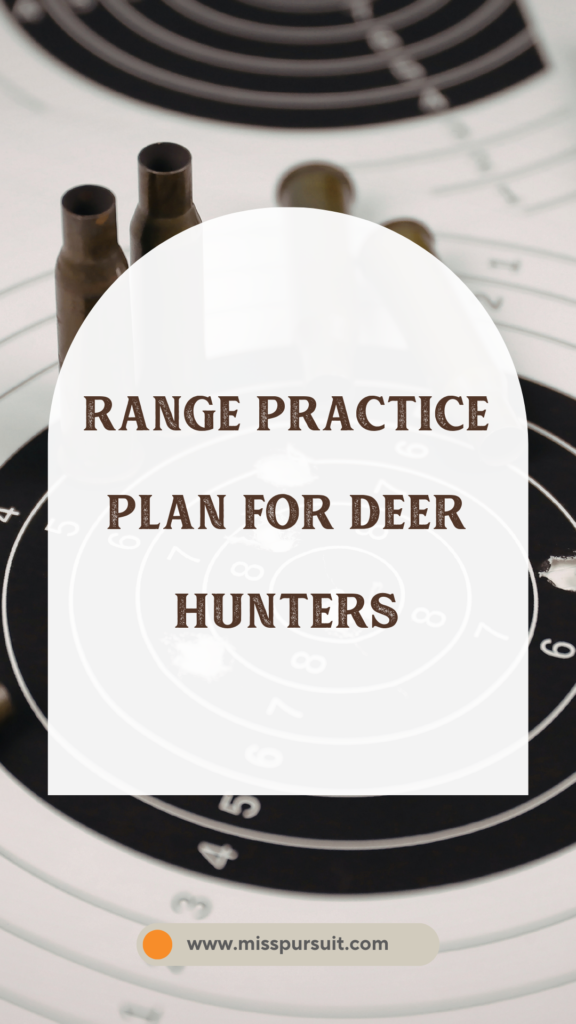
A Simple Way to Practice So It Actually Translates to a Hunt
Most people go to the range and just… shoot. That’s not practice. That’s noise. If you want this to carry into a real hunt, keep it simple:
Confirm your zero
Start close. 50 or 100 yards. Make sure your rifle is doing what you think it’s doing.
Slow down more than you want to
One shot. Reset. Breathe. Another shot. Rushing is the fastest way to lie to yourself about your accuracy.
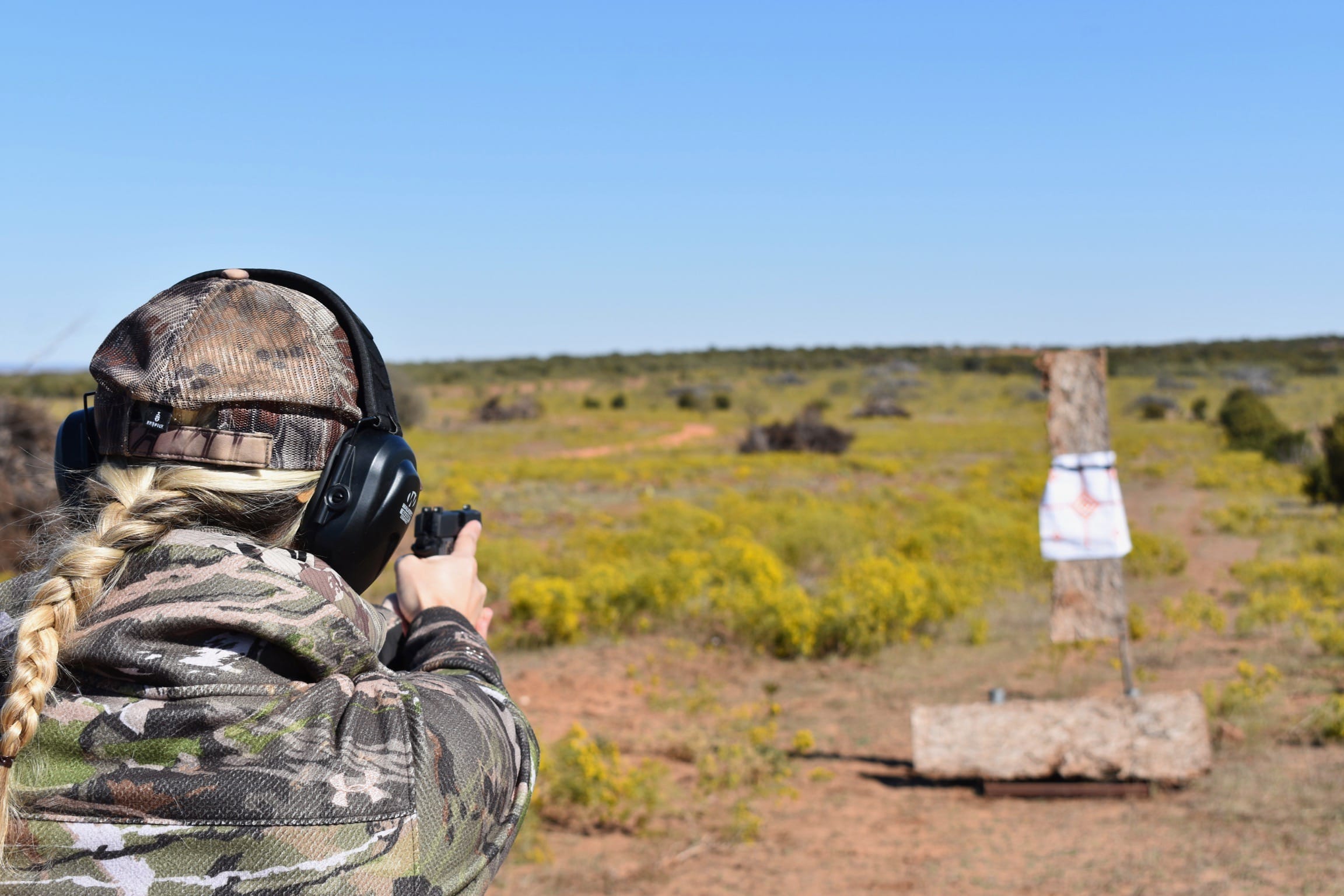
Shoot from something uncomfortable
Not just a bench. Sit. Kneel. Use a pack. That’s how you’ll actually shoot in the field.
End before you’re tired
The second your focus slips, your practice stops being useful. Most people train their worst habits at the end of a session.
That’s enough. You don’t need a complicated system.
Step 1: Confirm Your Zero (Before You Do Anything Else)
Before you start getting fancy with practice… Make sure your setup is actually hitting where you think it is. I know, obvious. (duh) But you’d be surprised how many people skip this part because “it was good last season.”
Weather changes. Travel bumps things. Storage affects equipment. Things shift.
Most rifle hunters will confirm zero at 100 yards. Start there. Take your time. Make adjustments if needed.
Once that’s solid, then you can move on.
Step 2: Slow Down and Fix Your Fundamentals
This is the part people rush through. And it’s the part that matters most. Good shooting isn’t complicated, but it is disciplined.
Focus on:
• your grip
• your breathing
• your trigger pull
• your follow-through
Nothing flashy here. But these are the habits that show up when pressure hits. And they will show up.
Step 3: Stop Only Shooting From a Bench
This is probably the biggest disconnect between range practice and actual hunting. Bench shooting is comfortable. Stable. Predictable. Hunting… is not.
Very few shots happen in perfect conditions. So you need to practice like you hunt.
Try:
• sitting
• kneeling
• standing with support
• using shooting sticks or a tree
Even small adjustments like this change everything. Your balance changes. Your timing changes. Your confidence changes. And honestly, the first time you do it, you’ll probably think:
“Oh… okay. This feels different.”
Exactly.
Step 4: Practice at Real Distances (Not Just What Feels Impressive)
There’s always a temptation to shoot farther. Because it feels like progress (and honestly, makes you feel a little cool). But most deer are taken at moderate distances, not extreme ones.
So instead of chasing distance, focus on:
• 50 yards
• 100 yards
• 150 yards
Get really solid inside your realistic range. Confidence there matters way more than being able to say you hit something at 300.
Step 5: Make It Feel a Little More Like Hunting
This is where practice actually starts to translate. Because the range is controlled. The woods are not.
So start introducing a little discomfort.
Things like:
• take a short walk before shooting (get your heart rate up)
• shoot with your hunting gear on
• practice from slightly awkward angles
• shoot from an elevated position if you’ll be in a stand
Most hunters never do this…and it shows. Even something as simple as practicing in your jacket or with your pack on makes a difference. Because suddenly… it feels more real.
Step 6: Use Targets That Actually Look Like a Deer
Paper targets are fine for dialing in. But at some point, you need to see the shot the way it will actually look.
Deer targets help you understand:
• where to aim
• what the vitals look like
• how angle affects your shot
This is where things start to click for a lot of people. Because it’s no longer just “hit the circle.”
It’s:
“Where does this shot actually go?”
Step 7: Follow a Simple Practice Timeline (Don’t Overthink It)
You don’t need a complicated system. Just a little consistency.
Here’s a simple structure:
6–8 weeks out
Confirm your zero and work on fundamentals
4–6 weeks out
Start shooting from field positions
2–4 weeks out
Add realistic scenarios and gear
Final week
Confirm everything and don’t overdo it
Shooting more doesn’t automatically make you better. It just makes whatever you’re doing more permanent. If your form is off, you’re just reinforcing it.
That’s it. No need to make it more complicated than that.
Track Your Progress
Keeping notes on range sessions can help hunters monitor improvement over time.
Consider recording:
• Group sizes
• Shooting distances
• Equipment adjustments
You’ll have a group that feels great, and then the next one opens up for no reason. That messes with your head more than anything.
Most of the time, it’s not your rifle. It’s you rushing, gripping too hard, or trying to “force” the shot.
Everyone wants to shoot farther. But most people haven’t actually earned their distance yet. If you can’t consistently hit where you’re aiming at 100, moving to 200 just hides the problem.
Tracking performance helps identify areas that may need additional practice.
How You Know Your Practice is Actually Working
It’s not about perfect groups every time. It’s when things start to feel repetitive.
- your setup looks the same every shot
- your breathing slows without thinking about it
- your misses make sense (not random)
That’s when it starts to click. Not perfect… just predictable.
Common Range Practice Mistakes
Some hunters spend time at the range but fail to prepare for real hunting situations.
Common mistakes include:
Practicing Only From a Bench
Bench shooting is useful for confirming accuracy but does not reflect field conditions.
Practicing Only Once Before the Season
Consistent practice over several weeks produces better results.
Ignoring Hunting Gear
Practicing with the clothing and equipment you will wear during hunts helps avoid surprises later.
Why Practice Improves Ethical Hunting
Hunting carries a responsibility to pursue animals ethically and humanely.
Practicing regularly helps hunters develop the accuracy and confidence needed to make responsible decisions in the field.
Good range practice reduces the chances of wounded animals and improves the likelihood of quick, humane harvests.
Preparation also helps hunters remain calm and focused during the excitement of real hunting encounters.
The Part No One Really Says Out Loud
The first time you line up a shot on an animal, it won’t feel like the range. Your heart rate is up. Your breathing isn’t steady. Nothing is perfectly still.
And all the clean, controlled reps you took at the range suddenly feel… far away. That’s why this matters.
You’re not practicing for a perfect moment. You’re practicing for a moment that feels a little out of control, and choosing to take the shot anyway, or choosing not to.
That’s part of this too.
Final Thoughts on a Range Practice Plan
I remember one range day where everything felt off. Nothing was grouping the way it should. I kept adjusting, kept shooting, trying to “fix it.” And it just got worse.
Finally, I stopped, sat back, and realized I hadn’t slowed down once. Not a single shot. I was just burning ammo and hoping something would click. It didn’t.
That was the day I understood. Practice only works if you’re actually paying attention to what you’re doing. Otherwise, you’re just getting really good at missing the same way.
Successful hunts often begin months before opening day.
By following a structured range practice plan, hunters can improve shooting accuracy, develop confidence with their equipment, and prepare for real hunting conditions.
Practicing fundamentals, simulating field scenarios, and building consistent habits all contribute to better performance when it matters most.
When the moment arrives and a deer steps into range, the preparation you put in at the range ensures that you are ready to take the shot with confidence and responsibility.
If You’re Getting Ready for Your First Season
This is just one piece of preparation. If you want a full breakdown—from gear to mindset to what actually happens after the shot—download the First Hunt Field Guide. It’s built for that first real season, when everything feels new and you just want to do it right.
➡️ Early Season Deer Hunting Strategies
➡️ Public Land Deer Scouting Guide
One thought on “Range Practice Plan for Deer Hunters: How to Train”