Walk into any hunting camp this fall and you’ll find two groups within the camp.
There are those who go to a local sporting goods store where they purchase a rifle right out of the box. They do this because they will hunt whatever is available for the season, as long as the rifle shoots well enough that they can fill their tag.
And then, there are those who have spent countless hours talking to a gunsmith, discussing the characteristics of a custom build (such as the barrel twist and how it affects the trajectory of the bullet).
The end result, however, is that both can put deer in your freezer!
The Off-the-Shelf Reality Check
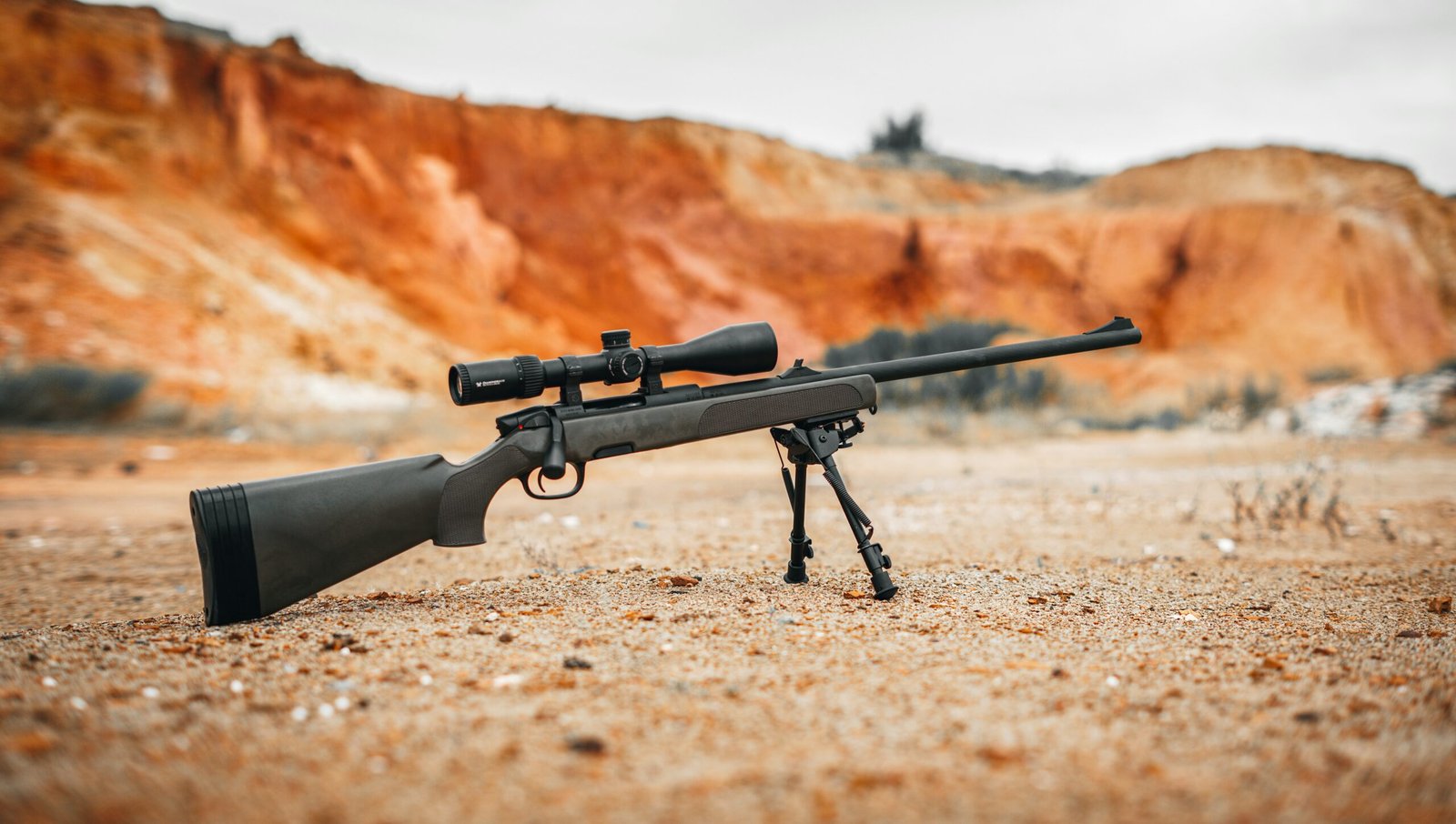
Factory rifles have come a long way from the boat anchors of yesteryear. Today’s production firearms from manufacturers such as Tikka, Bergara, Browning, and Christensen Arms are producing groupings that would have been considered custom rifle-grade less than twenty-five (25) years ago.
Production firearm manufacturing has also become much tighter in terms of tolerancing; their barrel quality has improved, and the majority of these production rifles will shoot sub-MOA right out of the box using acceptable ammunition.
This may surprise some people but here’s the truth: the vast majority of hunting opportunities can be accomplished using an off-the-shelf rifle A $900 production rifle with a good quality optic will accomplish this for you in all your whitetail hunting situations inside 300 yards, and all elk hunting opportunities inside of 500 yards.
The other advantage that doesn’t get talked about enough is convenience. You can walk into a shop or hop online for buying firearms and gear online and have a rifle in your hands within a week. No waiting list. No deposits. No phone calls every three months asking when the action will be ready.
Where Factory Rifles Fall Short
Production rifles are built to fit the average shooter, which means that they fit almost nobody perfectly. The length of pull is set for a 5’10” person of average build. The comb height is designed for whatever scope mounting system the average buyer uses. The trigger, while better than it used to be, still has compromises baked in for liability reasons.
If you’re tall, short, left-handed, or built like a linebacker, you’re going to be making compromises every time you shoulder the rifle. And those compromises add up when you’re shooting from awkward field positions at a game that won’t hold still for a perfect setup.
The Custom Rifle Argument
A custom rifle isn’t just a fancy production gun. It’s a firearm built around you specifically. The stock fits your face and shoulder. The trigger breaks at the weight you prefer. The barrel is chambered for the cartridge you actually want to shoot, with a twist rate that’s optimized for the bullets you intend to use.
That kind of personalization matters when you’re stretching the distance or hunting in tough conditions. Folks who get serious about long range shooting often find that the small details, the things that don’t matter much at 200 yards, become enormous at 800. A trigger that breaks cleanly. A stock that returns to zero from any field position. A barrel that holds the point of impact when it gets hot.
Custom rifles also shine when you’re chasing specific cartridges. Want a 6.5 PRC in a lightweight mountain rifle? Or a 7mm Backcountry (you read that right, 7mm Backcountry, not 7mm Mauser or 7mm Rem Mag) that nobody’s chambering in production guns yet? Custom is often the only path. Some hunters even go deeper into the build, such as by sourcing their own rifle and pistol components to get exactly the action, bottom metal, and bedding setup they want.
The Real Cost Conversation
Let’s not dance around this. A solid custom hunting rifle is going to start at around $4,500 and then it climbs quickly from there. Add a quality optic, mounts, and break-in ammo, and you’re looking at $7,000 to $10,000 before you’ve punched a single tag!
You could buy three nice production rifles for that money. Or one production rifle and enough premium shooting equipment to last a decade. Or a really nice elk hunt out west. The opportunity cost is real, and anyone who tells you otherwise is probably trying to sell you a custom rifle.
How to Actually Decide
Don’t worry about what the internet forums say. Don’t worry about what your buddy says when he has a $12,000 custom build. The real decision comes down to some very simple questions.
How much distance do you shoot at deer? Not how far you could shoot at deer. How far you DO shoot at deer. If you kill most of your deer in under 400 yards a Production Rifle is all you’ll ever need.
How often do you shoot? Someone that goes to the range every week and burns through a thousand rounds a year will be able to tell the difference in a custom rifle’s fitment. Someone who fires a case before hunting season and then doesn’t fire again for another year, probably won’t even be able to tell there is a difference. Take note that it’s not always necessary to modify your hunting weapon if you don’t plan on shooting it very much. For instance, many shotgun operators will add a heatshield to their shotguns in order to protect their hands during extended firing sessions, but this usually isn’t required for hunting shotguns where the amount of shooting done itself is more limited.
Do you need a rifle that fits your body? A 6’4” hunter, or a 5’2” shooter will greatly benefit from a stock made specifically for them. An average sized hunter/shooter can get by using an off the shelf product and make a few small adjustments.
Do you reload or shoot factory? Custom rifles often shine brightest with handloads tuned to that specific barrel. If you’re sticking with factory ammunition, browsing the options at outfits dedicated to buying ammunition online and matching the load to your rifle, a production gun will perform nearly as well at typical hunting distances.
The Middle Path Most Hunters Miss
Here’s a secret the rifle world doesn’t advertise loudly enough: you can split the difference. Buy a quality production rifle and have a gunsmith tune it up. A trigger job, a proper bedding job, maybe a stock upgrade, and you’ve got 90% of a custom rifle for half the money.
That Tikka or Bergara you bought for $1,200 can become a legitimate sub-half-MOA hunting rifle with another $500 to $800 in upgrades. And for most hunters, that’s the sweet spot. You get the fit and finish improvements where they matter most, without paying for hand-lapped barrels and exotic actions that won’t put more meat in the freezer.
Custom Rifles Are Wonderful Tools, But…
…they’re also not magic. They won’t make a poor shooter into a marksman or turn a bad hunter into a successful one. What they will do is remove the small frustrations that nag at you across thousands of rounds and dozens of seasons.
For the hunter who’s truly invested in the craft, that’s worth every penny. For the rest, an off-the-shelf rifle and the saved cash spent on tags, ammunition, and time afield will fill more tags every single year.