There is a certain kind of quiet that occurs when a person gives you a key to something he has said is “all yours now.”
Maybe it’s the safe your grandfather had in his garage, or maybe it’s a large stash of guns (with no knowledge of their history) hidden away in an old bath towel-covered closet. Either way, now all of the guns are all yours.
But what are you supposed to do with each of these firearms?
Take a deep breath because this is a perfectly solvable problem. It’s actually more of an issue for many people than they will admit!
First Things First: Nothing Gets Touched Until Everything Gets Checked
Before anybody says “let’s take these to the range this weekend” and before the family group chat and all of that, make sure that every single firearm coming out of that safe is treated as loaded.
Not “probably not loaded.” And not “He was careful. He wouldn’t have.”
Point it in a safe direction. Keep your finger off the trigger. Open the action and look at it. Then shine a flashlight on it. If you can get inside with a finger, do so. Old guns hide surprises, and guns you inherit usually sit for decades untouched!
The Inventory Nobody Wants to Make But Everybody Needs
Get a notebook. Get out your cell phone for use as a camera. Take them one at a time.
Then write down the make of the firearm, the model, the caliber or gauge, the serial number, and anything that stands out about this firearm. Document it with photographs as well. Specifically, you’ll want to document both sides of the firearm and all of the markings and engravings. This may be somewhat tedious work, but it’s also the single most important thing that you will do in the first week.
The reason for documenting firearms in this manner is that insurance companies will request documentation of property prior to loss. An estate lawyer will also ask what is present in regard to inventory of personal property, and after six months have passed and you try to determine whether a small handgun was a .38 Long Colt or a .38 Special, you will be grateful you documented the information.
When the Markings Don’t Make Sense
Sooner or later, you will hit one that stumps you. Faded proof marks, a name nobody recognizes, or a caliber designation that does not appear on any modern ammo box.
This is the moment to stop searching random forum posts and talk to someone who does this for a living. A qualified firearms historian can read the markings, place the manufacturing date, and tell you whether you are holding a common working gun or something with genuine collector value.
That distinction matters enormously. One of these gets shot on Saturdays. The other gets appraised, insured, and possibly never fired again.
About That Box of Old Ammunition
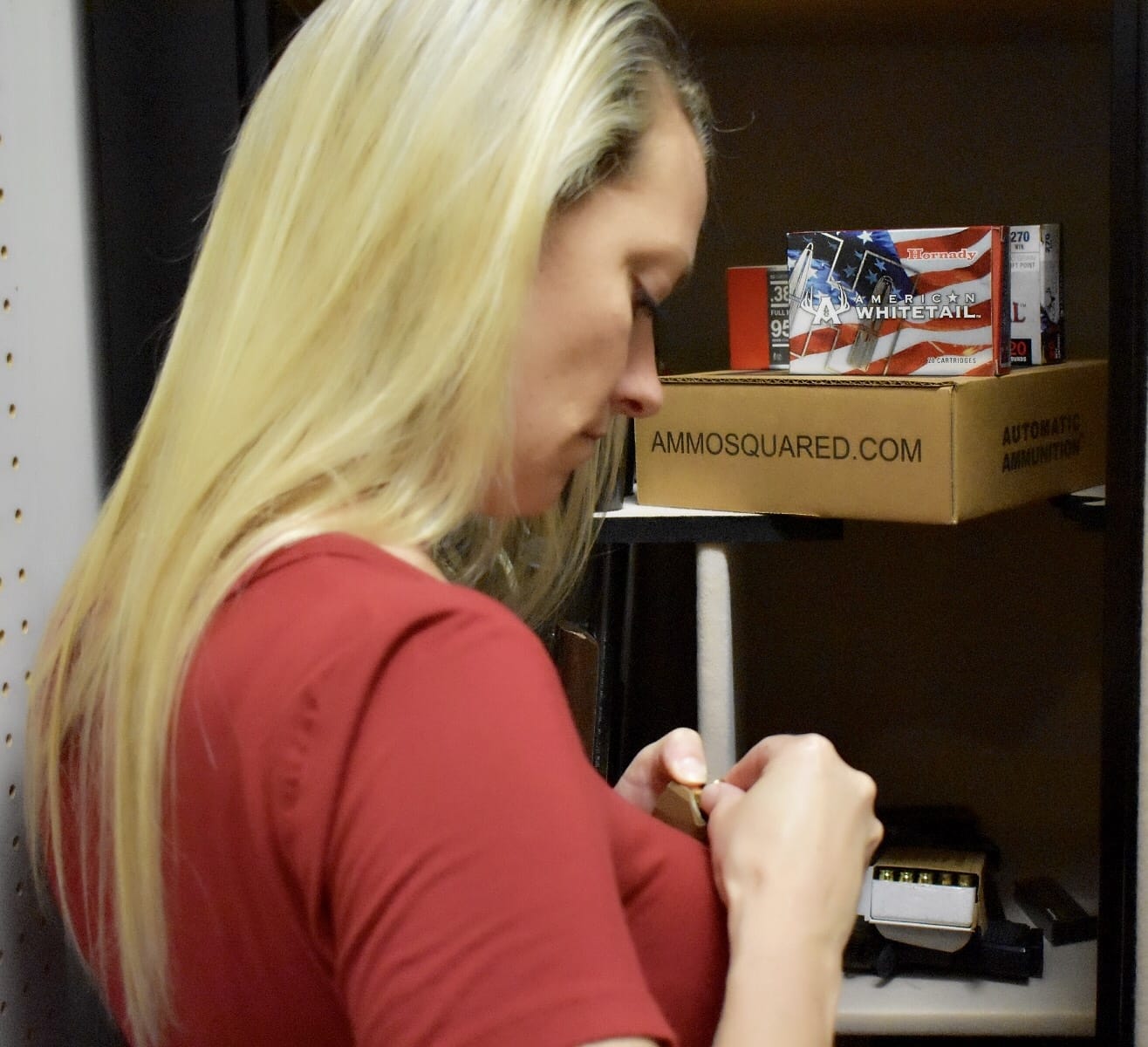
In almost every case, your inherited safe will come loaded down with a box of assorted loose rounds (and sometimes several boxes that are partially filled) from which the original sticker shows the price in fonts that were last utilized when Eisenhower was president, and probably some caliber you’ve never even seen before.
Please resist the temptation to simply throw everything into a bucket and haul it out to the shooting range. The reliability of old ammunition is suspect, and putting unreliable ammunition into an unfamiliar firearm is very poor planning. Hanging fires and “squibs” do exist, and they aren’t just theories based on primer technology from sixty years ago.
That said, do not throw it away either. Certain vintage cartridges are collectible in their own right, and some obsolete chamberings are still available if you know where to look. Collectors and specialty dealers in antique ammunition exist precisely because grandpa’s rifle in an oddball caliber still deserves to be shot. Before you write off an heirloom rifle as a wall hanger, find out whether anyone is still loading for it.
In general, if your ammunition is considered to be military surplus (as in it was made from the mid-50’s or before), you should assume that the primers in those rounds are corrosive. There’s no problem with you shooting it despite that; however, it also cannot be stressed enough the importance of cleaning the barrel immediately after firing these types of rounds. The beauty of an older bore can quickly turn into nothing but a rusted-out pipe in one short week.
Do yourself a favor and run hot water through the barrel followed by a regular cleaning, the very same day. There are no exceptions to this rule.
Deciding What Stays and What Goes
Inherited firearms don’t have to remain in your life. Sentiments are real, but so is the reality of owning a firearm you will likely never fire.
Put them into three true categories.
The keepers are the firearms you plan to utilize or those that have significant family history. The collectables are the firearms you would like to preserve and maintain their monetary worth but do not intend to fire.
The rest are the firearms that should be transferred to another owner who can truly appreciate them, which is a lawful transfer using the correct avenues and rules applicable to your state.
Turning an Heirloom Into a Skill Set
Owning a firearm and being competent with a firearm are two completely different situations, and the gap between them does not close on its own. If any of the inherited guns are going to be used (regardless of whether that’s for hunting, competition, or defense), the next step should be structured instruction rather than a cousin saying, “Here, just hold it like this.”
It’s also worth noting that professional firearms certification will do more for your confidence in understanding how your firearms actually work, their history, and how to handle and be responsible around them than simply handling them at the range every once in a while.
This applies doubly if one of the inherited pieces is something you are considering for personal protection. Which brings up the next thing…
What If One of Them Becomes a Carry Gun?
Sometimes an inherited compact revolver or a small semi-automatic pistol turns out to be an excellent daily companion. Sometimes it turns out to be a heavy chunk of steel that no reasonable holster was ever designed for. Be clear about which one you have.
The right setup for concealed carry depends far more on how you actually dress and move than on what looks good in a photograph. A gun you leave at home because the holster digs into your ribs is protecting nobody. Test it for a full week before you commit, and do that testing with an unloaded firearm at home first.
Upgrading Without Erasing the History
There is a fine line between improving a firearm and destroying its value. Permanent modifications to a collectible piece can wipe out thousands of dollars in a single afternoon with a Dremel tool. Reversible changes, on the other hand, are usually fair game.
Grips, sights, and other handgun accessories can transform how a gun feels in your hand without touching anything irreplaceable. Keep the original parts in a labeled bag inside the safe.
Future you (or future somebody) will thank you!
When the Answer Is a Modern Gun Instead
Occasionally, the honest conclusion is that the heirloom stays in the safe and something else fills the practical role. That’s not necessarily disloyal. It could just be accurate.
For home defense in particular, plenty of people land on pistol caliber carbines because they are easy to shoot well, manageable for smaller shooters, and share ammunition with a handgun that’s already in the house.
That way, Grandpa’s rifle keeps its dignity on the top shelf, and the practical work goes to something built in this century.
The Long Game
The real issue of inheriting firearms isn’t the firearm itself so much as it’s being the person who continues the family tradition while protecting its legacy. That can be a larger task than it seems, but it can also be a much greater reward.
Document everything. Store things properly. Learn what you have. Take training in all firearms that you wish to use. Document this information (wherever your loved ones will find it) as well, so they know exactly what you are giving to them and how it got there.
You will eventually give someone a key and tell them “that’s yours now,” too. Help make it an easy transition for them rather than for you.