Knowing where to aim on a deer is one of the most important skills a hunter can learn. Good equipment matters, but shot placement determines whether a harvest is quick and ethical or becomes a difficult tracking situation.
Every responsible hunter should understand deer anatomy, the location of vital organs, and which shot angles provide the best chance of a clean harvest.
For beginners especially, shot placement knowledge builds confidence and helps prevent common mistakes like gut shots or high hits.
In this guide, you’ll learn:
- The vital organs hunters should aim for
- The best shot placement for deer hunting
- The safest shot angles
- Shot angles hunters should avoid
- What happens after a well-placed shot
If you’re preparing for your first season, mastering deer shot placement is one of the best ways to ensure your hunt is both successful and ethical.
Understanding Deer Anatomy and Vital Organs
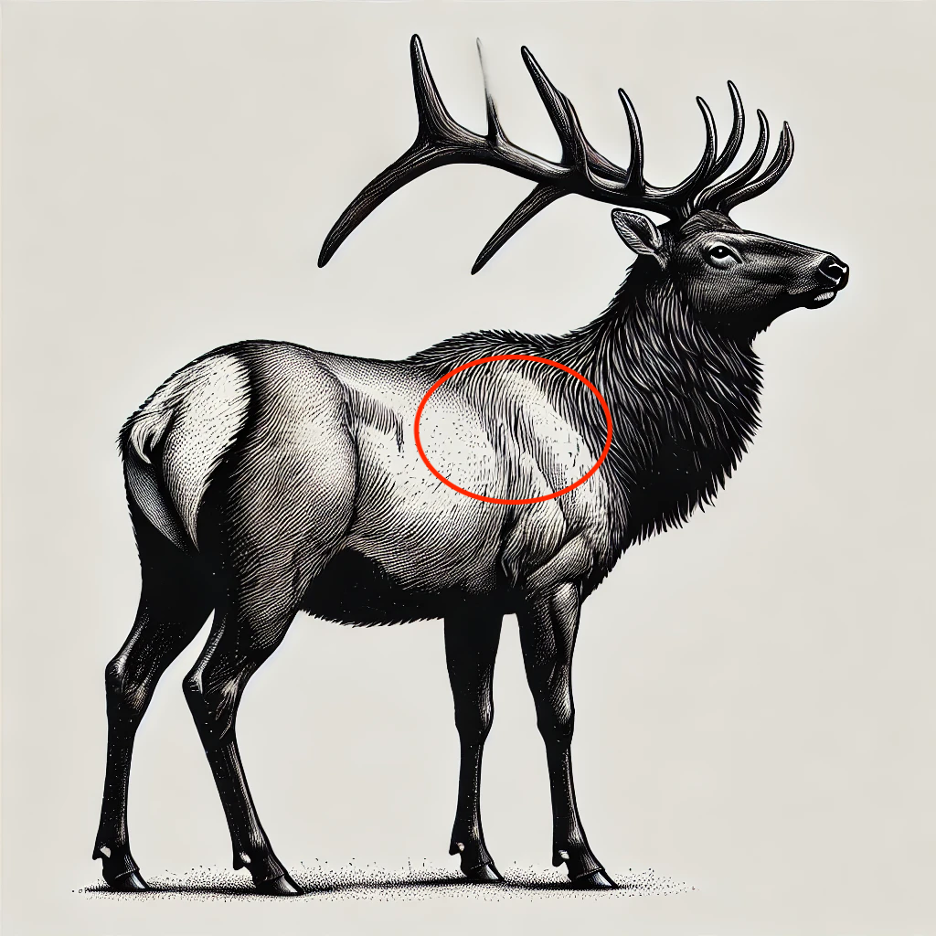
When hunters talk about deer shot placement, they are referring to the heart-lung vital zone. This area sits inside the chest cavity just behind the front shoulder.
Many new hunters aim too far back or too high. In reality, the vital organs sit lower and farther forward than people expect.
The main organs hunters target include:
Heart
The heart sits low in the chest between the shoulders. A direct hit to the heart typically causes rapid blood loss and may drop a deer within seconds.
Lungs
The lungs sit above and slightly behind the heart. Because the lungs are larger, they create the most forgiving target zone for hunters. A double-lung hit causes oxygen loss and internal bleeding, usually resulting in a deer traveling 40–120 yards before expiring.
Major Blood Vessels
Large arteries and veins surround the heart and lungs. When these vessels are disrupted, blood loss accelerates quickly. Because these structures sit close together, hunters commonly refer to this region simply as the vital zone.
Best Deer Shot Placement: The Broadside Shot
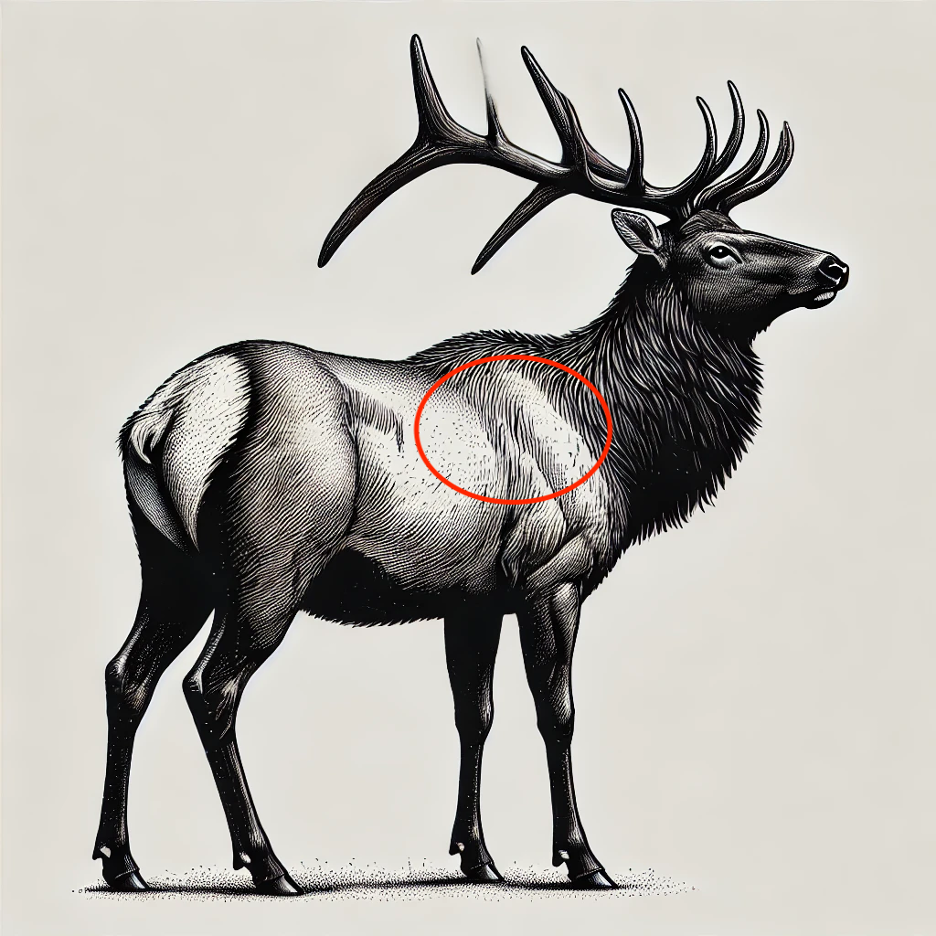
The broadside shot is the most reliable shot angle in deer hunting. A broadside deer stands perpendicular to the hunter, exposing the entire chest cavity. This angle provides the largest vital target area and the highest probability of a clean harvest.
Where to Aim
The ideal aim point is:
- Just behind the front shoulder
- In the lower third of the deer’s body
This shot path typically passes through:
- Both lungs
- The heart or major arteries
When executed properly, broadside deer shot placement leads to:
- Rapid blood loss
- A clear blood trail
- Short recovery distances
For beginners especially, waiting for a broadside opportunity is the safest decision.
Quartering-Away Shot Placement
A quartering-away deer faces slightly away from the hunter. This angle can still provide excellent shot placement when approached correctly. Instead of aiming directly behind the shoulder, imagine a line that travels:
Entry point → through the vitals → exiting near the opposite shoulder.
This path ensures the projectile travels through the heart and lungs.
Quartering-away shots are often preferred by archery hunters because they:
- Avoid heavy shoulder bone
- Create longer wound channels
- Increase the likelihood of an exit wound and blood trail
However, the shot must not be too steep. If the deer is sharply angled away, aiming too far back can result in a gut shot instead of a lung hit.
Shot Angles Hunters Should Avoid
Ethical hunting means recognizing when a shot should not be taken. Several shot angles increase the risk of wounding a deer rather than harvesting it quickly.
Quartering Toward
When a deer faces partially toward you, the shoulder bones protect much of the vital zone. Shots must pass through thick bone before reaching the lungs, which can reduce penetration or deflect the bullet or arrow.
This shot is generally not recommended for new hunters.
Head-On Shots
A deer facing directly toward you presents a very small target area surrounded by muscle and bone. The margin for error is extremely small, which makes this shot high risk even for experienced hunters.
Rear Shots
Shots taken from directly behind the deer risk hitting non-vital tissue and should always be avoided. Responsible hunters wait for a better opportunity.
What Happens After a Good Deer Shot
A deer hit in the heart or lungs often reacts immediately.
Common signs of a good shot include:
- A mule kick with the back legs
- A short burst of running
- Tail tucked down while fleeing
Most deer hit through both lungs will run 50–120 yards before collapsing. Even with a perfect shot, patience is important. Hunters should usually wait 20–30 minutes before beginning recovery.
Approaching too quickly can push a wounded deer farther away.
Why Shot Placement Matters More Than Caliber
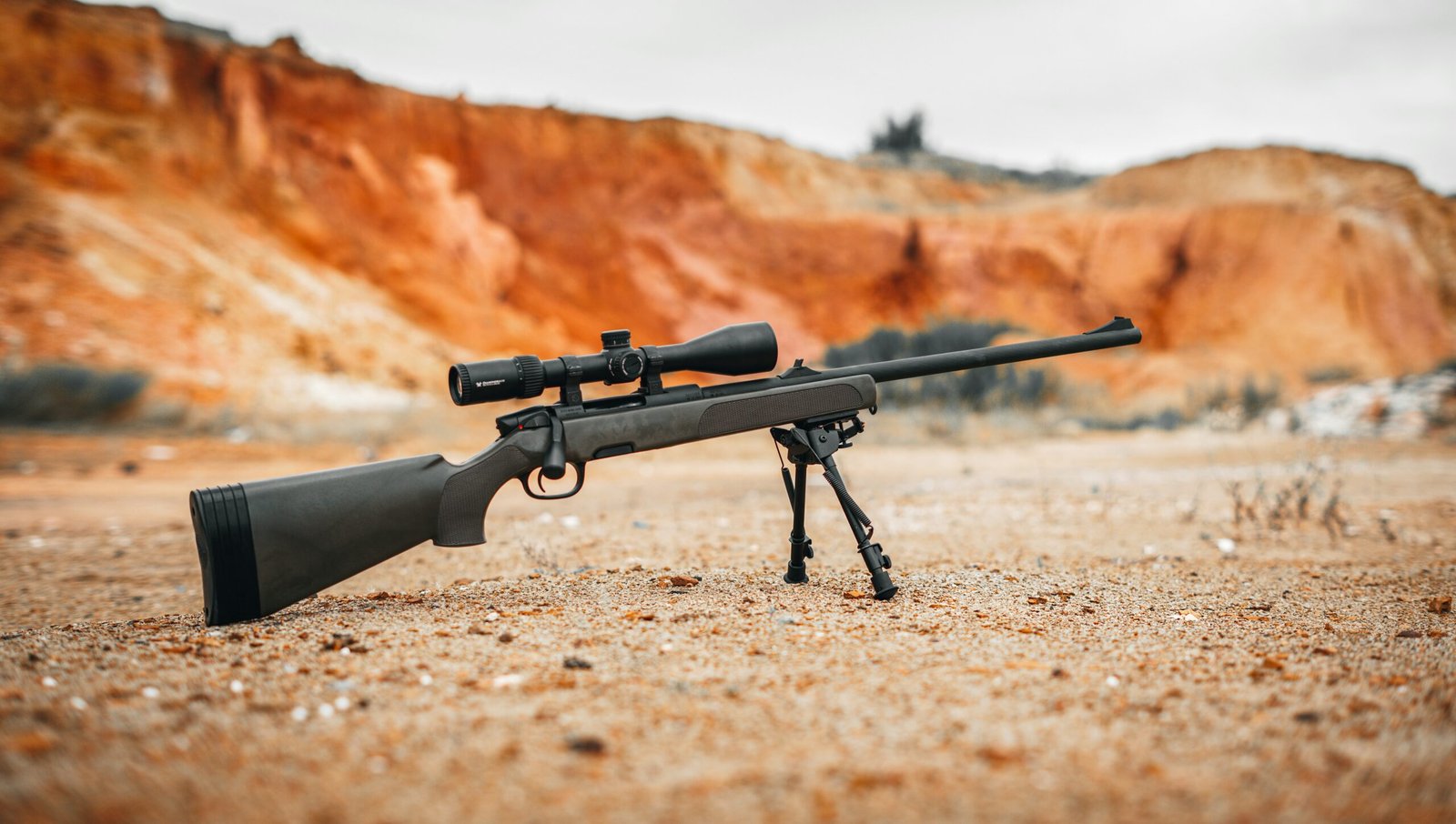
Hunters often debate which rifle caliber is best for deer hunting. While gear matters, shot placement is far more important than caliber choice. A well-placed shot from a moderate cartridge will always outperform a poorly placed shot from a larger caliber.
Successful hunters focus on:
- Shot accuracy
- Understanding deer anatomy
- Waiting for the correct shot angle
Ethical hunting depends far more on discipline and preparation than equipment.
Practicing Deer Shot Placement Before the Season
Confidence in deer shot placement begins long before opening day.
Preparation should include:
Practicing Realistic Shooting Positions
Practice shooting from:
- Standing positions
- Kneeling positions
- Shooting sticks or rests
- Elevated stands if possible
Studying Deer Anatomy
Looking at diagrams of deer vitals helps hunters visualize where the heart and lungs sit inside the chest cavity.
Learning Shot Angles
Understanding when to wait for a better shot opportunity is one of the most important hunting skills. The more familiar you are with deer anatomy before the season starts, the more confident you will feel in the field.
Ethical Hunting Starts With Shot Placement
Every responsible hunter carries the responsibility of making a clean, humane shot. The best deer shot placement remains the heart-lung area behind the shoulder, especially when the deer is broadside or quartering away.
Patience, preparation, and understanding deer anatomy ensure that when the opportunity comes, you are ready to make a quick, ethical harvest. For new hunters preparing for their first season, understanding shot placement is one of the most important lessons you can learn.
Frequently Asked Questions About Deer Shot Placement
Where should you aim on a deer?
The best place to aim on a deer is just behind the front shoulder in the lower third of the body, where the heart and lungs are located.
This shot placement disrupts vital organs and results in a quick, humane harvest.
What is the best shot placement for deer hunting?
The broadside heart-lung shot is widely considered the best shot placement for deer hunting.
It offers the largest vital target and typically leads to quick recoveries and strong blood trails.
Is a high shoulder shot good for deer?
Some experienced hunters use the high shoulder shot to drop deer immediately by hitting the spine and major nerves.
However, this shot requires precision and can damage meat. Many hunters prefer the traditional heart-lung shot.
How far do deer run after a lung shot?
Deer hit through both lungs often run 50–120 yards before collapsing. Blood trails are usually easy to follow.
Waiting 20–30 minutes before tracking improves recovery success.
Can a deer survive a gut shot?
Deer hit in the stomach or intestines can travel long distances and may survive for many hours.
Hunters should avoid shots placed too far back and always aim for the heart-lung vital zone.
10 thoughts on “Deer Shot Placement Guide: Where to Aim for a Quick, Ethical Harvest”