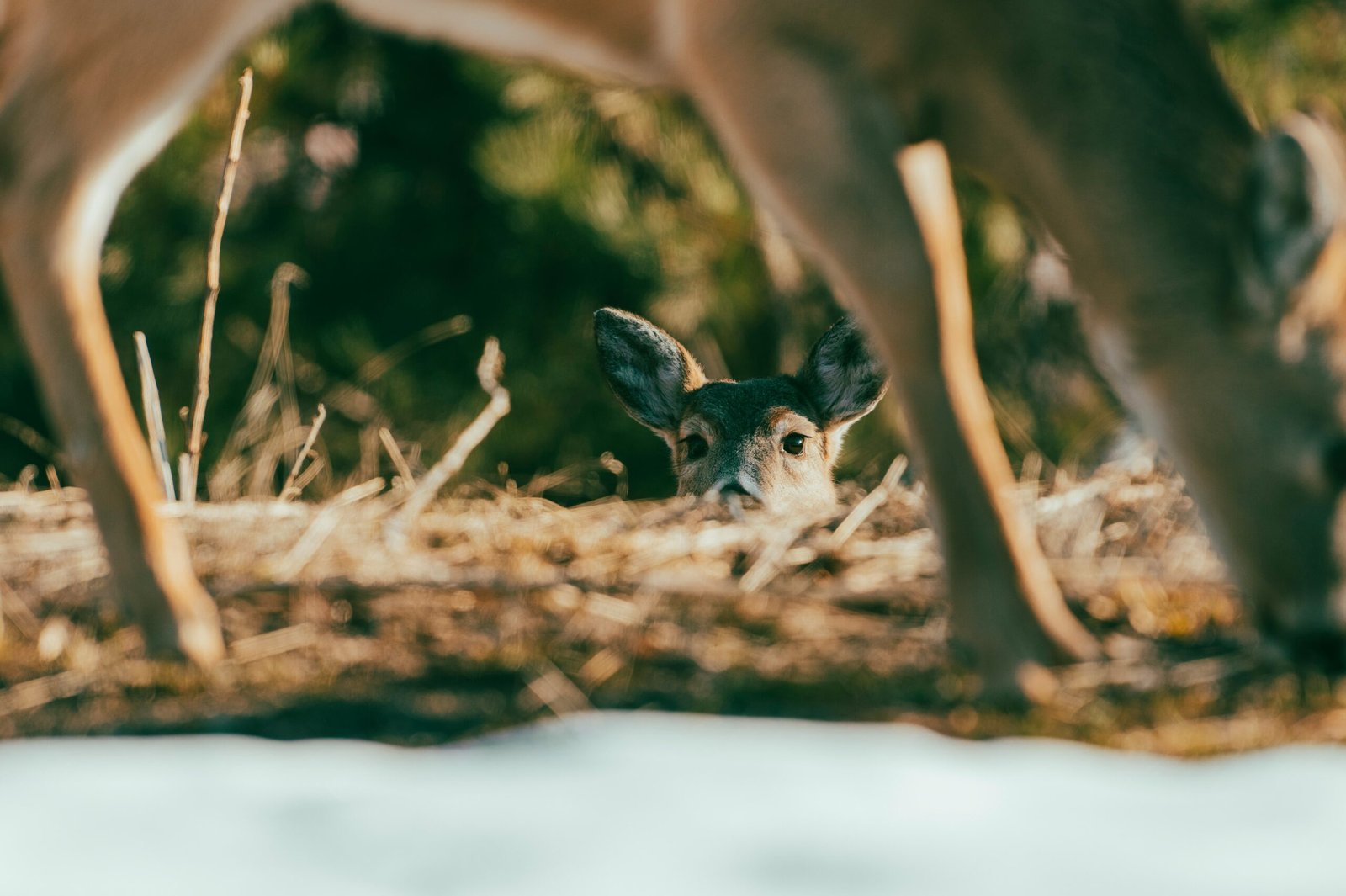
If you want to consistently see deer while hunting, you need to understand where deer sleep and rest during the day. These locations are called bedding areas, and learning to identify them is one of the most important skills a hunter can develop.
Deer spend the majority of daylight hours bedded in places where they feel safe, hidden, and able to detect danger before it reaches them. Mature bucks in particular are extremely selective about where they bed.
Once you understand what bedding areas look like, how deer choose them, and how terrain influences them, you can dramatically improve your chances of finding deer consistently.
In this guide, you’ll learn:
- How to identify deer bedding areas in the woods
- Terrain features deer prefer for bedding
- How mature buck bedding differs from doe bedding
- The most common bedding sign hunters overlook
- How to scout bedding areas without ruining your hunting spot
What Is a Deer Bedding Area?
A deer bedding area is a location where deer lie down to rest, chew their cud, and stay hidden during daylight hours.
These areas provide three critical things deer rely on:
Security
Thick cover or terrain that protects them from predators.
Visibility or scent advantage
Deer position themselves so they can smell or see approaching danger.
Comfort
Dry ground, wind protection, and shade.
Bedding areas can be found in many types of terrain including:
- Thick brush or young timber
- Ridge points
- Hillsides
- Tall grass or CRP fields
- Swamps or marsh edges
- Cedar thickets
- Pine plantations
However, deer rarely choose bedding locations randomly. Their bedding choices follow predictable patterns based on wind, terrain, pressure, and food sources.
How to Identify Deer Bedding Areas
Many hunters walk right past bedding areas without realizing it.
Here are the most reliable signs to look for.
1. Oval Beds in the Ground
The most obvious sign of bedding areas are depressions in the ground where deer have laid down.
These beds typically look like:
- Flattened grass or leaves
- Oval-shaped depressions
- Bare dirt spots in heavy use areas
A single deer bed will be roughly:
- 2–3 feet long
- 18–24 inches wide
Clusters of multiple beds usually indicate doe family groups, while isolated beds often belong to mature bucks.
2. Heavy Trails Leading In and Out
Bedding areas almost always have defined entry and exit trails.
Look for:
- Narrow deer trails leading into thick cover
- Multiple trails converging on one area
- Trails heading toward food sources
These travel routes often become extremely visible over time due to repeated use.
3. Droppings and Hair
Another strong sign of bedding activity is fresh deer droppings and hair.
Common indicators include:
- Pellets scattered near beds
- Deer hair caught on brush or grass
- Strong deer scent in the area
If you find droppings near flattened beds, you’re likely in an active bedding zone.
4. Thick Security Cover
Deer choose bedding locations where they feel hidden.
Common bedding cover includes:
- Young timber regeneration
- Briar thickets
- Cedar trees
- Pine plantations
- Tall grass
- Brush piles
If the area looks too thick for you to comfortably walk through, it’s probably attractive to deer. Understanding deer shot placement is just as important once you locate bedding areas.
Where Do Deer Bed During the Day?
Deer typically bed in places that give them a strategic advantage against predators.
These locations allow them to:
- Smell danger using the wind
- Watch their back trail
- Escape quickly if needed
The most common bedding locations include:
Ridge Points
Deer often bed on the ends of ridges, where they can smell behind them and watch downhill.
Hillsides
South-facing slopes provide warmth in colder months.
Thick Cover Near Food
Deer frequently bed within a few hundred yards of feeding areas during early season.
Transition Zones
Edges between two habitat types often hold bedding areas, such as:
- Timber and fields
- Swamps and hardwoods
- Pines and open woods
Buck Bedding Areas vs Doe Bedding Areas
Understanding the difference between buck bedding and doe bedding can dramatically improve your hunting strategy.
Doe Bedding
Doe groups often bed together in larger clusters.
Characteristics include:
- Multiple beds close together
- Bedding in thicker cover
- Areas closer to food sources
Doe bedding areas can contain 10 or more beds within a small area.
Buck Bedding
Mature bucks typically bed alone or in very small groups.
Buck bedding areas are often located:
- On terrain features like ridge points
- Downwind of expected deer travel routes
- Where they can smell behind them
These beds are usually more isolated and harder to access.
How Wind Influences Bedding Areas
Wind direction plays a major role in how deer choose bedding locations.
Deer often position themselves so they can:
- Smell behind them
- Watch downhill or downwind
- Escape quickly if danger approaches
For example:
A buck might bed on a ridge point with the wind blowing over his back, allowing him to smell anything approaching from behind while watching the downhill side. This wind advantage helps deer detect predators before they get too close.
Best Times to Scout Bedding Areas
Scouting bedding areas requires caution. If you push deer out repeatedly, they may abandon the location entirely. The best times to scout bedding areas include:
Late Winter
After hunting season ends, bedding sign is easier to see without leaves or vegetation.
Early Spring
Old beds, trails, and droppings are still visible.
Midday During Season (with extreme caution)
If scouting during hunting season, move slowly and minimize disturbance.
How Close Should You Hunt Bedding Areas?
Many experienced hunters avoid setting up directly inside bedding areas. Instead, they hunt travel routes between bedding and food.
Ideal stand locations include:
- 50–150 yards from bedding cover
- Along trails exiting bedding areas
- Funnels connecting bedding and feeding areas
Hunting too close to bedding areas can cause deer to detect your presence and avoid the area entirely.
Common Bedding Area Mistakes Hunters Make
Many hunters unknowingly ruin productive areas by making these mistakes.
Walking Through Bedding Areas Too Often
Repeated pressure causes deer to relocate.
Setting Stands Too Close
Mature bucks are extremely sensitive to disturbance.
Ignoring Wind Direction
Approaching bedding areas with the wrong wind can alert deer before you ever see them.
Scouting During Prime Movement
Walking through bedding areas at dawn or dusk can push deer out before you hunt them.
Final Thoughts on Finding Deer Bedding Areas
Learning how to find deer bedding areas is one of the most valuable skills a hunter can develop. When you understand how deer choose bedding locations based on terrain, cover, and wind, the woods start to make much more sense.
Instead of wandering randomly through the forest, you begin to see patterns of movement and security that deer rely on every day. Once you locate bedding areas and the travel routes leading away from them, you’ll be far closer to consistently seeing deer on your hunts.
➡️ If you’re new to hunting, start with our beginner deer hunting guide.



6 thoughts on “How to Find Deer Bedding Areas: The Complete Whitetail Bedding Guide”