Here’s how it normally goes. When most women purchase their very first firearm (and this holds true regardless of whether it’s a long gun or a handgun), they typically stick with the basic equipment and features already installed on the gun and then leave it alone.
There’s nothing wrong with that. If anything, it’s standard practice to leave a firearm in its original factory configuration. When you buy a handgun from the store, for instance, you’ll automatically get the sights installed on the gun, a small cleaning rod or brush, a spare magazine or two, and any small disposable items that the manufacturer chose to include in the case.
And it all works. More or less. Then one day; after shooting for a couple years…there will be a time in which you stand there looking at your gear thinking, huh…maybe I should have put some stock into my firearm after all.
So that being said, you don’t have to make upgrades to your firearm if you don’t want to. But if you do want to, here are eight such upgrades that can and will make a real difference with no hype:
Optics, Because Squinting Is Not a Skill
Iron sights ask a person to focus on the rear notch, the front post, and the target, all at the same time.
And human eyes cannot do that. They never could. Everyone just got used to picking one and blurring the other two.
So how can you fix that? Simple:
This is where red dots come in and quietly solve something that has annoyed shooters for a hundred years. One aiming point, sitting on the same plane as the target. Look at the thing, put the dot on the thing, press the trigger.
That’s it!
And the effect will become much more apparent in low-light conditions, which will happen during dawn and dusk during hunting season.
Muzzle Devices Are Not Just for Show
Recoil is physics. It doesn’t care how tough anybody is, and pretending otherwise is just going to build up an unnecessary flinch in you.
And here’s the thing that nobody says out loud: most accuracy problems are flinch problems.
A shooter who anticipates the kick will be mashing the trigger and dipping the muzzle before the shot even breaks. Swapping in a decent muzzle device, however, should take just enough of that sting away that the flinch fades on its own.
Fair warning though. Brakes are loud. Like, aggressively loud. Anybody who’s planning to share a blind should think about that before bolting on the biggest one available (unless the goal is losing a hunting partner, of course).
The quiet alternative lives in the stock. A recoil reducer like the Gracoil is a spring unit that sits inside the buttstock and soaks up the kick before it reaches your shoulder, with no extra noise for whoever is sharing the blind. It is fully adjustable, roughly 14 to 70 pounds of resistance, so a light 20-gauge load and a 3-inch magnum can get different settings on the same gun. The length-of-pull version also lets you shorten the stock to a fit that was never designed around a six-foot guy, which is the other half of why shotguns beat women up more than they should. For shotgun shooters especially, that fixes the flinch and the fit in one part.
The Boring Parts Inside That Nobody Talks About
Nobody stands around the tailgate bragging about their extractor spring. That’s fine. It still matters.
Trigger first, always
Truth be old, the trigger is perhaps the number one thing that you can improve on a firearm over its original factory configuration. An 8-lb trigger that is grating (such as with a harsh or unpleasant feel as you pull it back) is going to destroy good shooting habits each and every time you practice on one.
But the same pistol with a smooth and crisp release of about 4-5 lbs. will turn what was once difficult into a natural extension of your arm and hand.
Then the rest of it
Springs sag. Extractors chip. Buffers wear out. Nobody notices any of it until the gun starts short-stroking in the middle of a good morning. Keeping decent gun parts on hand means fixing that at the truck instead of packing up and going home. A little spares kit in the range bag is one of those things that feels paranoid right up until the day it saves the trip!
Targets That Actually Talk Back
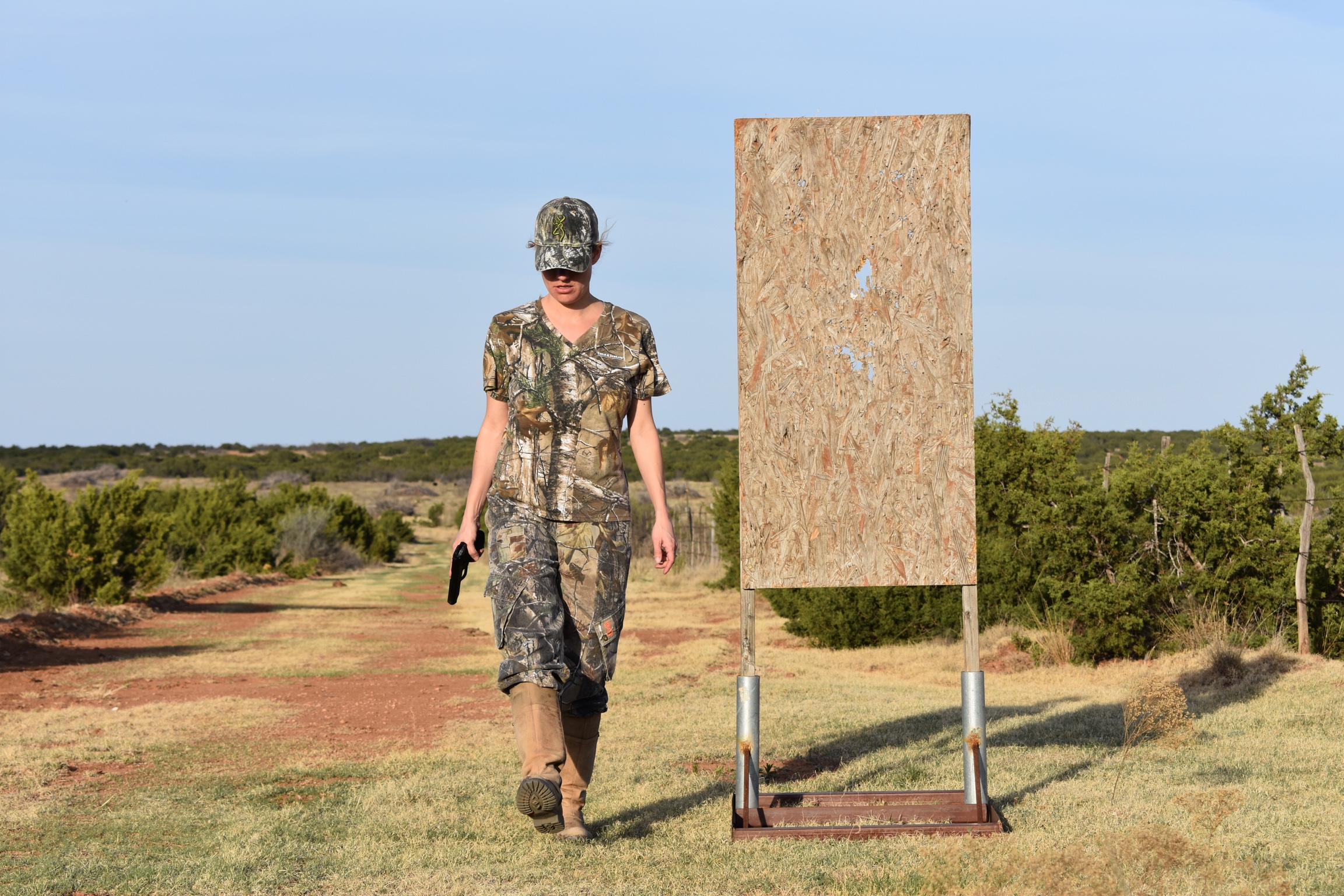
Paper is honest. Paper is also completely silent, which means walking downrange every ten rounds to go squint at holes.
The ping does something to your brain
There’s a reason target shooting on steel makes people better faster. Instant feedback. No waiting, no walking, no guessing. Miss, adjust, hit, hear it. The loop tightens up and the corrections start happening automatically.
Also (and this is the part people underestimate), it’s just more fun. There’s just something satisfying about hearing the sound of a DING! each time the bullet hits the metal target. And people practice things they enjoy. That’s the whole secret. Nobody who dreads range day gets good at range day.
Do the setup part properly
Steel that’s too soft, mounted flat, or shot too close is how ricochets happen. Real range shooting setups use angled faces, hardware rated for the calibers actually being fired, and enough distance to stay safe.
It’s not exciting to read about. But it’s also the real difference between a fun afternoon and a trip to urgent care.
The Storage Question Everybody Wrestles With
Every house with guns in it deals with the same tug of war. Locked up enough that a curious ten-year-old cousin can’t get to it. Reachable enough to matter if something happens at two in the morning.
Thankfully the technology got good. Biometric readers that actually read, keypads that light up, interiors that aren’t a black hole. For storing a handgun in a nightstand or a truck console, the things worth checking are backup power, real steel construction, and mounting hardware so nobody just carries the whole box out the front door.
And honestly? Teaching kids about guns does as much as any lock. It’s a very important life skill to teach a child to learn how to use a firearm (just like learning how to drive and operate a vehicle). Curiosity is what gets people in trouble. A kid who’s been shown what a firearm is, allowed to look at it, and told why it deserves respect usually stops caring. Then lock the gun up anyway, because kids have friends.
Gear Built for an Actual Woman’s Body
For a long stretch, everything on the market was designed around a six-foot guy, and women just dealt with it. Belts that sat wrong. Slings that carved a groove into the collarbone. Packs with shoulder straps set way too wide.
That’s finally changing. Good tactical gear now comes in configurations that fit a narrower waist, a shorter torso, and shoulders that aren’t linebacker width. A two-point sling with a fast adjuster is the sleeper upgrade here. Doesn’t sound like much until the first time a rifle needs to hang out of the way while both hands are busy dragging a deer through brush.
Test everything with gloves on. Buckles and adjusters that work great with bare fingers turn into puzzles at twenty degrees.
Duck Season Runs on Its Own Rules
Waterfowl hunting is less a hobby and more a lifestyle choice involving voluntary suffering, terrible coffee, and being fully awake at 3:45 in the morning. You may think that all you need for a successful duck hunt are a decent shotgun and a well-trained hunting dog, and while both of those are certainly important, they’re also not the only things you need.
In actuality, the gun barely matters compared to everything else. Waders that don’t leak. Calls that sound like a duck instead of a party horn. Decoys placed with some actual thought about which way the wind is blowing. And for anyone who gets properly bitten by the bug, hunting for ducks eventually shows up on the back window of the truck, because that’s just what happens.
There’s something nice about that, too. Pull into a gas station before dawn and the other trucks with decals are running the same kind of morning. Nobody says much. Everybody nods. Everybody smells like the marsh.
Know How the Shop Actually Runs
This last one isn’t gear at all, but it changes how well the gear-buying goes.
Shops running a solid gun store POS can tell in about four seconds whether something’s in stock, where the transfer is sitting, and when a special order is landing. Shops without one send somebody to go look in the back and come back twenty minutes later with a shrug.
So ask. Can you check the other location? Do you have a real ETA on that? The answer says a lot about whether the shop’s gunsmith schedule and warranty handling are equally organized. Tight systems usually mean tight everything.
Where to Actually Start
Nobody can get their hands on all eight of this stuff by next weekend. And for many people, buying all of this kind of gear usually results in a closet full of stuff that will probably stay in the box because they don’t know how to use it!
So take what’s bothering you right now. Are you not able to see the sights during low light? That’s optics. Does your hand have a bad flinch? The problem could be the muzzle brake. Are you bored with target shooting? Buy the metal targets (it will make the shooting more fun).
You get the idea. The goal is for quality equipment to become completely unnoticeable. Quality equipment simply works, and when it does work, it will basically fade into the background and what remains is you and the gun.
Anything after that is just shopping.