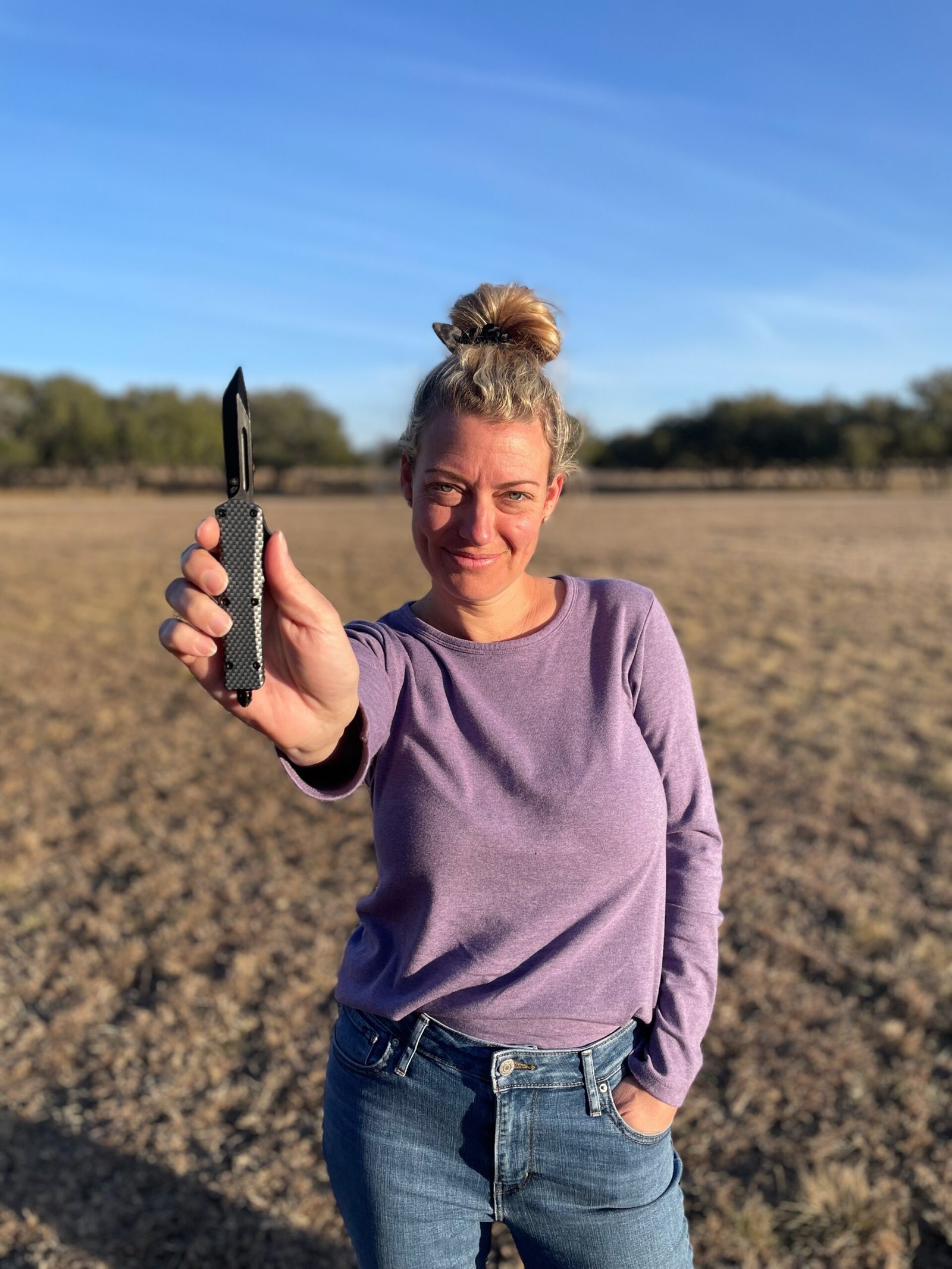
Ask a hunter which knife is the dangerous one, and most point at the razor-sharp blade fresh off the stone. The dull one puts more people in the emergency room. Knives send roughly 434,000 people to United States emergency departments a year, and pocket and utility blades cause almost half of those wounds. In the field, far from a hospital and often working fast in poor light, a hunter cannot afford the mistakes that turn a routine field dressing into a wound of its own. Most of those mistakes are habits, and habits can change.
The Dull Blade
A dull edge is the most common and most dangerous mistake a hunter makes. A sharp knife bites where it is placed. A dull one skates across hide and bone, so the hunter pushes harder, and the extra force is what drives the blade off course and into a hand or a thigh. More pressure, less control, and a slip with real force behind it.
Knives already cause more disabling injuries than any other hand tool, and a dull edge is how a large share of those happen. A dull edge ruins the work as well as the hand. It tears tissue and makes ragged cuts, which raises the chance of opening the stomach or intestines and tainting the meat. Start sharp and touch up the edge during a long job, well before the blade quits cutting.
The Wrong Knife for the Job
The second mistake is reaching for the blade that happens to be in a pocket. Plenty of hunters carry EDC knives for daily tasks, and those knives open boxes and cut cord all week without complaint. A folding pocket knife with a three-inch blade is a poor tool for breaking down an elk, and a heavy survival blade is clumsy around the fine work of a joint.
Match the knife to the animal and the task. A mid-size fixed blade handles most big-game field dressing, while a smaller replaceable-blade knife works best for caping and detail cuts. Carrying the right tool is cheaper than forcing the wrong one, in both meat and blood. A replaceable-blade knife skips sharpening altogether by swapping in a fresh edge, which appeals to hunters who process several animals a season and would rather carry spare blades than a stone.
Working Too Fast
Adrenaline is still running when a hunter kneels beside a downed animal, and speed works against clean cuts. Rushing is how a blade punctures the stomach, how a cut runs too deep, and how a guide ends up burying a knife in his own hand or a partner’s leg. Those stories are common.
Slow down and set each cut before making it. Field dressing rewards patience the way few outdoor tasks do. The animal is not going anywhere, and the minutes saved by hurrying are lost twice over when the gut spills or the hand needs stitches.
Cutting Toward the Body
A knife under pressure does not stop when the material gives way. It keeps going in the direction it was pushed. A hunter who cuts toward a hand, leg, or the partner holding a leg is one slip from a serious wound. Hide releases suddenly, joints pop free without warning, and the blade follows through.
Cut away from the body whenever the task allows it. When a pulling cut is unavoidable, brace the hand and keep every other body part out of the blade’s line. The fingers and thumb take the majority of these lacerations, and most come from a blade that traveled somewhere the hunter did not intend.
Blood, Hair, and a Dirty Blade
A knife used for field dressing collects blood, hair, fat, and grit, and a hunter who pockets it dirty invites two problems. The residue draws rust onto the steel and dulls the edge, and a folding knife’s pivot packs with material that jams the action and breeds bacteria. The next time that blade comes out for food or first aid, it carries whatever the last animal left on it.
Wipe the blade during the job and clean it fully at camp. Warm water, a brush for the pivot, a dry cloth, and a light film of oil keep a working knife sound. A fixed blade has an advantage here because there is no pivot to trap what the hunter cannot see.
A Neglected Edge
Sharpening is a skill, and skipping it is the quiet mistake behind the loud one. A hunter who never learned to put an edge on a blade carries a knife that gets duller every season until it becomes the dangerous tool described above. A cheap sharpener left at home does no good in the field.
Learn to sharpen, and carry a compact stone or a guided sharpener in the kit. A few passes at camp keep the edge honest through a long hunt. The knife that field dresses an animal cleanly on the first day should do the same on the last, and only maintenance makes that true.
The Dropped Knife
A knife set down during field dressing disappears fast. A dark handle vanishes into leaf litter or snow, and a hunter who lays the blade on the ground to reposition an animal can spend twenty cold minutes finding it or leave it behind for good. A high-visibility handle or a short lanyard solves this for a few dollars. Set the knife in the same spot every time, sheath it between cuts, and it stays where the hand expects it.
What a Bad Cut Costs
A knife mistake in the field is rarely a small thing. A slip can open a hand hours from the truck, where even cuts and grazes that would be minor at home turn serious, and a deep wound to the fingers or palm can cost the use of the hand for weeks. A dull or dirty blade can spoil the meat the hunt was for. The habits that prevent all of this are simple and inexpensive, and none takes more than a moment of attention before and during the hunt. Build them before the season, and the knife stays a tool instead of becoming the reason the hunt ends early.
Conclusion
Most knife accidents in the field are not caused by bad luck but by preventable habits. A dull edge, the wrong knife, rushed work, poor cutting direction, and neglected maintenance all increase the chance of injury while making field dressing harder than it needs to be. Paying attention to these small details keeps both the hunter and the harvest in better condition. Preparing a knife before the season is just as important as preparing any other piece of hunting equipment, and a sharp, clean, well-maintained blade paired with patient technique makes every task safer and more efficient. In the end, the best hunting knife is not simply the sharpest one, but the one handled with care and good judgment every time it leaves its sheath.