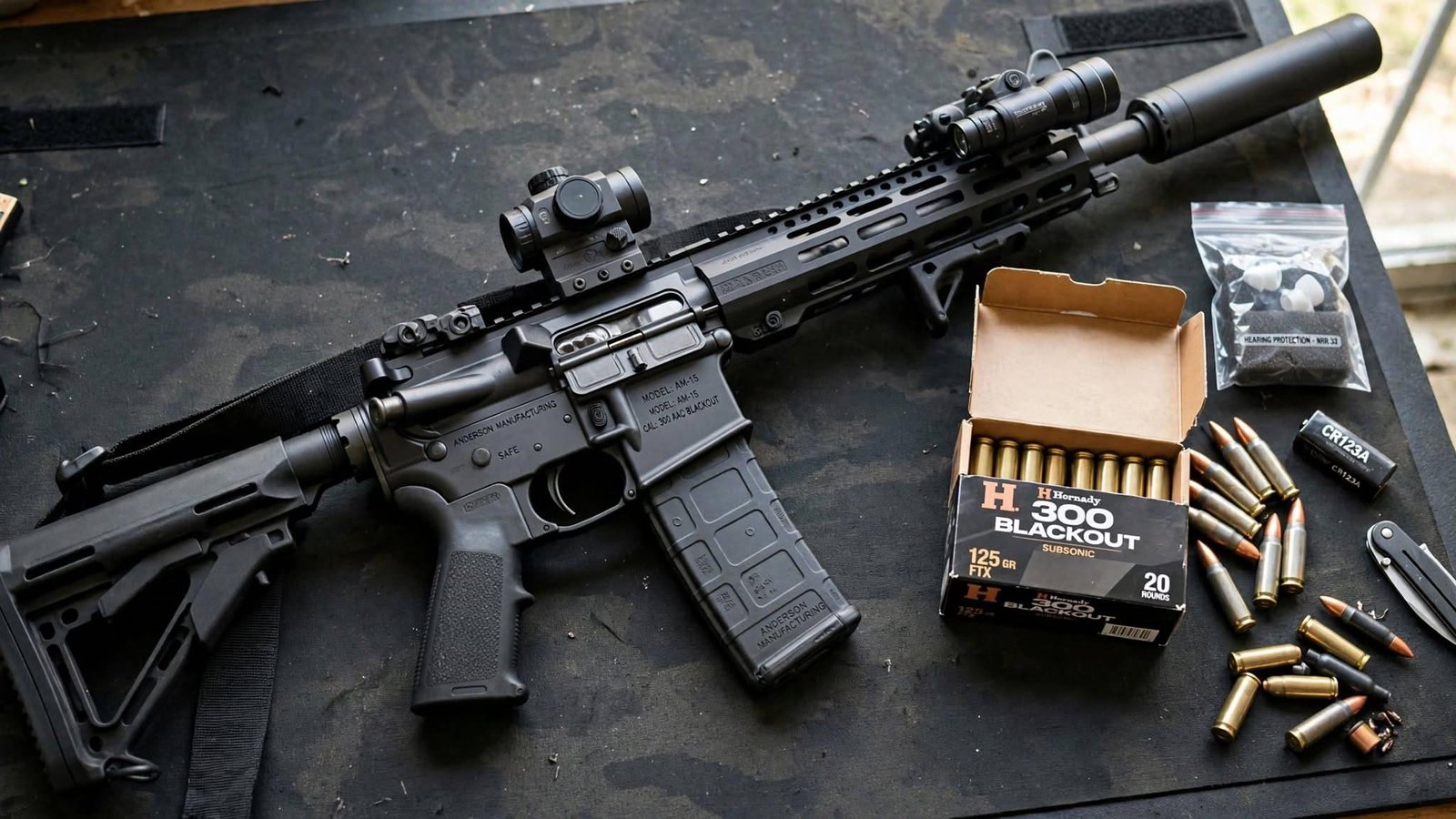
Once you have a basic understanding of calibers and what they’re capable of, .300 Blackout comes up almost as often as 5.56 NATO. It runs in the same AR-15 platform, uses the same magazine wells with a barrel swap, and offers options 5.56 can’t match indoors. When considering your next home defense build, here are some interesting facts about .300 Blackout you need to know before deciding.
What Makes .300 Blackout Different
.300 Blackout, officially the .300 AAC Blackout, was developed to address a particular issue – reliable performance out of a short-barreled AR-15 while still maintaining terminal effect. Standard 5.56 was designed to have a longer barrel to achieve its intended velocity, and if you shorten it up, your rifle won’t perform as well. .300 Blackout is designed to be a short-barreled rifle from the beginning, so you don’t compromise performance with a shorter rifle.
The cartridge is based on a .223-caliber case, cut down- and up-necked to accept a .308-diameter bullet. Because of that shared case head, you can swap out your existing AR-15’s upper receiver for a .300 Blackout upper and start running the cartridge without buying a whole new rifle. The bolt carrier group, lower receiver, and magazine remain unchanged, so any 300 blk magazine drops flawlessly. Only the upper is changing.
Terminal Performance Inside the Home
Over-penetration is a serious concern inside a house. A round that breaks through drywall, doors, and interior walls can travel further than you would imagine and put anyone on the other side of the wall at risk. .300 Blackout can dump more of its energy into a target than 5.56 does, particularly with heavier, slower bullets, though the difference depends heavily on the load.
To be clear, .300 Blackout isn’t necessarily safer than 5.56 in all situations. Bullet construction and bullet weight are more important than the caliber name on the box. A soft point or hollow point .300 Blackout round will perform in a totally different way than an FMJ loaded round of the same caliber in the same case. Consider the type of ammunition you use, which one will be better suited to the walls and layout of your home.
Suppressor Compatibility and Noise
.300 Blackout was designed to be used with suppressors, which is probably what makes it so popular for home defense. If you shoot any rifle indoors without hearing protection, a single shot could be enough to cause permanent hearing loss. In a middle-of-the-night defense scenario, you wouldn’t have time to grab a pair of ear pro’s. A suppressed .300 Blackout rifle, particularly the one using subsonic ammunition, won’t leave you with ringing ears for days.
Subsonic .300 Blackout rounds stay below the speed of sound, meaning that there is no sonic crack even if the rounds are suppressed. Combined with a good-quality suppressor, this is a home-defense combination that lets you protect your hearing without giving up stopping power. Remember, though, that a suppressor will make your rifle longer and heavier, so consider how you will store and access it.
The Advantages of Short-Barrel and Maneuverability
Home defense rifles must not snag on anything as they travel through hallways and around furniture. Since .300 Blackout was designed for short barrels, a 9” or 10.5” barrel will provide you with full performance out of the cartridge. That’s a real advantage over 5.56, which needs 14.5 to 16 inches of barrel to perform as intended, and the difference is obvious the first time you clear a hallway with each.
One-handed control is easier with a shorter, lighter rifle if you need a free hand for your phone or to guide a family member to safety. Weight distribution is as important as overall length. The well-rounded, short-barreled .300 Blackout AR will provide you with increased speed on target and a sense of confidence moving through your home at night.
Ammunition Options: Supersonic vs Subsonic
The cartridge’s flexibility is one of the best features of .300 Blackout. There are no restrictions on the type of load. There are options for you to choose from based on your priorities:
- Supersonic loads for higher velocities and flatter trajectories, similar to a traditional rifle load;
- Subsonic loads for reduced noise (particularly with a suppressor) and reduced risk of over-penetration loads;
- Hollow point or expanding bullets for controlled terminal performance inside typical home construction;
- Heavier bullet weights (110 to 220 grains) for you to adjust penetration and expansion for your specific setup.
This is one of the things that make .300 Blackout a superior choice to other caliber options for home defense. You can make one rifle and configure it with the type of ammunition selection based on your needs: training, hunting, or setting up a home defense load. Few other cartridges offer that range without switching platforms.
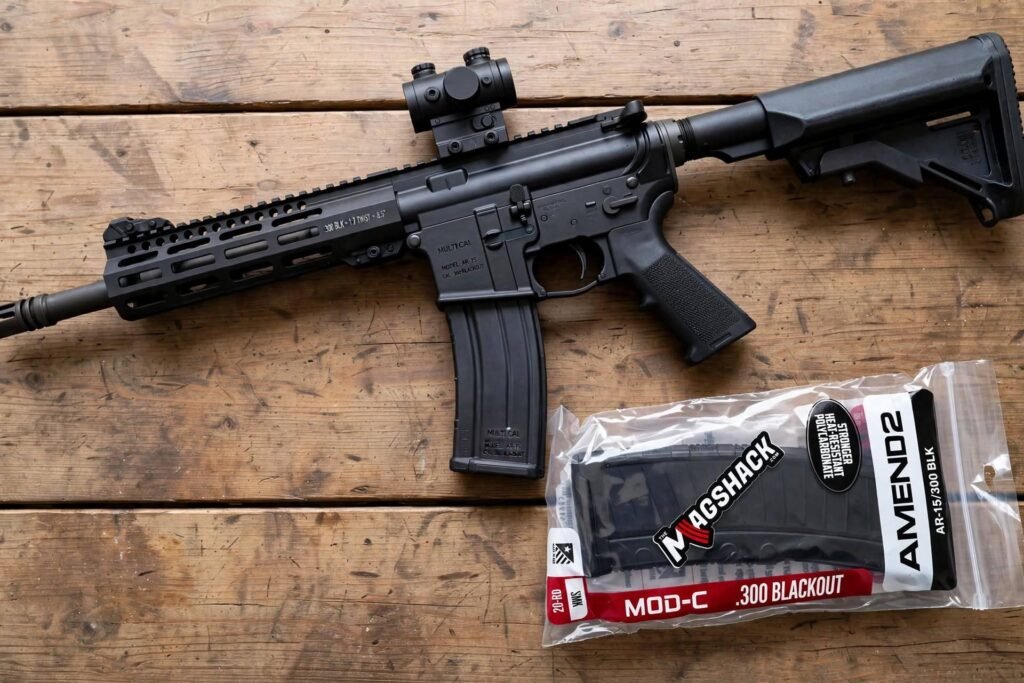
Magazine Compatibility and Capacity
The .300 Blackout is chambered in a standard AR-15 magazine well, and shares the same magazines as your 5.56 rifle. The AR-15 case head diameter is the same as 5.56 and .223, so standard 30-round AR-15 magazines accept .300 Blackout cartridges without modification. So you won’t need to buy a different magazine or search a dedicated parts supply network if you switch calibers.
The Mag Shack stocks a 300 blk magazine collection covering standard capacity, reduced capacity for restricted states, and drum options for those who want more rounds on hand. As good as the rifle is, it’s the magazines that are essential for any dedicated home defense weapon or rifle conversion.
So, Is .300 Blackout Good for Home Defense?
.300 Blackout is a good cartridge for home defense but it’s not the best for everyone. Changing calibers from 5.56 to .300 Blackout is not necessarily an improvement if you already have a 5.56 AR-15 and use it regularly. Knowing your platform and practicing with it can matter more than the cartridge in the box.
The .300 Blackout’s reputation is built on short barrel builds, suppressed setups, and when overpenetration is a genuine concern. .300 Blackout offers a reliable, multi-purpose solution designed specifically for the job.
Conclusion
There’s a good reason why .300 Blackout is a popular choice for home defense. It incorporates improvements from the ground up for short barrels, suppressor use, and versatility in ammunition selection, all of which are more salient indoors than on a wide-open range. If you are building an upper for your AR-15, or converting an existing one, take time to practice with it, learn what types of ammo you can use, and always keep extra magazines available.