Hikers who spent four days in nature with no devices scored 50% better on a creative problem-solving test than a group tested before the same trip. That comes from a 2012 study in PLOS ONE by psychologists at the University of Utah and the University of Kansas. The test was a word game, not a soul search. But the reason those scores jumped is the same reason people come home from outdoor adventures talking like they finally know what they want.
The busy front of the brain gets a break. What shows up in the gap is you. It helps to arrive with a question already in hand—a birth chart in the Nebula app reads your specific placements and hands you one, so you’re not trying to dream up something to reflect on at 6 a.m.
It Takes the Worry-Loop Offline
There are two ways to turn inward, and from the inside they feel the same. One of them gets you somewhere. The other one is rumination, the thought that circles the worst parts of you and never lands.
Stanford researchers tested whether the outdoors touches that loop. Volunteers took a 90-minute walk, half through a grassland near campus and half beside a loud six-lane road. The nature group came back with lower rumination scores and less blood flow to the subgenual prefrontal cortex. That small patch of brain is tied to brooding and to pulling away from the world. The road group came back unchanged. Same city, same hour and a half. The only thing that changed was the setting.
So the first thing a trip does for your inner life is subtraction. It takes the loop offline. Whatever smaller voice was sitting underneath finally gets the floor.
What to do with that floor is a separate problem. That’s where a prompt earns its keep. The card of the day gives you one thing to sit with. Read that as fate or read it as a mirror; the usable part is the same either way. The trouble is the hardware. The phone holding the question also holds your inbox, and the loop lives in there, too. Read the chart over coffee, write the question on the back of your permit, then leave the phone in the glovebox. Paper travels better than notifications do.
It Uses Awe to Clear Your Perspective
Researchers sent veterans and teenagers from rough neighborhoods on whitewater rafting trips. A week later, the ones who’d felt awe on the river were doing better: less stress, more well-being. It wasn’t happiness or gratitude that carried over. It was awe.
Awe does one odd thing to a person. It makes the self feel small. Researchers call it the small self.
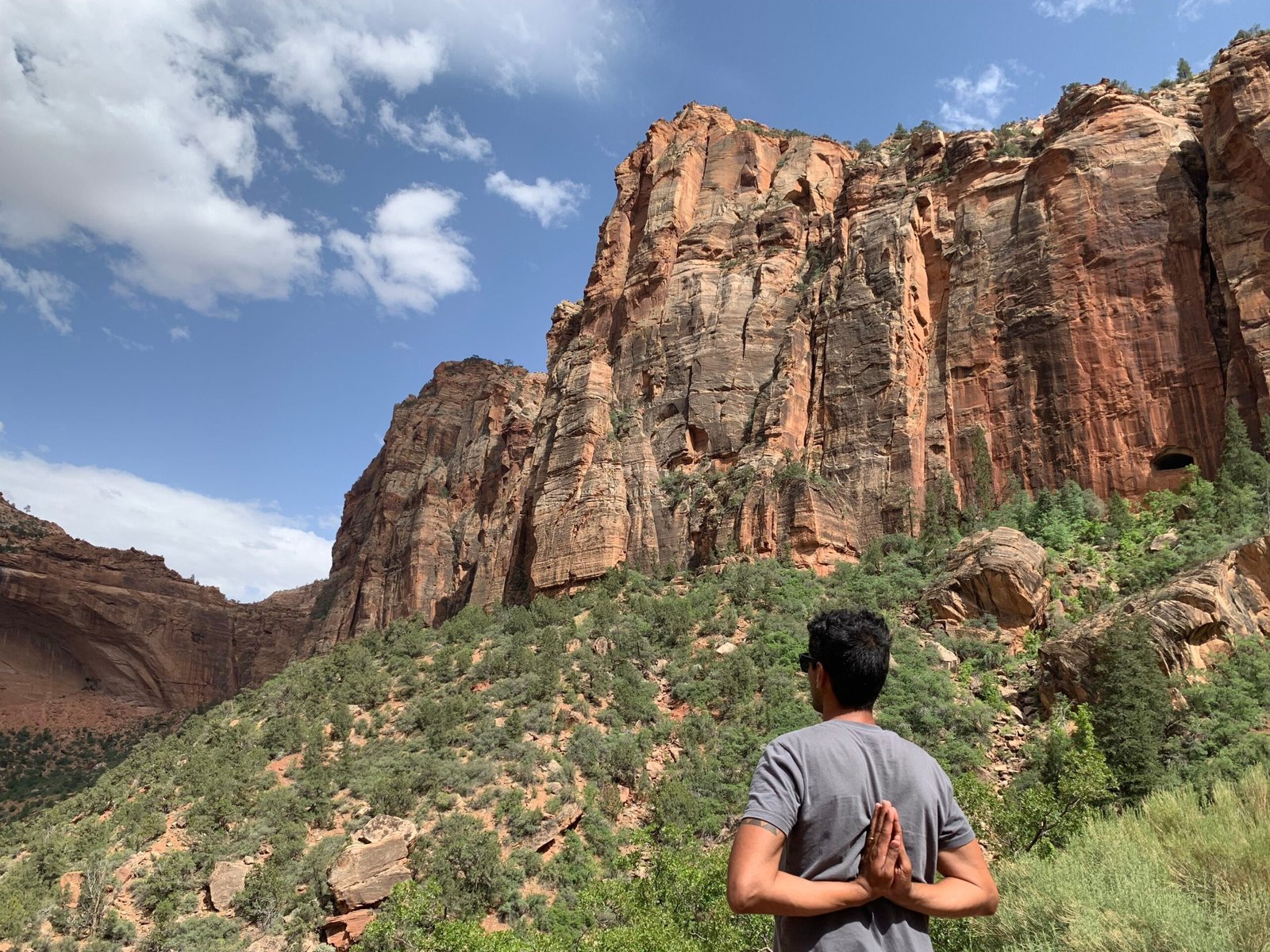
Small is the part that helps. A worry that fills your whole windshield can’t be looked at, only sat inside. Stand under a canyon wall, or a sky with no streetlights for fifty miles, and your own life drops back to normal size. From there, you can see the shape of it. The job, the argument, the thing you’ve been putting off for two years: still there, just not the whole horizon.
Big water, big rock, big dark. A nice view of a night sky, the ocean, and a big storm won’t do it. The trigger is a scale you can’t argue with.
It Wears You Down to Show You Who You Are
Ask yourself who you are on the couch, and you’ll get a polished answer. Get eleven miles in with wet socks and four hours of daylight left, and the polish comes off.
Someone pooled 96 adventure programs and 1,728 results. The average bump was 0.34 on measures like self-concept, which mostly means people came home with a clearer sense of who they were. Programs like that usually fade once everyone goes home. These kept growing, another 0.17 by the time researchers checked back.
That’s the tell. A trip shows you the self that runs the show when there’s no audience and no exit. Out there, you find out whether you push for the summit or you’re happier making tea and turning back. Both answers are honest, and neither shows up in a journal at your kitchen table because your kitchen never asks hard questions.
Before You Go
A walk beats a meditation cushion for most people, and there’s a brutal study behind that claim. Volunteers were left in a room for 15 minutes with nothing but their thoughts and one button that delivered an electric shock. Every one of them had already said they would pay money to avoid that shock. Plenty of them pressed it anyway rather than keep sitting with their own thoughts. Time alone with your own head is hard work. A trail hands the restless part of you a job, and the thinking happens anyway.
Four things that make the difference between a nice weekend and a trip you think about for a year:
- It takes a couple of days to see the effects. The effect needs a day one and a day two to burn through before it arrives.
- Avoid any headphones on the first day. Podcasts are the loop with better production values.
- Write three specifics each night. Skip the moods. Things: the smell after rain on hot rock, how long the light took to leave the ridge.
- Carry the question, not the device. One question, on paper, for four days.
Nothing out there is going to tell you who you are. The mountain has no opinion. It just stops interrupting long enough for you to hear what you say when nobody is asking. That voice is easy to recognize once the other noise is gone.