Buying a knife to keep changes what you look for. The handle needs to fit. The edge needs to be maintainable. And the knife should still make sense after the excitement of buying it wears off.
For a first-generation hunter, that purchase can also be the beginning of a family tradition. A knife given to mark a first deer or a graduation can earn its place through years of use before it ever changes hands.
These six picks include a recent American custom release, a hand-engraved deer skinner, and some less familiar European and Japanese options. They cover different jobs and budgets. The selections draw on published maker specifications and construction details; the order reflects different buying priorities.
What Makes a Hunting Knife Worth Passing Down?
“Heirloom-grade” describes what you intend to keep and care for. It is not a formal knife-industry rating.
Start with the cutting work. A broad belly helps with skinning. A fine point is useful for detailed cuts. A rounded point can help when opening the hide, but gives up some precision. For most deer work, a manageable blade and a secure grip matter more than extra length.
Then look at the whole purchase. Can you sharpen the steel with the equipment you own? Does the sheath retain the knife securely? Can you reach the maker if the handle needs attention or the sheath wears out?
If you are still deciding between fixed blades, folders, and replaceable blades, start with our hunting-knife guide. This selection focuses on fixed blades you can maintain over many seasons.
1. Smith & Sons Scamp Damascus & American Elk Founder’s Series
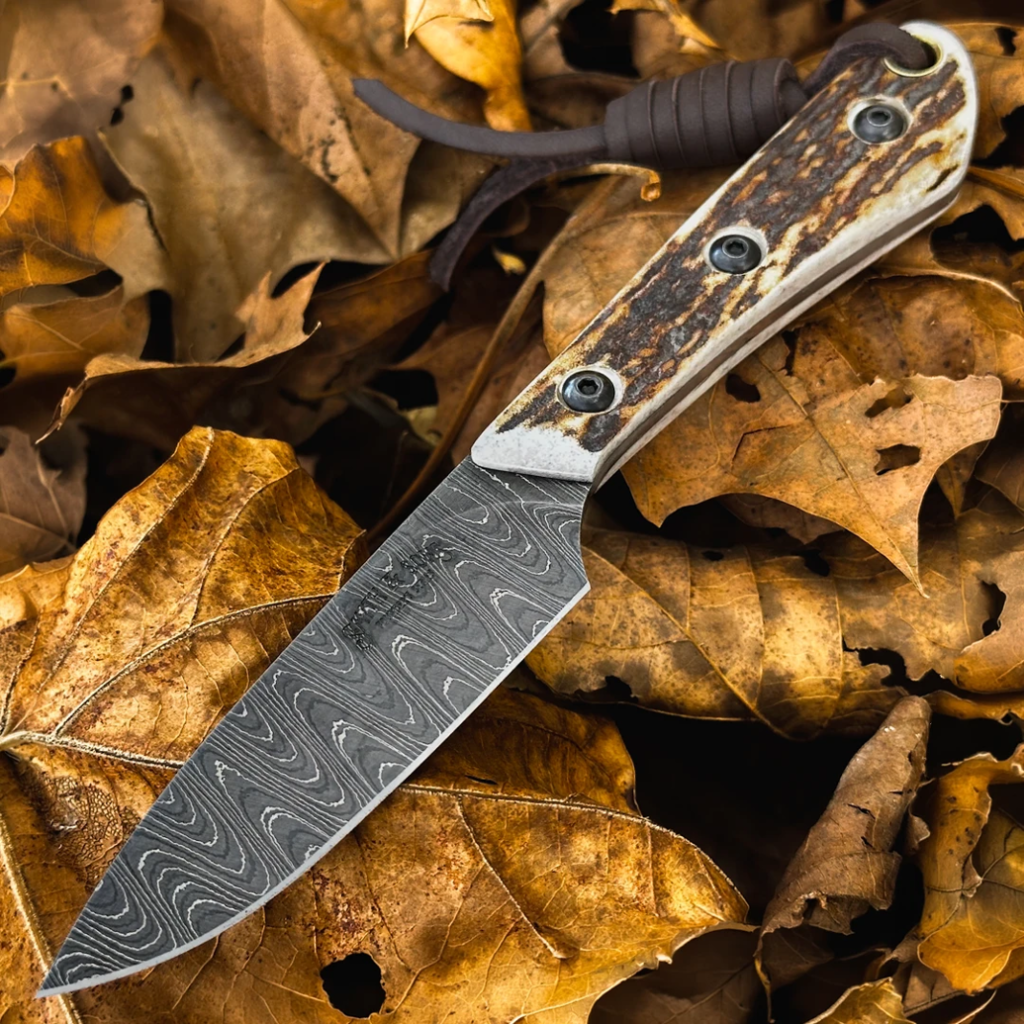
Smith & Sons Scamp Damascus & American Elk Founder’s Series.
The Scamp in Damascus and American elk antler is a recent limited release from Smith & Sons’ Founder’s Series. Its appeal is easy to understand: a compact American-made knife with visible handwork and natural handle material.
The hand-ground blade is 3¼ inches long, with a flat grind and 0.100-inch stock. At 6¾ inches overall, the Scamp is compact enough that handle fit deserves a close look before ordering. Use it for slicing and controlled game work, and carry a separate tool for bone.
Smith & Sons specifies 416-layer Alabama Damascus made with 5160, 15N20, and Ni200. The elk-antler scales are shaped by hand, so their surface and color vary between knives. If the appearance matters as much as the specifications, ask to see the actual piece available.
This is a good candidate for someone who enjoys the care that comes with a traditional knife. Dry and protect the carbon Damascus after use, and keep the antler away from prolonged heat and moisture. Those habits belong in the conversation when you eventually pass it along.
2. Noblie Custom Knives Full-Tang Deer Skinner
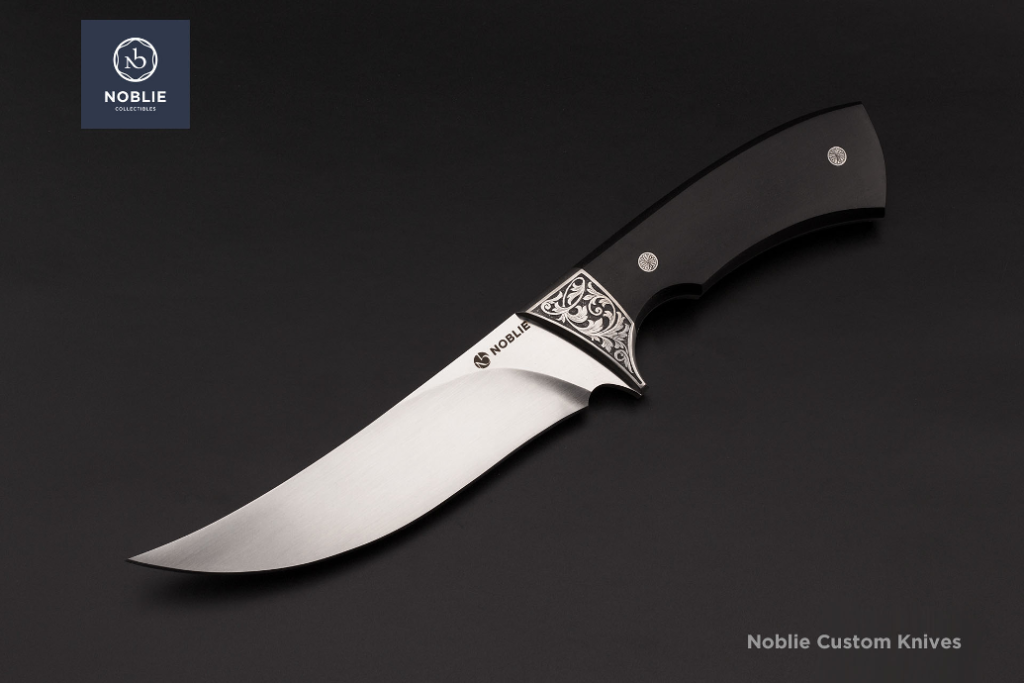
Noblie Custom Knives Full-Tang Deer Skinner.
The Full-Tang Deer Skinner from Noblie brings hand engraving into a recognizable hunting design. It pairs an ebony handle with a titanium bolster decorated in a vine pattern. The engraved metalwork gives the knife a personal character without taking over the blade itself.
The working specifications are straightforward: a 4.33-inch Böhler N695 stainless blade, 4 mm thick, hardened to 57 HRC. Its trailing point creates a raised tip and a pronounced cutting belly suited to sweeping skinning cuts. That elevated point also calls for care when opening the body cavity, where keeping the tip under control matters.
The hand engraving and finishing are a substantial part of what you are paying for. The 57 HRC blade will need regular touch-ups in use. Choose this knife when you value the individual handwork and want a hunting gift with more personal detail than a standard production model.
A leather sheath and presentation box accompany the knife. Keep the certificate and record why it was given: a first successful season, a retirement, or a hunt shared with someone important. That context will matter to its next owner.
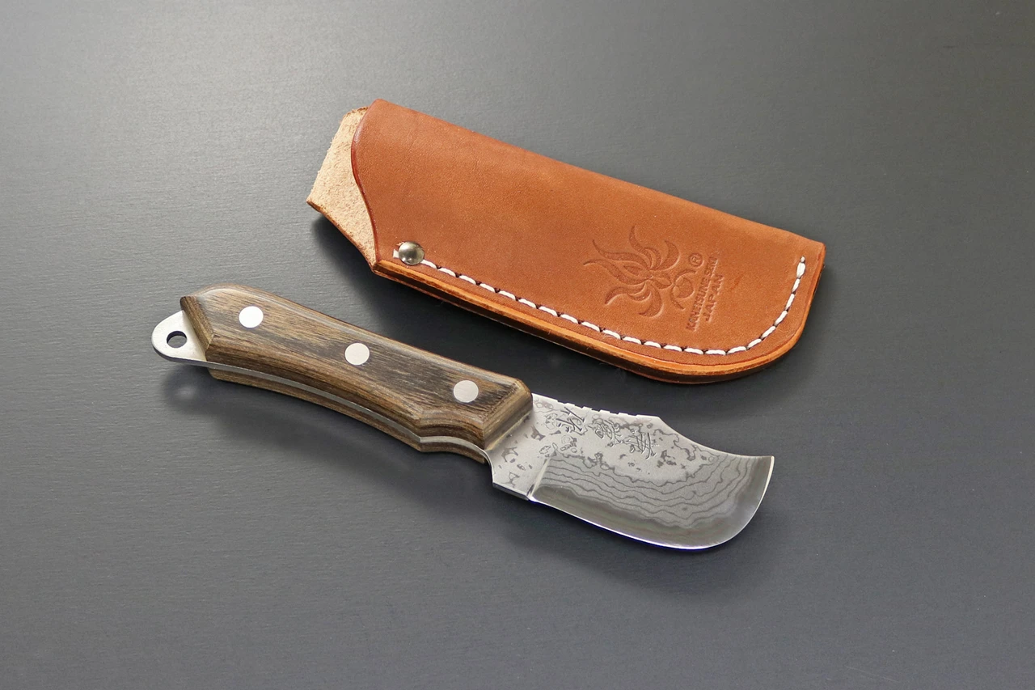
3. Kanetsune Seseragi 2 Skinner KB-270
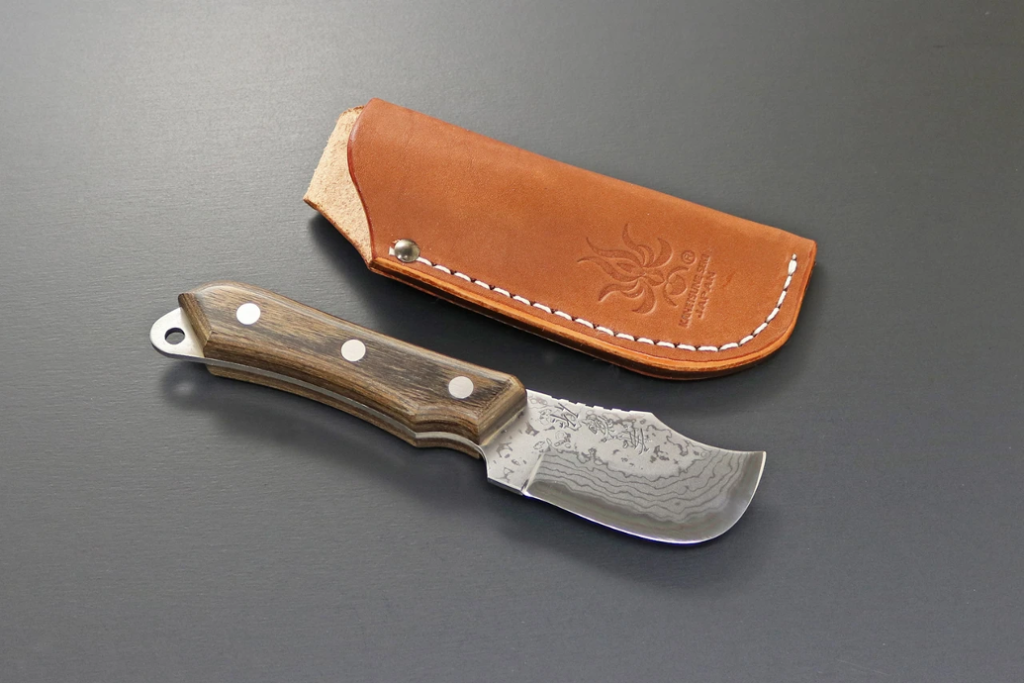
Kanetsune Seseragi 2 Skinner KB-270 with its leather sheath.
The Kanetsune Seseragi 2 Skinner takes a different approach to skinning. Its short, rounded blade puts a broad cutting curve in a compact package.
Made in Seki, Japan, the KB-270 uses a Blue Steel No. 2 core in 15-layer Damascus, with a stated hardness of 61–62 HRC. It has full-tang construction, a wood grip, and a leather sheath. Kanetsune identifies the second-generation series as an update to the handle construction of the original Seseragi.
The broad belly is the reason to consider this model. It suits a buyer who wants a dedicated skinning knife and already has another blade for fine point work. A rounded skinning profile has different strengths from a narrow caping knife.
Blue Steel No. 2 needs prompt attention after use. Clean and dry the blade, then apply a suitable protective oil before putting it away. The patterned blade can develop a patina; active rust still needs to be addressed. A buyer who enjoys maintaining Japanese carbon-steel cutlery will already know that routine.
4. Karesuando Galten Metsä
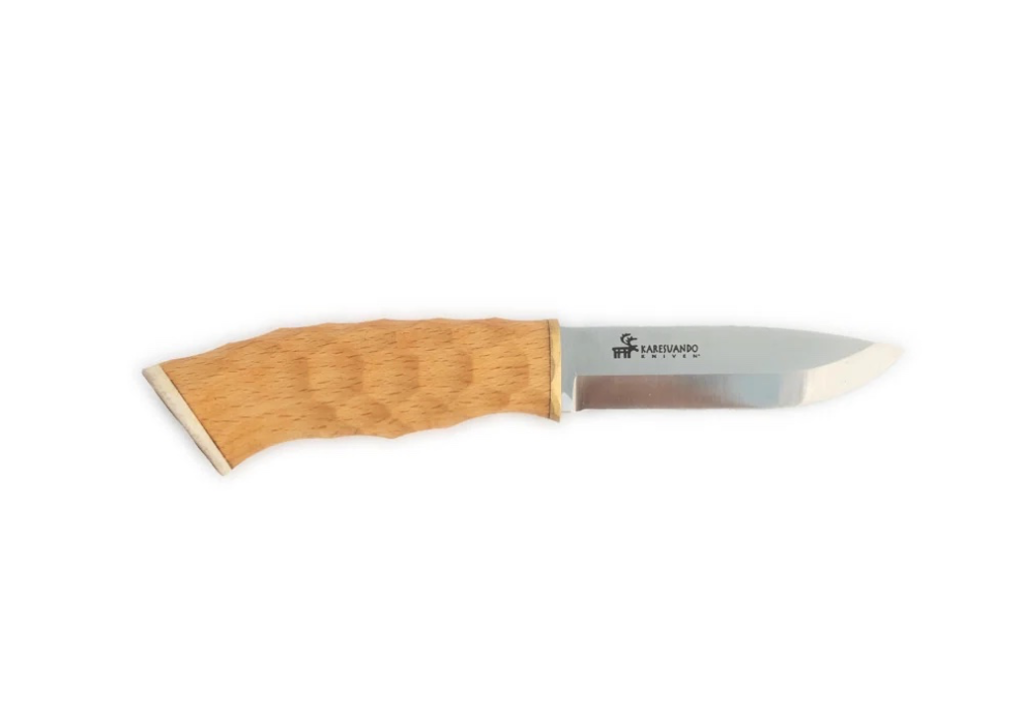
Karesuando Galten Metsä.
Karesuando lists the Galten Metsä as a new variation of its long-running Galten hunting knife. The Swedish maker gives this version a grooved beechwood handle, a moose-antler end piece, and a brass guard.
That combination has a purpose beyond appearance. The handle profile is intended to help with wet or gloved use, while the guard gives the hand a clear stopping point. It is worth trying those grooves with your own hunting gloves; pronounced shaping needs to line up with the person holding it.
The blade is 3.94 inches long and 3.2 mm thick, made from Sandvik 12C27 stainless steel at a stated 58 HRC. The knife weighs about 3.35 ounces without its leather sheath. It offers traditional materials in a fairly light package.
The Metsä makes sense for a hunter drawn to Scandinavian craft who wants a conventional hunting blade. Its oil-finished wood and antler deserve normal care, but the stainless blade keeps the maintenance routine manageable after a wet day outside.
5. Helle Polaris
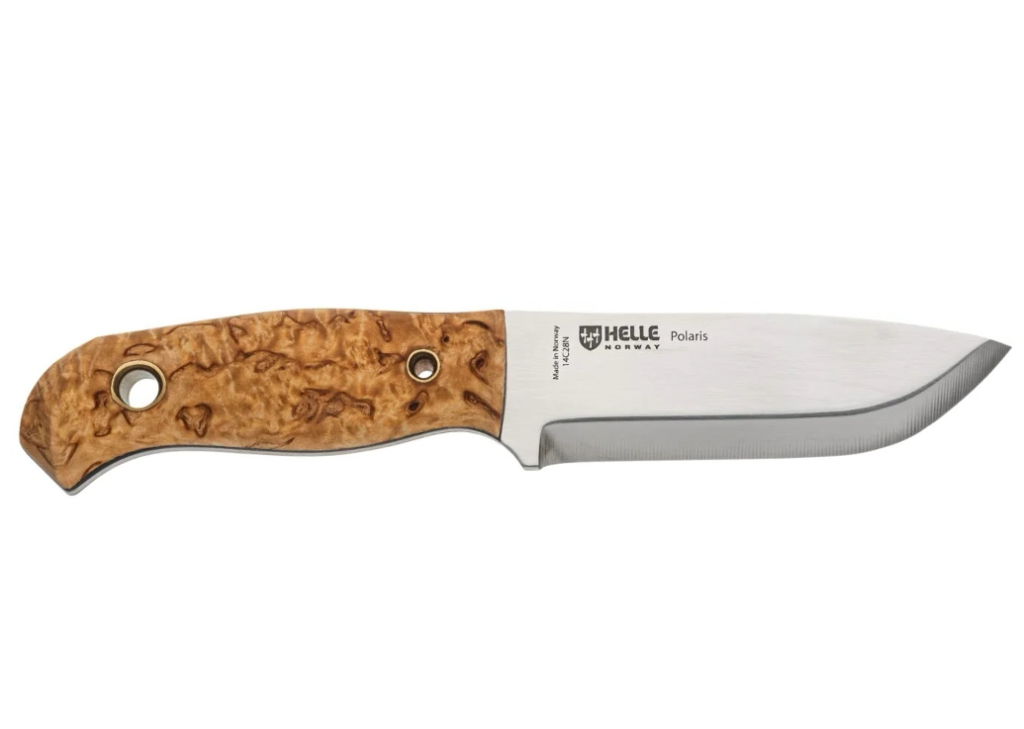
Helle Polaris with its curly-birch handle.
The Helle Polaris is a confirmed 2026 design. It brings the lines of Helle’s larger Nord family into a compact full-tang knife with curly-birch scales.
Its 3.15-inch blade is made from 14C28N stainless steel. Helle lists the stock at 3.2 mm and the handle at 3.42 inches long. Those dimensions make the Polaris worth considering if a large hunting knife feels awkward to carry or control. Larger hands may find the grip too short, particularly in thick gloves.
This is the all-around outdoor option in the group. Its Scandinavian grind suits camp tasks alongside the cutting work that comes with a hunt. A hunter who primarily wants long skinning strokes may prefer one of the dedicated skinning profiles above.
The supplied leather sheath allows belt or pocket carry. Have the recipient try the grip and sheath together, including while seated in hunting clothes. The dimensions are small, but the carry arrangement still needs to work with a pack belt and layered clothing.
6. Casström Swedish Field Dresser in Black Micarta
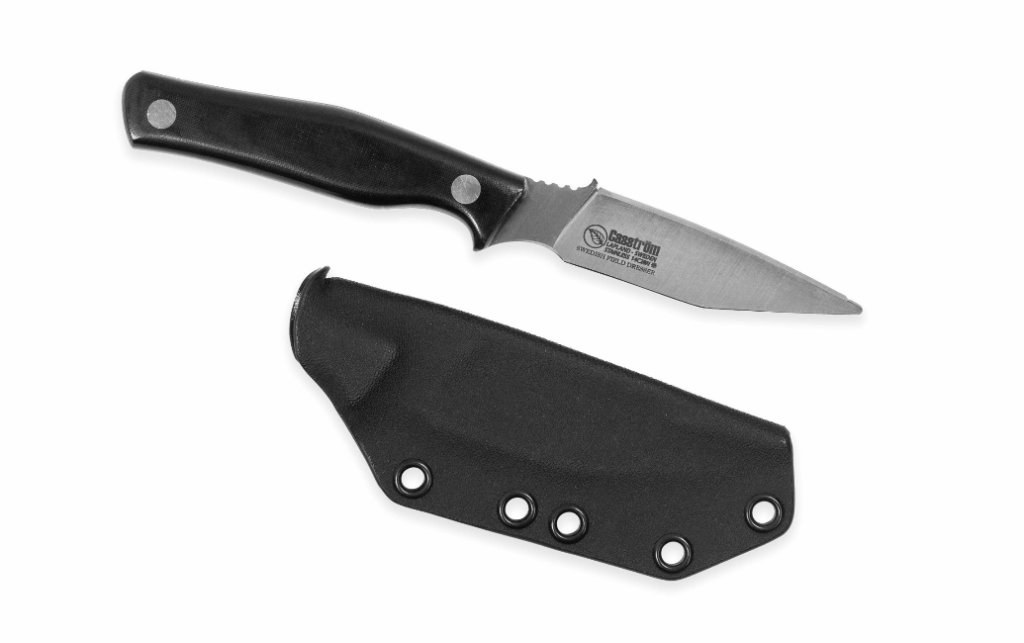
Casström Swedish Field Dresser in Black Micarta with its Kydex sheath.
The Swedish Field Dresser earns its place through the job it is built to do. Casström developed it with input from hunters and game butchers, using a nearly straight cutting edge and a rounded tip for opening and dressing game.
The full-tang blade is approximately 3 inches long, made from cryogenically treated 14C28N stainless steel at 59–60 HRC. Black Micarta scales and a Kydex sheath make this a practical choice for someone who puts easy cleaning high on the list.
The unusual tip is the important buying decision. It can help limit unintended punctures, but it does not replace a fine point for detailed caping. Think about the cuts you make most often before choosing it as your only hunting knife.
The straight cutting edge is also easier to follow on a sharpening stone than the tight inside curve of many gut openers. This is a practical choice for a hunter who wants a dedicated dressing tool that is simple to clean and maintain over the years.
Choose for Your Hand and Your Hunt
A knife does not need a women’s label to fit a woman’s hand. Grip length, circumference, finger spacing, and the way you hold it during a cut are the useful measurements.
Try a normal grip and a controlled grip with your forefinger extended along the spine. Check that a guard or deep finger groove lets your hand settle naturally. If you hunt in gloves, bring them when you shop. As with other hunting gear, fit should solve a problem you encounter in the field.
Choose the Noblie or Scamp when handwork and the meaning of the gift are central. The Kanetsune is the specialist skinning choice. The Galten Metsä offers a more conventional hunting format, while the Polaris covers smaller outdoor tasks. The Casström deserves a look when opening game and cleaning up afterward are your main concerns.
For a gift, leave room for the recipient to make the final choice. Handle fit is difficult to judge from a photograph.
Keep It Ready for the Next Generation
After a hunt, remove blood and tissue with mild soap and water, then dry the knife thoroughly. Avoid soaking wood or antler handles. Let a wet sheath dry separately, and store the clean knife outside its leather sheath for extended periods in a dry, protected place.
Carbon Damascus and the Kanetsune’s Blue Steel core need prompt attention to moisture. Stainless blades still benefit from cleaning and drying. Use a food-safe protective product when the knife will contact meat, following the maker’s care instructions.
Touch up the edge before it becomes badly dull, and preserve the original geometry. A powered grinder can remove material quickly and overheat a fine edge; routine maintenance calls for more control.
Keep the receipt, model information, and any certificate with a short note about the knife’s history. Add the sharpening method that works and the care it needs. When the time comes to give it to someone else, those practical details will help them keep using it.