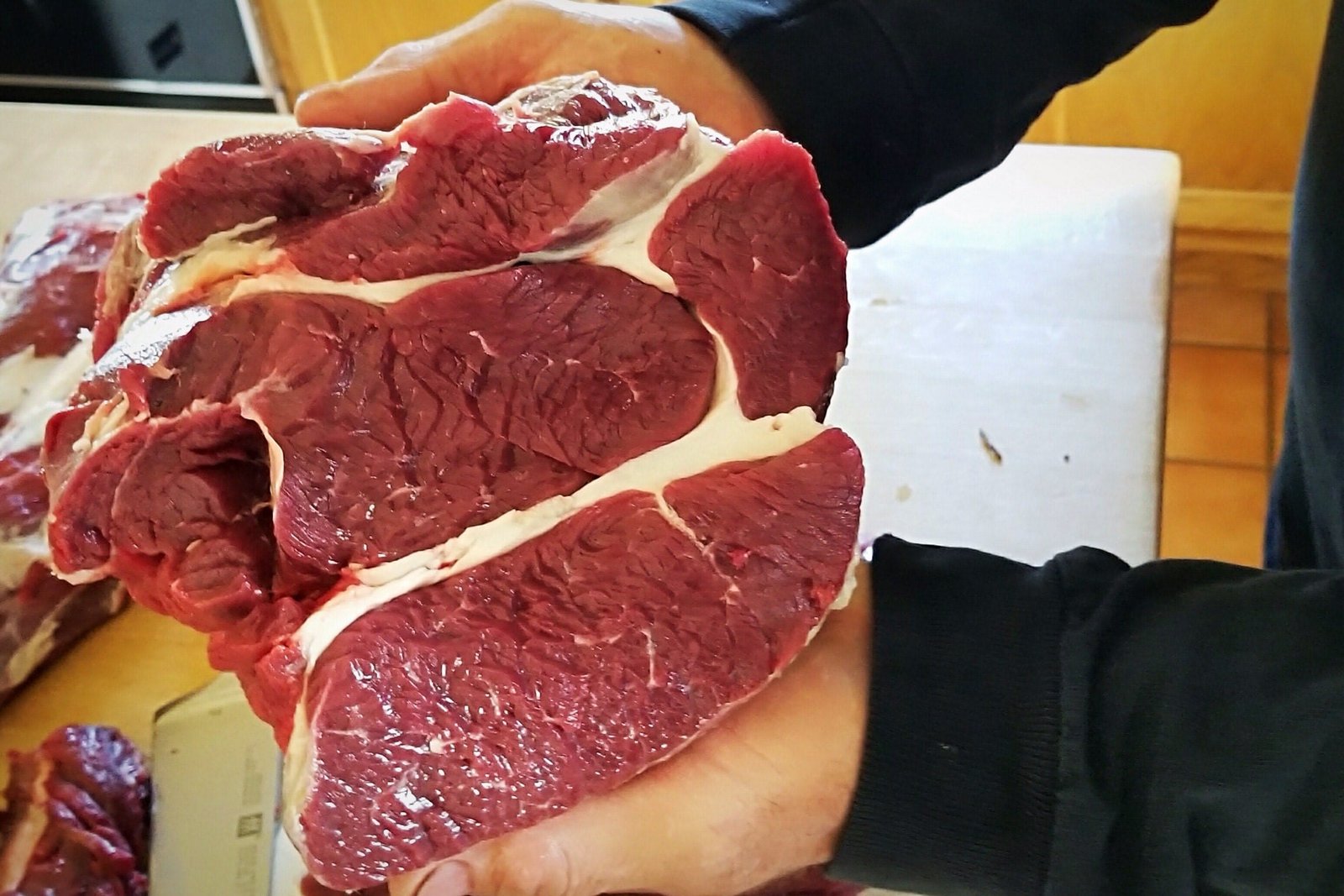
Why Wild Game Beats Store-Bought Meat
The pursuit of physical excellence is directing active women toward whole, single-ingredient foods. For the female hunter, this aligns with a commitment to clean eating for hunting season. Eating game from the wild is not only an ethically better choice but also nutritionally superior to the common meats one buys from the supermarket. While the former eats grass, woody browse, and nuts from trees, the latter is kept in confined spaces, with growth hormones and antibiotics administered to promote faster growth. The biochemical composition of the meat depends on the diet of the animal, which results in healthy fats and nutrients without artificial ingredients. It is important to note that wild deer emit up to twenty times less methane than farmed animals.
Wild game is characterized by an exceptional lean-to-protein ratio. As a result of constant activity, muscle tissue in wild ungulates becomes highly elastic without having any marbling underneath or within the muscle. Prepared venison from the wild offers about 25.4 grams of protein for every 100 grams of meat but provides only 2.35 grams of fat. Beef steak from the loin of cattle contains more than 8.7 grams of fat. Therefore, we can conclude that wild game has a significant advantage in terms of heart health. Wild elk has even more protein, providing around 22.9 grams of protein and 1.4 grams of fat per 100 grams.
Fueling Your Fitness with Wild Game
In terms of body composition, this type of lean meat offers a unique advantage to women. Lean meats with high protein content help maintain satiety through the regulation of appetite hormones. While discussing the benefits of eating ultra-lean wild game as a perfect protein source for meal planning, one should note that a woman who uses a calorie deficit calculator to control her workouts can consume larger amounts of venison than domestic beef because of its low fat content. This macronutrient efficiency is equally apparent in wild waterfowl.
Skinless wild duck breast offers just around 12.92 grams of fat for each three-ounce serving, making up half the fat content found in domestic ducks, but also offering up 14.81 grams of protein.
Active women face unique physiological challenges, particularly regarding cellular energy production and mineral depletion. Strenuous training, like building the upper-body strength needed to increase bow draw weight, demands high levels of vitamins and minerals. Wild game delivers here too: venison and elk retain over 95% of their B-complex vitamins after cooking, compared to only 70% in conventional beef.
The Iron Edge for Female Hunters
However, when it comes to minerals, the first one that should be considered is iron, since iron deficiency is among the most frequent causes of fatigue. In terms of heme iron, red wild meat offers an unrivaled source because iron from heme sources is absorbed far more effectively than plant-derived iron. When discussing the specific micronutrient needs of female hunters, note that the high bioavailable iron found in red wild game is critical for combating fatigue and replenishing iron levels, prompting readers to track their cycles with a period calculator to know when to increase their wild game intake. As stated in the USDA FoodData Central database, there are about 4.5 milligrams of heme iron in venison compared to 3.2 milligrams in elk meat and 2.6 milligrams in regular beef, making venison the most iron-dense option available.
From Field to Freezer
In order for women to fully enjoy the benefits, there is a need to undertake strict meat preservation procedures in the field. Meat preservation begins with field processing. The removal of tarsal scent glands from the animal in the field helps eliminate any potential meat contamination. While beef contains fats that add to its flavor, deer fat is characterized by waxiness and contains volatile compounds, which give a bad taste. Trimming all fat, sinew, and silver skin from the meat is the key procedure.
Long-term meal preparation requires having a systematic method of food storage to avoid any kind of freezer burn and wastage. Freezers need to be regularly thawed and cleaned several times throughout the year by storing the meat in coolers. This is achieved by using coated freezer paper to wrap the meat or vacuum sealing the meat pieces to avoid oxidation. Meat needs to be labeled according to date, cut, gender, and weight because buck meat is denser and contains low pH and therefore needs to be cooked slowly, whereas doe meat is tender.
Cooking It Right
Integrating wild game into a daily fitness routine requires pairing specific cuts with appropriate cooking techniques. Lean cuts like backstraps should be cooked quickly over high heat, such as pan-searing in a hot cast-iron skillet, ensuring the internal temperature does not exceed 130–135 degrees Fahrenheit for a perfect medium-rare. Tougher cuts from the shoulder should be braised slowly in a slow cooker with rich broths to break down connective tissues without drying. Ground venison serves as a highly versatile, low-fat substitute in everyday recipes, from breakfast sausages to slow-cooked chilies. By mastering these strategic preparation and storage techniques, female hunters can successfully sustain their bodies with the cleanest, most environmentally conscious red meat available, transforming hard-earned harvests into a foundation for lifelong athletic success.