I had always imagined standing at the foot of the world’s highest peak surrounded by the towering Himalayas, and finally, after months of planning, I set out alone for the Everest Base Camp trek. Navigating rugged trails, high passes, and remote villages alone felt both daunting and thrilling. I wanted to experience the mountains without compromise, allowing myself to walk, breathe, and reflect in silence while being surrounded by nature at its most vast and unforgiving.
My journey began in Lukla, the gateway to the Khumbu region. The small airstrip and guides prepared for the long trail ahead. I felt a mix of excitement and nerves stepping off the tiny plane onto the tarmac in the crisp air tinged with pine and cold mountain wind. With my backpack secured, I started the trek toward Phakding, the first overnight stop. The trail followed the Dudh Koshi river with suspension bridges swaying gently over turquoise waters and the distant peaks reflecting sunlight on snow. Even the first day offered a sense of immersion that felt transformative.
The next day led me to Namche Bazaar, a bustling town that felt like the heart of the Khumbu region. Trekkers and locals moved along stone paths, shops sold trekking gear and tea, and the smell of freshly baked bread filled the air. I paused at a small café to enjoy a cup of tea while watching the rhythm of life around me. The town was more than a stopover; it was a place to absorb the culture, speak with Sherpas, and observe the preparation and resilience that went into high-altitude living.
Read More: Base Layers – The Chilly Girl’s Guide
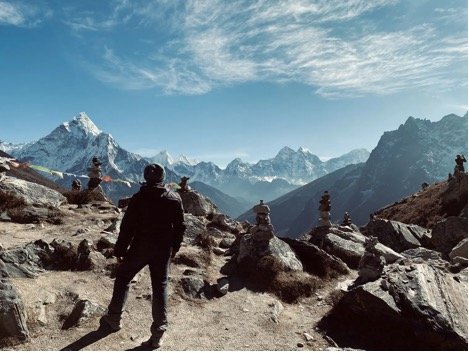
In Namche, the trail grew steeper and more challenging. Each day tested endurance from the gradual climbs to the thinning air that made every step heavier. I passed through rhododendron forests and across open meadows where prayer flags fluttered in the wind. The trail offered moments of quiet reflection walking in solitude, hearing only the crunch of my boots against rocks or the distant call of a bird. These moments allowed thoughts to flow freely, and the journey became as much inward as outward.
Trekking solo brought both independence and introspection. I had to make every decision carefully, when to rest, how to pace myself and how to manage altitude and fatigue. The experience required focus, resilience, and self-trust. However, I also encountered other trekkers who were exchanging stories, encouragement, and laughter along the way. These brief connections reminded me that while the trek was solitary in many ways, it was also part of a larger community of adventurers all sharing the same mountains.
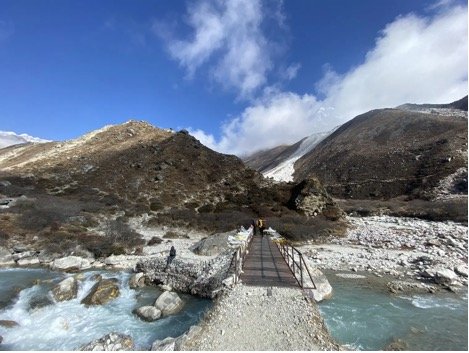
One morning I reached Dingboche after a long climb. The view opened to vast valleys and distant peaks that seemed impossible to capture fully in a photograph. The thin air made each step deliberate, and I rested often, letting my eyes roam across the landscape. I spoke with local guides who shared stories about the mountains, monasteries, and survival at high altitudes. Listening to them added depth to the journey, connecting the natural landscape to human experience and resilience.
The final ascent to Gorak Shep and then to Everest Base Camp tested every bit of preparation. The rocky trail patches of snow and icy winds demanded careful navigation. At times, I felt the solitude intensely, being aware that I was walking a path that few had the chance to experience alone. But reaching the base camp, the world opened in a way I had not anticipated. Everest towered above glaciers sprawled across the horizon, and prayer flags marked the spirit of those who had walked this path before. Standing there I felt both small and expansive, a mix of humility and triumph that words could barely capture.
The base camp itself carried a solemn beauty. Tents dotted the rocky ground; trekkers rested and shared meals, and the sound of wind over ice added a rhythm to the landscape. I took time to absorb the surroundings photographing the lake glaciers and peaks but also simply standing in silence, letting the magnitude of the mountains sink in. Every breath felt precious, every step to reach this point a testament to preparation determination and the patience cultivated over days of walking.
Descending brought reflection alongside exertion. Each step downward was lighter in some ways, yet the trek continued to demand care and attention. I passed through the villages valleys and forests again noticing details I had missed on the ascent I noticed the fluttering prayer flags, the texture of the stone paths, and the smiles of locals who had become familiar faces. Each small observation added texture to the experience and a sense of completeness to the adventure.
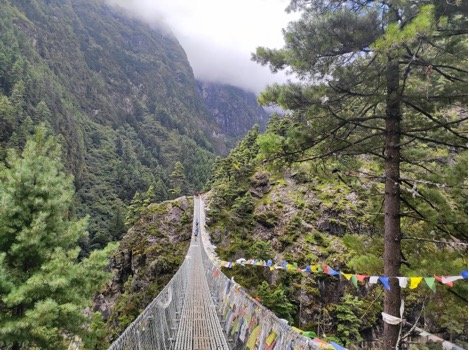
Along the way, minor challenges arose, including blisters, sudden weather changes, and moments of fatigue; however, every hurdle reinforced the resilience required for such an adventure. Planning and guidance through Thrillophilia had made a significant difference. From permits to route advice and recommendations for accommodations, having reliable information allowed me to focus entirely on the trek rather than logistics. Reading a few Thrillophilia review posts before booking gave me confidence that I was in good hands, and the actual experience proved those reviews right.
By the time I returned to Lukla for the flight home, exhaustion and exhilaration had mingled. My body was tired, yet my mind carried clarity and a sense of achievement. The trek had offered solitude, challenges, awe-inspiring landscapes, and moments of connection with both people and the mountains themselves. It had been a journey of endurance reflection and discovery, a chance to step outside familiar limits and confront both the physical and emotional demands of high-altitude trekking.
Looking back, I realised the EBC trip was transformative in ways I could not have predicted. Every step, every pause, and every conversation with fellow trekkers or Sherpas added layers to the experience. It reminded me of the value of planning, preparation, and the courage to step into uncertainty. Most importantly, it showed me that solo travel, even in the harshest and most remote environments, can offer profound moments of self-discovery, perspective, and gratitude. My personal review of Thrillophilia after this journey is a deeply positive one—their support, resources, and local expertise helped turn a long-time dream into a safe, memorable reality.